Tsunami Waves Hit Japan, Hawaii and Alaska After 8.8 Magnitude Quake Off Russia
Published in Politics
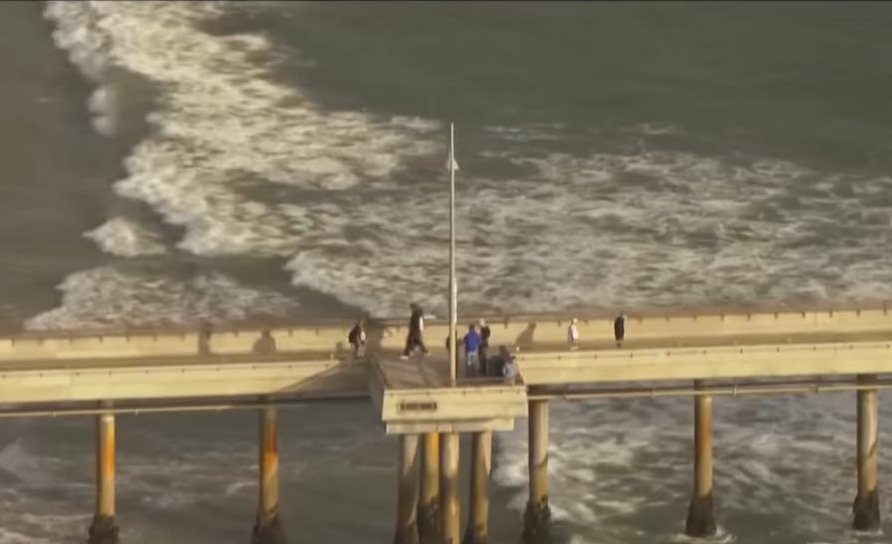


A powerful undersea earthquake off Russia’s Kamchatka Peninsula sent tsunami waves racing across the Pacific early Tuesday, striking Japan, Hawaii and Alaska, triggering widespread coastal alerts, evacuations and flight disruptions.
The earthquake, which struck at 3:17 a.m. local time, registered a preliminary magnitude of 8.8, according to the U.S. Geological Survey. The epicenter was located about 250 miles southeast of Petropavlovsk-Kamchatsky, in the Sea of Okhotsk, at a depth of approximately 19 miles. It is among the most powerful quakes ever recorded in the region.
In Japan, tsunami waves up to 2.1 meters (roughly 7 feet) were observed along the northern coast of Hokkaido. The Japan Meteorological Agency issued tsunami warnings for wide swaths of the country’s eastern and northern coastline, prompting thousands of residents to evacuate to higher ground. Emergency sirens sounded in coastal towns, and bullet train service was temporarily suspended in affected areas.
Japanese officials said there were no immediate reports of casualties or major structural damage, but strong currents damaged piers and swept away small vessels in several harbors. Authorities urged continued caution as aftershocks continued to rattle the region.
Farther east, Hawaii’s entire island chain was placed under a tsunami warning by the Pacific Tsunami Warning Center. Sirens were activated just after 9 a.m. local time, waking residents and tourists alike. State officials advised people in low-lying and coastal areas to move inland or to higher floors.
Waves between two and three feet were recorded on the Big Island and Maui, and strong currents disrupted boating and beach activity throughout the day. Emergency shelters were opened in several counties, but no injuries were reported.
On the U.S. mainland, the National Weather Service issued a tsunami advisory for much of Alaska’s southern coast. Waves up to four feet reached parts of the Aleutian Islands and Kodiak, where residents reported visible surges and choppy waters. Coastal airports in several communities suspended operations briefly as a precaution, and fishing vessels returned to port.
Russian authorities said damage assessments were ongoing in Kamchatka, where the quake’s tremors were felt strongly but initial reports indicated limited impact on infrastructure. Russia’s Ministry of Emergency Situations deployed response teams to coastal villages, but no fatalities had been confirmed by Tuesday evening.
Experts said the quake originated along the Kuril-Kamchatka subduction zone, where the Pacific Plate plunges beneath the North American Plate — a fault system known for producing major seismic events. The depth and magnitude of the quake, combined with the tectonic features of the region, made it highly efficient at transferring energy into the sea and generating tsunami waves.
“Tsunamis like this can travel vast distances across the Pacific,” said Dr. Anne Kuroda, a geophysicist with the U.S. Geological Survey. “What we saw today is a classic example of a basin-wide event—while the waves weren’t devastating in most places, the speed and scope of their reach underscore how interconnected the region is.”
Tsunami warnings were gradually lifted across affected regions by late Tuesday, though experts cautioned that strong currents and unusual tides could persist for another 24 hours.
In Tokyo, Prime Minister Masao Kida addressed the nation in a televised statement, thanking citizens for responding swiftly to evacuation orders and pledging resources to any communities that experienced damage.
“We were fortunate today,” Kida said. “But this is a reminder of the need for vigilance and preparation in the face of nature’s power.”
Officials in Hawaii echoed that sentiment. “The response was orderly, and people took this seriously,” said Honolulu Mayor Leilani Kimura. “We’re grateful for that, and we’re reminding everyone to stay clear of beaches until we get the all-clear.”
Though no deaths or widespread destruction were reported, scientists and emergency officials said the event was a near-miss that could have been much worse under slightly different circumstances.
“Had this earthquake struck closer to population centers or triggered a larger sea-floor displacement, the outcome might have been tragic,” said Kuroda. “This is a wake-up call, not a sigh of relief.”
========
This article was created, in part, utlizing AI tools.







































































































Comments