Politics
/ArcaMax

Anita Chabria: Should child rapists be released just because they're old? Maybe
SACRAMENTO, Calif. — Murder is considered the worst crime out there, but for my money, it’s child rapists who are the worst of the worst — especially the serial ones who destroy one life after another.
That’s wholly subjective on my part, but I doubt I’m alone. Which is why I was far from surprised at the outrage that accompanied two...Read more

Steve Lopez: My promise to you: AI didn't write this column, and if it's after my job, it'll be over my dead body
For quite a while now, someone has been living inside my computer, writing emails for me.
I don't recall signing up for this artificial intelligence feature, which is like having a word valet. It's in my phone, too, which offers three serviceable but impersonal responses I can fire off to someone who has just sent me an email pitching a story ...Read more

Lynn Schmidt: Putin helps Iran; Americans die. That's not 'inconsequential'
In one weekend, a series of ominous dots was laid out regarding the United States, Iran, and Russia. Once connected, the picture that forms is damning and chilling.
Russian President Vladimir Putin counted his winnings, America mourned its dead, and the U.S. president, astonishingly, shrugged it off as trivial.
Last Saturday morning President ...Read more

Leonard Greene: Thousands dead over war in Iran -- biggest casualty is compassion
War is ugly.
So is hubris.
The next time President Donald Trump tells you how well the war is going, remember that U.S. missile strikes have killed more than 1,400 people in Iran, including 168 children who perished at an elementary school.
Remember, too, that the average price of gas in America has surged more than 65 cents a gallon in the ...Read more
Editorial: Citizenship-proof laws chase phantom fraud and threaten voters' access
Always beware the Why not? argument — especially when it comes to erecting barriers to voting in elections. In that case, the pertinent question should always be, Why?
There’s no good answer to the latter question regarding federal and Missouri state legislation that would require proof of citizenship to register to vote.
Both the federal ...Read more

Abby McCloskey: Republicans are squandering their MAHA moment
The MAHA base is bigger than you think. And the GOP is going to need all the support it can muster to survive what’s likely to be a bruising midterm.
Foughly four in 10 parents (38%) identify as supporters of the Make America Healthy Again movement, according to a KFF/Washington Post poll. I think this underestimates the movement’s ...Read more

Commentary: Join the fight to protect the ocean
My half-century as a journalist and two decades as an ocean advocate has taught me that democracy is not a guarantee of environmental protection for our public seas or people — it’s a prerequisite.
That’s why, in advance of what will be the third No Kings Day of mass protest against President Donald Trump’s increasingly authoritarian ...Read more
Commentary: Empowering independent voters can fix primary elections
Not long ago, almost no one talked about the rules and culture of primary elections. Today, there is a growing recognition that the way we run primary elections isn’t working. They’re too partisan. Too low turnout. Too dominated by ideological activists. My organization, Open Primaries, has spent years pushing this conversation into the ...Read more

Commentary: Don't let lobbyists win a liability shield for Big Oil
What do oil companies fear even more than cheaper and cleaner competition to their dirty fossil fuel business? A jury of American citizens.
In California and across the nation from Hawaii to Maine, a growing number of state and local governments are fighting in court to hold oil giants like Exxon Mobil, Chevron, Shell and BP accountable for ...Read more
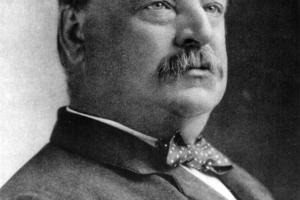
Commentary: Grover Cleveland and the lost art of saying no
In high school, I put useless trivia knowledge to work on the quiz bowl team. I wasn’t the fastest on the buzzer, but I learned quickly which names and facts came up repeatedly.
Grover Cleveland was one of those names.
He was the only president to serve nonconsecutive terms. Of course, this was before Donald Trump’s return to office.
...Read more

Editorial: The Chicago Teachers Union's May 1 walkout puts politics ahead of education
Education starts with the basics.
An educated person has core math skills — they can add, subtract, multiply and divide. With a solid education, a person can become a lifelong reader, or at least competently navigate the world and its written cues. A well-educated person can do these things and also think independently.
With their planned ...Read more

Editorial: An erratic FDA is a threat to innovation
Few corporate cautionary tales are as vivid as the rise and fall of Moderna Inc. During the pandemic, the company’s mRNA vaccine was approved and distributed in record time, saving millions of lives and turning a once-obscure startup into a $200 billion behemoth.
Now Moderna is in a tight spot: Hundreds of millions of dollars in grants for ...Read more

Allison Schrager: Yes, Americans are saving enough for retirement
One of my most longstanding and controversial opinions is that the move from defined-benefit pensions to defined-contribution pensions was a success. It’s an especially unpopular view amid stories of retirees who fall through the cracks and a grim market that is pruning many retirement accounts, if not retirement dreams.
Nevertheless, my ...Read more

Abby McCloskey: Staggering US deficits call for a debt-to-GDP limit
I recently went to the doctor about a minor health issue. “Is what I’m experiencing normal?” I asked her. “No, it’s never normal,” she said, “but it happens to almost everybody.” I thought: That pretty much sums up the problem of national debt.
After all, it’s been normal for America to run up the federal deficit since the ...Read more

Commentary: The window to declare success in Iran is closing
If you’re looking for the most elegant way to wrap up our “little excursion” in Iran, it’s this: President Donald Trump should follow what might politely be called the “declare victory and head for the airport” strategy.
You know the drill: Announce that we’ve set back Iran’s nuclear programs a decade, pounded their navy into ...Read more

Commentary: America can afford higher taxes. The tariffs prove it
If the Trump administration’s misguided tariff policy has proved anything, it’s that corporate America can afford to pay higher tax rates without the disruptions that Republican devotees of supply-side economics always say are inevitable. This is an important lesson as the warnings over the country’s elevated debt and federal budget ...Read more

Editorial: Helping Americans save shouldn't be so complicated
Americans are struggling to save any money at all, let alone enough for major bills like tuition, a home or retirement. A new government initiative has the right objective but the wrong solution.
“Trump accounts,” created in last year’s reconciliation bill, will become available on July 4. The aim is to encourage families to accrue ...Read more

Gustavo Arellano: Noma's $1,500 meal is the antithesis of LA and the way we eat
LOS ANGELES — Ulises Menchaca idled in his pickup truck on a steep street in Silver Lake, late for work.
In front of him, activists were emerging from a tour bus to gather in front of the historic Paramour Estate.
Menchaca, a landscaper, had landed in the middle of a traffic jam sparked by Los Angeles' latest referendum on itself.
It was ...Read more
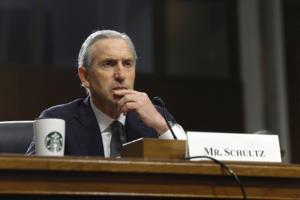
Editorial: Whatever his reasons, it's good Gov. JB Pritzker isn't joining other blue states on the tax-the-rich bandwagon
News broke earlier this week that Howard Schultz, the founder of Starbucks and a multibillionaire, is moving from his long-time home in Washington state to South Florida.
Schultz didn’t say the move was a response to Washington’s likely enactment soon of a 9.9% tax on income above $1 million, but the timing was hard to ignore. It’s become...Read more

James Stavridis: 3 targets for US boots on the ground in Iran
As President Donald Trump’s administration wrestles with options in the war with Iran, it continues to consider “boots on the ground.” While the Pentagon has been doing a good job with the massive air and sea assaults against Iranian targets, there are several dangerous missions that ultimately would require US troops within Iran’s ...Read more
Related Channels

ACLU
By The ACLU

Amy Goodman
By Amy Goodman

Armstrong Williams
By Armstrong Williams

Austin Bay
By Austin Bay

Ben Shapiro
By Ben Shapiro

Betsy McCaughey
By Betsy McCaughey

Bill Press
By Bill Press

Bonnie Jean Feldkamp
By Bonnie Jean Feldkamp

Cal Thomas
By Cal Thomas

Clarence Page
By Clarence Page

Danny Tyree
By Danny Tyree

David Harsanyi
By David Harsanyi

Debra Saunders
By Debra Saunders

Dennis Prager
By Dennis Prager

Dick Polman
By Dick Polman

Erick Erickson
By Erick Erickson

Froma Harrop
By Froma Harrop

Jacob Sullum
By Jacob Sullum

Jamie Stiehm
By Jamie Stiehm

Jeff Robbins
By Jeff Robbins

Jessica Johnson
By Jessica Johnson

Jim Hightower
By Jim Hightower

Joe Conason
By Joe Conason

John Stossel
By John Stossel

Josh Hammer
By Josh Hammer

Judge Andrew Napolitano
By Judge Andrew P. Napolitano

Laura Hollis
By Laura Hollis

Marc Munroe Dion
By Marc Munroe Dion

Michael Barone
By Michael Barone

Mona Charen
By Mona Charen

Rachel Marsden
By Rachel Marsden

Rich Lowry
By Rich Lowry

Robert B. Reich
By Robert B. Reich

Ruben Navarrett Jr
By Ruben Navarrett Jr.

Ruth Marcus
By Ruth Marcus

S.E. Cupp
By S.E. Cupp

Salena Zito
By Salena Zito

Star Parker
By Star Parker

Stephen Moore
By Stephen Moore

Susan Estrich
By Susan Estrich

Ted Rall
By Ted Rall

Terence P. Jeffrey
By Terence P. Jeffrey

Tim Graham
By Tim Graham

Tom Purcell
By Tom Purcell

Veronique de Rugy
By Veronique de Rugy

Victor Joecks
By Victor Joecks

Wayne Allyn Root
By Wayne Allyn Root
Comics