Editorial: How to lose public trust on data centers
Published in Op Eds
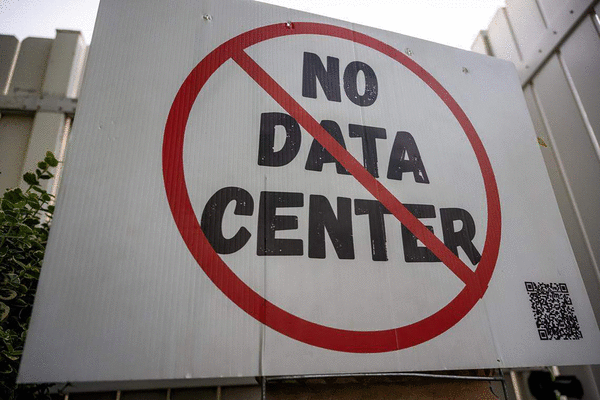
In St. Louis, as nationally, the debate over data centers is raging. We don’t presume to settle that debate here. But one axiom applies: Secrecy and behind-the-scenes political pressure around data center public policy decisions is a surefire way to lose whatever public support the growing industry has.
For months, city officials have wrestled with how to regulate large proposed data centers here. The city’s Planning and Urban Design Agency initially recommended relatively stringent restrictions. The Board of Aldermen, at the urging of the business community and others, voted last month for looser restrictions. Last week, the planning commission voted to reject the aldermen’s looser rules.
Then, in a remarkable and troubling bit of intrigue during that same meeting, an unnamed elected official texted the head of the planning commission, who then asked that the commissioners reconsider their decision.
The mysterious request came hours into the contentious meeting Wednesday — and after much of the public who had been attending the meeting virtually and in person had left.
Don Roe, the executive director of planning and urban design, ultimately recessed the chaotic meeting without revealing which elected official had contacted him. At this writing, he still hasn’t, though both Roe and Mayor Cara Spencer’s office say it wasn’t her.
The commission's recommendation for tighter data center rules currently stands. It will now fall to the Board of Aldermen to decide whether to override the commission and insist on looser rules.
As long as the identity of the elected official who tried to influence the commission’s decision remains undisclosed, any such override will invite opponents to cry foul.
Public opposition to industrial development is nothing new. From hog factories to fracking to wind farms, new large-scale technologies have always roiled neighbors, often with good reason.
Even within that historical backdrop, though, today’s controversy over data centers feels different — deeper and more visceral, based not only on proximity issues like pollution, power usage and noise but on broader anxieties about the ultimate product itself: artificial intelligence.
The proliferation of data centers across Missouri and the U.S. has drawn strong grassroots opposition and in some jurisdictions, including locally, moratoriums on their construction.
What has especially incensed many data center critics is the use of nondisclosure agreements between prospective data center projects and local political leaders to sidestep public opposition. While NDAs aren’t unheard of in the public sector, using them to fuzzy up the details of a topic of such intense public interest is arguably never appropriate.
For an elected official to quietly nudge an independent commission toward favorable data center policies, while enjoying public anonymity, isn’t the same as an NDA, but there’s a similar poison there.
On data center approval, perhaps even more than with most other public policy issues, utter transparency in every step of the process is crucial. If data center supporters want to overcome public opposition to siting these projects in St. Louis going forward, they must avoid any hint of untoward secrecy around policy creation.
_____
© 2026 the St. Louis Post-Dispatch. Visit www.stltoday.com. Distributed by Tribune Content Agency, LLC.




















































Comments