Marc Champion: The call for a Ukrainian election is compelling and wrong
Published in Op Eds
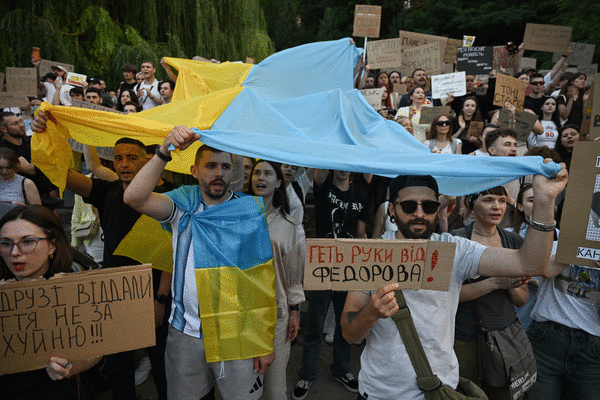
Mykhailo Fedorov is perhaps the standout political figure to have been forged in Ukraine by Russia’s invasion. He is smart, young, so far untouched by any corruption scandal and the force behind two transformations that have proved critical to his nation’s survival: drone warfare and digital government. Even so, his demand this week for wartime presidential elections was reckless and wrong.
Fedorov, whose July 15 sacking as defense minister prompted street protests, dropped a video address on Tuesday night that delivered as powerful an expression of what Ukrainians are fighting for as you could hope to see.
It’s worth watching what amounts to Fedorov’s nine-minute presidential campaign launch, because he distills what has driven so many Ukrainians to risk all in resisting not just Russian occupation, but also their own kleptocratic leaders when these have threatened the country’s democratic future.
Taken alone, almost every argument Fedorov makes is self-evidently true. Volodymyr Zelenskyy was elected president in 2019, so his five-year term expired two years ago, and democracy would be served by submitting him to the judgment of voters sooner rather than later. And although the constitution forbids holding a vote under martial law, Fedorov is right that the conflict with Russia could go on for years more, creating unavoidable issues of political accountability.
Other arguments are just as convincing. For example, that Russia should not be allowed to dictate when Ukraine holds elections. Or that Ukrainians are fighting because they want theirs to remain a free European state. Likewise, that “democracy is not a peacetime luxury,” and that in time of war, both corruption and the hiring and firing of critical personnel for reasons of loyalty, rather than merit, are unaffordable.
All of this is true and Zelenskyy has questions to answer on every count. That fact was underscored again on Wednesday morning, when anti-corruption investigators raided the home of his administration’s deputy head, Iryna Mudra. Nevertheless, when Fedorov says the complexities of holding a ballot in wartime can be addressed, or implies that holding elections would defy Moscow, he’s misguided and surely knows it.
Perhaps the longstanding logistical hurdles to holding a vote universal and reliable enough to command trust could be overcome. It’s possible that with enough preparation, the roughly 10 million Ukrainians who have been displaced could be given a fail-safe way to vote on the Diia (Action) app that Fedorov developed as minister for digital transformation, a post he held from 2019 until last year. Maybe getting tens of thousands of front-line soldiers to a reliable secret ballot is a problem that could be solved without risking their lives or Ukraine’s defense, too. Maybe.
But without extensive cooperation from Moscow, it is inconceivable that a safe and meaningful election could be held in areas that are within glide-bomb distance of the front. And now that Russia is firing near-daily barrages across the entirety of Ukraine and Kyiv has run out of interceptors to stop the most powerful ballistic missiles, just the thought of civilians gathering outside polling stations should be enough to end all discussion.
Moreover, holding a wartime vote would not defy Vladimir Putin. It would answer his prayers. Russia’s leader has been calling for Ukrainian elections for years. His goal is to sow doubts about Zelenskyy’s legitimacy as a negotiating partner, and to divide and destabilize the target of his invasion through the inevitable political polarization that such a vote would bring.
Ukraine cannot afford these distractions. It is about to face the most brutal winter of the war as a result of its lack of missile defenses. Preparing for that challenge must now be the focus of the nation and most Ukrainians understand this. There is no clamor for elections within Ukraine, only in the Kremlin and among the populist politicians and influencers of the West who like to parrot its propaganda.
Moreover, while Fedorov ranks high among Ukrainian politicians in terms of trust, he was added to regular voting-intention polls only in July and still has a distance to go before he could beat Zelenskyy.
All of this could change quickly with peace, after which the popularity of Ukraine’s wartime president is likely to plummet. That may explain why Zelenskyy has said that, as soon as a ceasefire is in place, he would call a presidential vote to run alongside a referendum on the settlement. This is a self-serving proposal, but abiding by the Ukrainian constitution and waiting for the bombs to stop before attempting a nationwide election is the only sane choice.
Zelenskyy made a mistake when he fired Fedorov. The younger man’s brief six-month tenure at defense was marked by improved battlefield performance, combined with high levels of friction over strategy with top Ukrainian commanders. He was offered a return to government with a vague new portfolio, but the damage was done.
The same wartime imperative that makes Fedorov’s call for elections so wrong also argues for Zelenskyy to find a way to bring him back into government, even at defense, putting his own political interests aside despite his rival’s now public presidential ambitions.
As long as the country is at war, it would be inexcusable not to. Fedorov has proved effective, innovative, untainted by scandal and trusted by the public. That combination is rare in Ukraine or, for that matter, anywhere else.
_____
This column reflects the personal views of the author and does not necessarily reflect the opinion of the editorial board or Bloomberg LP and its owners.
Marc Champion is a Bloomberg Opinion columnist covering Europe, Russia and the Middle East. He was previously Istanbul bureau chief for the Wall Street Journal.
_____
©2026 Bloomberg L.P. Visit bloomberg.com/opinion. Distributed by Tribune Content Agency, LLC.

















































Comments