POINT: Dynamic pricing is a consumer's best friend
Published in Op Eds
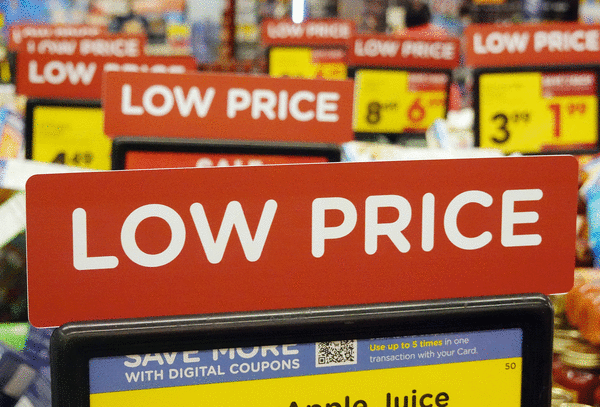
Price changes naturally occur in a competitive, free-market economy, as in the United States. Prices are the mechanism for allocating scarce resources, and they change constantly to reflect shifts in supply and demand.
The term “dynamic pricing,” as used in today’s sophisticated world, refers to the automatic, continuous adjustment of prices to reflect changes in conditions in real time. This can be the best friend for consumers and businesses.
Consider a grocery store and how it operates. When products are perishable, the grocer may end up disposing of unsold products at the end of the day. To clear out the products, the grocer may lower prices instead of throwing inventory away. The business benefits by realizing value from an otherwise wasted product, and consumers benefit from a lower price.
Similarly, an empty airline seat is instantly worthless when the plane leaves. The airline uses pricing to maximize revenue by filling empty seats at off-peak times and increasing prices during high-demand periods. Consumers can manage their costs based on their flexibility in timing their flights. If they must go at peak hours, they pay the price; if they are flexible, they can shop for the best prices.
Sometimes a dramatic upward price change can irritate consumers. An airline ticket that costs $500 today may cost $1,000 tomorrow (or vice versa). A taxi ride that usually costs $20 may cost twice as much during a storm or after a concert. A hotel room that was affordable last week may suddenly be out of reach this weekend.
When prices rise, we feel as if we are being unfairly taken advantage of. But it is a two-way street, and if we like the price reductions, then we must accept the increases as well. This makes businesses more efficient and can help keep prices lower overall, giving shoppers the ability to take advantage of prices when they go down.
Politicians often hear complaints but rarely hear compliments. Now, many are rushing to propose restrictions or even outright bans on so-called dynamic pricing. It is another example of the famous warning attributed to Ronald Reagan: “The nine most terrifying words in the English language are: I’m from the government, and I’m here to help.”
Consumers and businesses would be better served if government focused on protecting transparency and preventing fraud rather than dictating how companies set prices. Please, let businesses operate and compete as they see fit, if they are following the law.
Dynamic pricing tells consumers, businesses and producers what is happening and how they should respond. It is nothing more than supply-and-demand pricing in real time. The system is not working against them. In many cases, the ability to adjust prices is precisely what makes lower prices possible.
That does not mean every pricing practice should be considered acceptable. Fraud, deception, collusion and the misuse of sensitive personal information are legitimate concerns. Those problems are already addressed directly through existing consumer protection, privacy and antitrust laws. However, there is a major difference between stopping illegal conduct and banning a tool because it might be abused.
Competition is the guardrail for the consumer. If one company charges too much, a competitor has an incentive to offer a better deal. If a business develops a reputation for unfair pricing, consumers can take their business elsewhere. In a competitive marketplace, companies that consistently abuse their customers do not operate in a vacuum.
The government, in its infinite wisdom, might try to protect the consumer by freezing prices. That may sound appealing, especially when inflation has made Americans painfully aware of the cost of everyday goods and services. Prices that cannot adjust create shortages, waste and fewer choices. At the extreme, when the price is set below the production cost, the product disappears from the legal market and can only be bought on a competitive “black market.”
Consumers do not need protection from the basic economic forces that help the market function. Sometimes the price goes up. Sometimes it goes down. The freedom to do both is precisely what makes the market work.
____
ABOUT THE WRITER
Les Rubin is the founder and president of Main Street Economics. He wrote this InsideSources.com.
___
©2026 Tribune Content Agency, LLC



















































Comments