Commentary: Therapy isn't the only help. Peers offer a different kind of support
Published in Op Eds
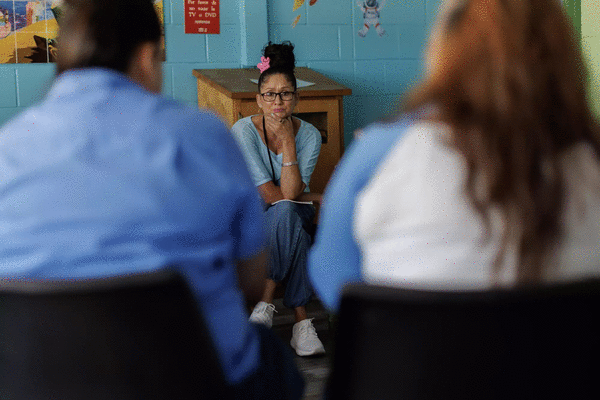
Californians seem to be talking about mental health more openly than ever before. But as the conversation grows, the support available hasn’t kept pace with the need. Therapy remains inaccessible for millions — because they often can’t afford it, can’t find it or can’t overcome the cultural and logistical barriers that stand in the way.
The Los Angeles Times published a series last year on the mental health challenges within L.A.’s Thai community. One line stayed with me: “They come in with their silence.” Silence — not because people don’t struggle, but because stigma, cost and limited access make help feel out of reach. That story isn’t unique to one community. It reflects a truth across Los Angeles: Many Angelenos suffering with anxiety, loneliness, grief or stress simply don’t have a place to go.
I know this personally. A few years ago, after the sudden death of my father, I searched for emotional support that felt human, grounding and accessible. What I found instead were long waitlists and therapy costs ranging from $150 to $350 per session — a financial barrier even for those with resources. I didn’t need a diagnosis. I needed connection. But the system treated connection as a luxury.
California’s mental-health crisis is often explained in part by citing the shortage of clinicians, and that shortage is real. But an equally urgent issue is that our public conversation overlooks the spaces to which people already turn for support when therapy isn’t available — community and peers.
Peer support is not therapy. It isn’t meant to be. But for countless Californians facing chronic stress, burnout or isolation, peer support may be the only form of emotional care they can realistically access.
Intentional spaces for peer support can draw people navigating all kinds of experiences: caregivers overwhelmed by responsibility, LGBTQ+ youth coping with hostility and identity stress, and adults of all ages quietly battling loneliness. These spaces bring in people who aren’t in crisis but aren’t OK. They’re not candidates for emergency services, yet they’re struggling in ways that traditional therapy can’t absorb, especially when demand is outpacing supply.
Some mental health professionals worry peer support could delay people from seeking clinical care when they actually need it. That’s a legitimate concern — and one worth taking seriously. But more often, peer support operates upstream, before someone reaches crisis. It doesn’t divert people from therapy; it reaches people therapy was never going to reach in the first place. Everyday emotional strain, grief and uncertainty don’t always require clinical intervention. Sometimes they simply require a compassionate ear.
Peer-led groups allow people to speak before they reach crisis. I’ve seen people enter tense, overwhelmed or shut down and leave feeling grounded, lighter and more connected. That effect is not incidental. It’s the result of giving people what many are missing in their lives: presence, community, consistent emotional practice.
California does not need just one solution to its mental health crisis. It needs many. Yes, we need more licensed therapists, psychiatrists and community clinics. But we also need low-cost, scalable, culturally flexible support systems — especially for communities underserved by conventional care.
Peer-support programs are uniquely suited to meet that moment. They reduce pressure on the clinical system, help people build emotional resilience earlier and increase access for those navigating stigma, financial barriers or cultural expectations that discourage “professional help.”
Los Angeles is especially well positioned to lead this shift. Ours is a city that creates movements — from activism to culture to wellness. Community-driven mental health models belong in recreation centers, college campuses, libraries, LGBTQ+ spaces and neighborhoods where people may never walk into a therapist’s office.
Therapy cannot, and was never intended to, hold the entire weight of California’s emotional well-being. Peer support also isn’t the whole solution. But it is part of the answer, and it is a support that we can give people now — without cost, without waitlists, without stigma.
Those people who come in with their silence need a place to break it.
____
Bo Lopker is the founder of Totem, an L.A. nonprofit that creates free, peer-led emotional-wellness spaces online and in person.
©2026 Los Angeles Times. Visit at latimes.com. Distributed by Tribune Content Agency, LLC.





















































Comments