Editorial: The millionaire's tax will tempt many Illinoisans. Here's why it is a terrible idea as written
Published in Op Eds

Voters love to pass tax burdens on to someone other than themselves, especially voters who are struggling under the high property tax burden we face in Illinois.
And since most of us make less than $1 million a year, we think many will be tempted to vote for a so-called millionaire’s tax on the Prairie State’s fortunate seven-figure earners, assuming it emerges from Springfield and makes it to the ballot in the fall.
But, especially as written, it is a terrible idea.
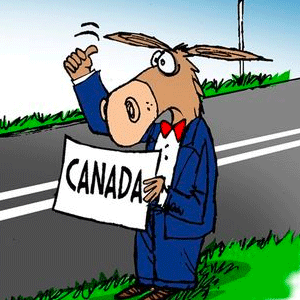
Let’s start with the issue of competitiveness. As we’ve noted many times, high earners have high mobility and, while those in politics might talk a different game, many of them are highly likely to skedaddle when someone comes after their money.
If Illinois imposes a 3% surcharge on income above $1 million, the state’s top marginal income tax rate would rise to 7.95% — above neighboring Michigan’s 4.25%, Indiana’s 3%, Iowa’s 3.8% and even Wisconsin’s top rate of 7.65%.
A top marginal rate of 7.95% on income above $1 million, as hawked by Springfield Democrats, would put Illinois in the top 10 U.S. states for marginal income tax rates. Even New York state, hardly a tax haven, would only tax this level of income at a graduated rate of 6.85%.
Granted, that state’s top marginal rate is still much higher, and New York City’s tax would add to that burden, but lots of attractive locales in the nearby Hudson Valley would not. And, of course, the competitive likes of Florida and Tennessee are among the eight U.S. states with no state income tax at all.
Much in the way of details is left unknown, and we don’t think it’s right to ask voters to weigh in without all the information. If this millionaire’s tax gets approved at the ballot, the legislature will still have to sort out implementation and enforcement.
We don’t know, for example, how a millionaire’s tax would treat married couples filing federal taxes jointly, so it’s possible this surtax could become a half-millionaire tax, unless said couples decided instead to file separately, adding to the complexity of their tax day and raising other liabilities.
We also don’t know whether this tax would include any kind of indexation for inflation. While a million-dollar income might seem like a lot today (indeed, it is a lot), a few years of high inflation will whittle that threshold down in real terms, and we’ll wager that by then the state will have gotten used to the extra money. Not long ago, what’s now a $30 pasta entree was 15 bucks at your neighborhood joint; things can change fast.
It’s hard to justify asking voters to approve a constitutional amendment like this when so many core details are left undefined.
Here’s another important detail: This new surtax on individuals would also clobber small business owners who “pass-through” their business income to their individual tax returns and who likely would be walloped by a combined top tax rate north of 50%, disincentivizing our state’s leading job creators.
Similarly, it would hit Illinoisans who have a one-time windfall or sell a business upon their retirement, or even a house they have been in for years and hope to have the proceeds to pay for long-term care. If you are lucky enough to do so, you’d end up sending a check big enough, surely, for some to consider a move to Nashville. At least for a year.
We’d also note that here is yet another Illinois tax aimed at high earners that could ripple outward through small businesses, investment decisions and migration, likely to be shrewdly dodged by the loophole-savvy multimillionaire class who are adept at showing on their tax returns far less income than they actually make.
Then there’s the question of what the state would do with the money, which is vague, to say the least. At least beyond the blanket statements that half of it would go for property tax relief and half to fund public schools.
We’re all for some property tax relief, but how would that be apportioned, exactly? And what scale of relief are we talking about? And where is the evidence that the problems with our public schools, especially in the city of Chicago, are issues that throwing more money at the issue could solve? Where is the data showing a tight correlation between budgets and test scores, or other markers of educational achievement? Where is the assurance that Chicago Public Schools would show greater fiscal responsibility, especially when it comes to mostly empty schools? How do we know they won’t just ask again for the maximum possible increase in the money flowing their way from our property tax bills, on top of this new state money? Without specifics, this feels like an overly broad and, likely, empty promise.
It’s also worth noting that the bill says the new money will be apportioned on a per pupil basis, as distinct from other forms of need, so it could well be that Chicago would do badly in however all of this shakes out. At a minimum, voters deserve to know how all this new money would be spent.
We’ve nothing against amending the constitution when it is the will of the people (a good case can be made for doing the same apropos of state pensions), and it appears that a further amendment would be needed to build further on a graduated tax — but there’s no question that this will open the door to Illinois raising the tax for those who make much less, potentially driving away not just the truly wealthy but the upper-middle-class. The people who employ people.
Is there an argument for this tax? Here are the circumstances where we’d allow for some room for debate. Any surtax should be more modest (a jump from 4.95% to 7.95% is egregious, uncompetitive and too risky), there should be an accommodation for married couples filing their taxes jointly, the income threshold should be indexed for inflation (as in most other states with graduated tax rates), thought should be given for single-year exemptions, and above all, precisely how any revenue raised will be spent should be crystal clear with reducing property tax as the priority, thus lessening the impact on the overall tax burden for all Illinoisans. As of now, there is no lockbox preventing the diversion of this revenue to … whatever for however long the politicians desire.
But the biggest sticking point is that such a tax hike must be paired with a plan for the state to reduce its waste and overall spending, not just soak its citizens for what could be an additional $3 billion in taxpayers’ money for Springfield Democrats to spend at will.
Without all of that? That’s a hard no here.
_____
___
©2026 Chicago Tribune. Visit chicagotribune.com. Distributed by Tribune Content Agency, LLC. ©2026 Chicago Tribune. Visit at chicagotribune.com. Distributed by Tribune Content Agency, LLC.




















































Comments