Editorial: Climate migration could be a big boost for Chicago
Published in Op Eds
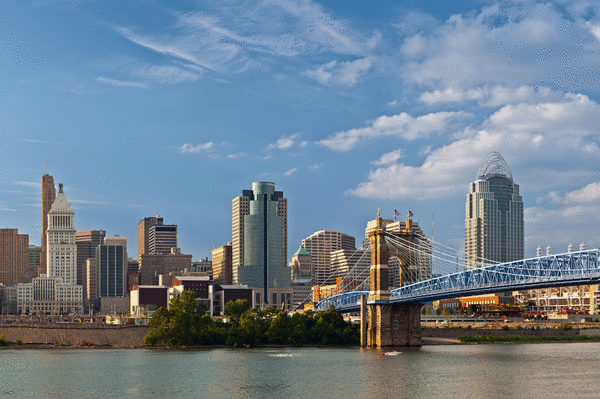
Cincinnati is known for its chili, ice cream and devoted sports fans. But these days, the Queen City is banking on other assets to secure its future, and we think Chicago should be paying attention.
Cincinnati sits on the banks of the Ohio River, which (along with an underground aquifer) provides it with ample fresh water. Its location in the central Midwest puts it at a low risk for natural disasters that beset coastal areas, like floods and hurricanes. It also has remained relatively affordable, with housing costs below the national average for comparable areas.
Earlier this year, city officials took stock of those attributes and published a blueprint for absorbing up to 525,000 newcomers by 2050. While we’re fans of Cincinnati’s charm, that would be a huge increase for a metro area of 2.3 million that has grown at a modest pace to date.
So who, exactly, are all these people the city expects to be knocking on its doors?
Climate migrants.
In its recently published Climate Migration Readiness Plan, Cincinnati lays out a long-term strategy to attract newcomers whose homes elsewhere become unaffordable or simply unlivable as (the city believes) sea levels rise, storms intensify and peak temperatures soar.
Planning for a mass migration due to climate change is a tad speculative. The calamities that Cincinnati anticipates for the Miamis and Houstons may never come to pass or may be many decades further down the pike than the Ohio city thinks. Or not. It’s also possible that other calamities could undermine the city’s status as a climate haven. Nothing like a big, deep breath of Canadian wildfire smoke to remind everyone that climate change knows no borders.
Yet Cincinnati is not alone in anticipating a future where climate refugees come calling. Also touted as potential climate havens: Snowy Buffalo, on the banks of Lake Erie, and Duluth, on Lake Superior, nicknamed the “Air-Conditioned City” for its cool summers.
Why not Chicago, too? We’ve got Lake Michigan for fresh water, a diverse economy capable of absorbing many more people, plenty of room within city boundaries and a central location far removed from the hurricane belt.
Chicago should be thinking ahead in a similar vein to those other northern cities, mainly because the plans make sense no matter what the climate brings. As it turns out, the key to making a Midwest city attractive to climate migrants involves doing some of the same things that would make a city attractive to anyone thinking about moving in. Whatever the weather.
Cincinnati’s so-called Readiness Plan, for instance, recommends changing zoning rules to allow for denser residential construction that would head off housing shortages. Chicago desperately needs that, too, as this page has often said.
The Cincinnati plan also calls for investing in infrastructure to support growth. That’s another of this page’s familiar priorities, and the plan goes on to list several others: Upgrade public transit. Attract new business. Go green where it makes sense to build resilience.
No one needs to believe a climate doomsday is imminent to see the benefits of a long-term plan with those goals. We would emphasize the need for more efficient and frugal government and tax relief as well, knowing that Illinois’ public corruption and high taxes deter in-migration.
For years now, Chicago has been losing ground in the race for population growth. Between 2020 and 2025, Illinois’ population declined by a fraction, according to the U.S. Census Bureau, while Texas and Florida posted 9% gains over the same period.
The COVID-19 pandemic skewed those results, but the movement of Americans from Northern cities to the Sun Belt is nothing new. Every year, for example, financially secure Illinoisians retire to Arizona’s Maricopa County. That Chicago-to-Phoenix pipeline remains active today, as the desert city continues to grow in part by luring productive citizens that Illinois can ill afford to lose.
Yet climate change is coming to this retirement hot spot. Summers in Phoenix have gotten hotter and hotter, threatening the health of its many older residents. There’s no Lake Michigan to cool things off, and fresh water in Arizona is at a premium.
On July 31, the federal government floated a plan requiring Arizona, California and Nevada to reduce their use of Colorado River water by up to 20% over the next two years — a huge cut that stands to disrupt agriculture and other economic pillars in those states. Additional cuts are expected over the next decade to replenish this critical source of fresh water and hydroelectric power.
So, give thanks for sparkling Lake Michigan, and don’t be so quick to curse those frigid Chicago winters. That natural air-conditioning could help Illinois turn the tables on the Sun Belt and maybe sooner than you think.
_____
©2026 Chicago Tribune. Visit chicagotribune.com. Distributed by Tribune Content Agency, LLC.





















































Comments