Editorial: More Americans are saying no to alcohol. So, too, is new federal guidance
Published in Op Eds
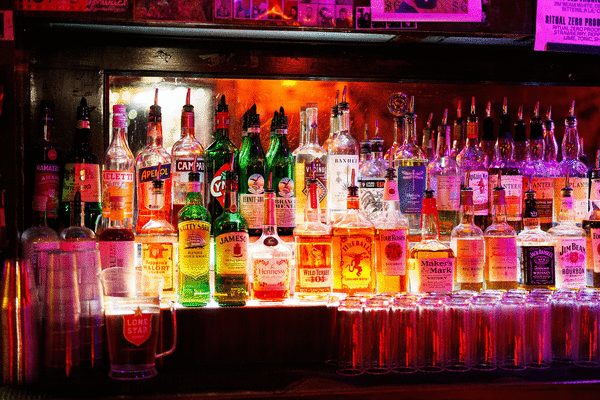
American drinking habits are changing.
Nearly half of American adults say they don’t touch alcohol, according to a 2025 Gallup survey. At 54%, the share of the population that drinks has reached its lowest level since the survey started in 1939.
Earlier this year, federal officials replaced the longstanding recommendation that adults limit themselves to no more than one drink a day for women and two for men with broader advice encouraging Americans to drink less. Critics, including many public health experts, argue that removing the specific limits makes the guidance less useful and reflects industry influence.
Some doctors and other health experts say this watered-down advice will be less effective in alerting the public to alcohol’s increasingly well-documented hazards. But perhaps folks are already getting the point, given Americans were already drinking less before the new guidance was issued.
Why the retreat from the bottle? Health concerns no doubt play a role. Alcohol has been linked to breast, bowel and liver cancers, among others, in addition to being bad for the brain and cardiovascular systems. Plenty of folks who have become dependent on the stuff can tell you it can ruin your life, and drunken driving causes mayhem on the roads. No amount of alcohol is “good for you.”
Another factor in reduced consumption? Sticker shock. As the number of regular drinkers has declined, brewers, wineries and distillers have raised prices to maintain profits. Chicago’s upscale restaurants and bars, meantime, routinely charge 8 or 9 bucks for a beer, $15 for wine and $20-plus for cocktails. Talk about an affordability crisis.
Nonalcoholic beer and mocktails are catching on, too. Products like Michelob Ultra Zero and Heineken 0.0 have become big sellers, and Athletic Brewing Co. sells zero-proof beer that we think tastes as good as intoxicating versions. The rise of THC drinks has also diversified recreational drinking habits.
In 2024, Chicago-based Kava Haven launched a line of alcohol-free adult beverages using a South Pacific plant known for its relaxing properties. “People are drinking less, but they’re still looking for a feeling,” co-founder Grace Manwaring told us. “People want to feel something, not nothing. I liken it to a strong herb tea.”
This page is always skeptical when a nanny-state government tries to meddle in people’s lives. Adults can make sound decisions about their health when presented with the facts.
Whatever role government guidance plays, Americans appear to have reached a conclusion of their own. They’re drinking less, embracing alcohol-free alternatives and treating alcohol more like cigarettes than a harmless indulgence.
Washington should make sure its advice reflects the best available science, but it shouldn’t underestimate the public’s ability to recognize changing evidence and act accordingly.
_____
©2026 Chicago Tribune. Visit chicagotribune.com. Distributed by Tribune Content Agency, LLC.





















































Comments