Editorial: College sports are a mess. Can Congress help?
Published in Op Eds
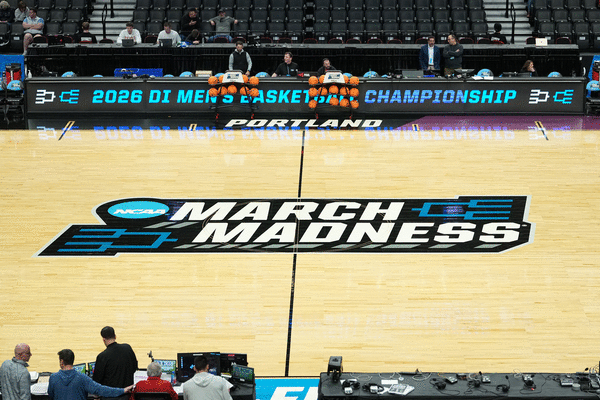
College sports have long been influenced by money.
These days, commercial gain appears to be the point. Some athletes are playing at a different school every season. Others are betting on their own games. Eligibility has become so loosely defined — and potential compensation so generous — that some professionals are trying to play for college teams.
Many have expressed dissatisfaction with this arrangement, including courts, lawmakers, college administrators, educators, fans and (not least) many student-athletes themselves. Exactly what should replace it is harder to say.
The National Collegiate Athletic Association was founded in 1906 to establish safety standards for football. Over time, it evolved into a sprawling regulatory body, composed of member colleges. This group didn’t agree on much but settled on a central premise: that college athletes shouldn’t get paid.
Amateurism is a worthy principle and worth defending. College sports give players access to elite training and competition, foster virtues such as grit and self-confidence that are rewarded in the workforce, and nurture school traditions — to say nothing of the degrees awarded at the end. For most of the nation’s half-a-million student-athletes, these dividends justly compensate the intense commitment.
For the small fraction of athletes on revenue-generating teams, however, the arrangement has been fraught. As college sports mutated into a multibillion-dollar enterprise, universities, coaches, athletic directors, conferences and TV partners all profited handsomely, while the athletes creating most of the value made do with scholarships and other limited benefits. Meanwhile, rich alumni tried to lure star players with under-the-table perks. This created the worst of all worlds: It exposed “amateurism” as a polite fiction yet failed to compensate top athletes at fair market value.
As a result, the system faced ever-growing pressure. Lawsuits proliferated, many of them successfully challenging the NCAA under antitrust laws, which prevent competitors (colleges, in this case) from colluding to suppress wages. Further complicating matters, states started passing laws, overriding NCAA rules, that allowed athletes to profit from the commercial use of their “name, image and likeness,” or NIL.
In 2021, the Supreme Court ruled that the NCAA’s limits on certain “education-related benefits” were unlawful. Although the court considered only a narrow subset of compensation rules, the implication was clear: The days of amateurism were numbered. “The NCAA’s business model,” Justice Brett Kavanaugh wrote, “would be flatly illegal in almost any other industry in America.”
It didn’t take long for other courts to agree. Last year, a federal judge approved a landmark class-action agreement between athletes and the NCAA that, among other things, allowed colleges to directly pay athletes up to a cap for the first time.
Yet many issues remained unresolved. To what extent are athletes subject to labor and employment law? What will happen to women’s and Olympic sports — long subsidized by football and basketball — when so much revenue is diverted to paying star players? And, critically, can the NCAA enforce basic rules without getting sued?The NCAA has appealed to Congress for help. Although lawmakers have good reason to be skeptical of antitrust exemptions, preventing college sports from morphing into a minor league warrants prudent intervention.
To that end, the focus should be on a few narrowly executed goals. Congress should preempt conflicting state NIL laws and clarify the legal status of athletes. It should offer limited immunity for the NCAA on issues it is well-equipped to regulate, including rules of play, academic standards, athlete welfare, eligibility, and transfer rules. It should also specify how the revenue-sharing system will be administered going forward. Finally, the exemption should be conditioned on establishing reasonable protections for non-revenue sports.
No doubt, this would be an imperfect solution. It risks rewarding the NCAA for decades of poor decisions and protecting entrenched interests. But it would set clear rules, help stabilize finances, impose order on chaos, and preserve much of what Americans love about college sports. It may be the best of bad options.
____
The Editorial Board publishes the views of the editors across a range of national and global affairs.
©2026 Bloomberg L.P. Visit bloomberg.com/opinion. Distributed by Tribune Content Agency, LLC.
















































Comments