Politics
/ArcaMax

Editorial: Governments can't take their resilience for granted
Somewhat unexpectedly, the global economy has weathered the challenges of the past few years extraordinarily well. Following the pandemic, shock followed shock — Russia’s war on Ukraine, Washington’s rejection of rule-based liberal trade, then most recently the war with Iran. Any one of these might’ve led you to expect a severe economic ...Read more
Editorial: Pandering to Vladimir Putin won't bring peace to Ukraine
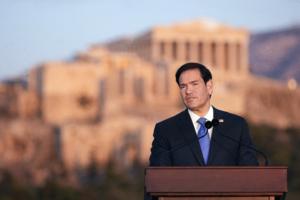
Speaking near the Acropolis earlier this month, Secretary of State Marco Rubio praised the ancient Athenians who heroically repelled Persian invaders. The administration he serves is treating Ukraine’s resistance very differently.
In hopes of lowering prices before the November midterms, the White House recently struck a deal easing sanctions...Read more
Commentary: Muslims have always had to prove our Americanness. Enter Abdul El-Sayed
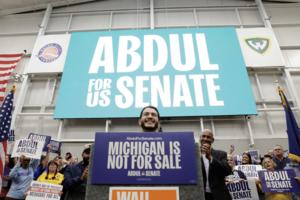
Michigan’s Democratic candidate for the U.S. Senate, Abdul El-Sayed, is many things to many people.
He represents change, part of a new generation of outspoken leaders who aren’t afraid to challenge the status quo.
He represents possibility: As the son of Egyptian immigrants, his trajectory is the American dream realized.
And he ...Read more
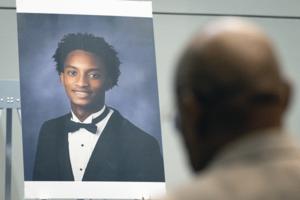
LZ Granderson: No magic words will cure the racism that festers in America
Martin Luther King III and his wife, Andrea Waters King, were in Georgia when they learned about the July death of Nolan Wells, who authorities in Mississippi said drowned even though no water was found in his throat, lungs or stomach.
"We were getting our daughter prepared for college when he died," Waters King said about Wells. "The news just...Read more
Commentary: Faith's work will outlast the ballot
After the midterm elections, people will still need groceries. A parent will still weigh the cost of a prescription against the rent. A child will still enter a classroom carrying burdens no backpack should hold. Whatever the electoral map looks like, faith communities will wake to neighbors who need more than a winning party's promises.
The ...Read more
Commentary: Americans have more in common than we think. That's not enough
Americans have more in common than our political conversation suggests.
That is the encouraging conclusion of political scientists Stephen Ansolabehere and Brian Schaffner, writing recently in The New York Times. Their evidence comes from two decades of surveys of more than 700,000 Americans.
Asked to name the most important thing that ...Read more
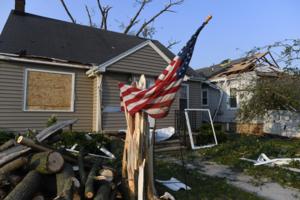
Mark Gongloff: Why your home insurance costs more than your property tax
An annoying, persistent myth of climate discourse is the idea that trying to stop the planet from becoming a charred hellscape is antithetical to the affordability of life’s basic needs. Have you seen charred hellscapes? They tend to be short on the essentials, and shortages usually make things more expensive.
Consider housing. Home ...Read more
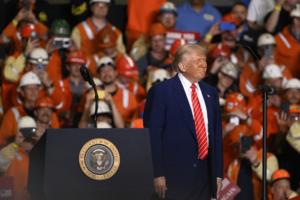
Commentary: There's nothing special about factory jobs
If there’s one thing on which American politicians can agree, it’s that U.S. factory jobs are special. And with midterm elections approaching, the number of people working in manufacturing has become the scoreboard for President Donald Trump’s trade and industrial policies: Democrats point to 35,000 jobs lost since Trump took office in ...Read more
Commentary: Becerra's plan for free midday electricity would be a leap forward
Gubernatorial candidate Xavier Becerra has called the clean-energy transition “necessary and urgent” and has promised to make lowering power bills the center of his energy policy — which is key to electrifying everything.
That wasn’t always clear. During the primary, Becerra, a Democrat, was criticized for a lack of ambition on climate,...Read more
Editorial: The 'abundance agenda' and permitting reform
Many Democrats now advocate for an “abundance agenda,” which loosely holds that the party should be in the business of providing “vital goods” such as housing and infrastructure, rather than working to block or burden important projects on environmental or other grounds.
The new approach follows the 2025 book “Abundance” by Ezra ...Read more
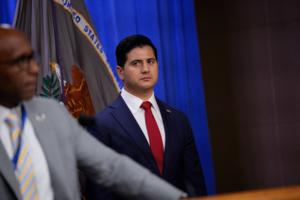
Gustavo Arellano: In Trumpworld, dogs who commit voter fraud aren't as bad as immigrants
LOS ANGELES — When federal prosecutors charged 28 California immigrants with illegally registering to vote, they invited friendly media outlets to document the early morning arrest of one suspect.
At a news conference in Los Angeles this week, First Assistant U.S. Attorney Bill Essayli intoned that the defendants' alleged crimes proved ...Read more
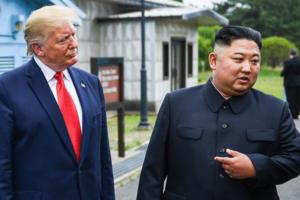
Ruth Pollard: Why everyone wants to meet with Kim Jong Un
Kim Jong Un might be the world’s most in-demand leader. President Donald Trump wants to meet him during a visit to Asia next month. So, too, does South Korean President Lee Jae Myung and Japan’s Prime Minister Sanae Takaichi. He stood shoulder-to-shoulder with Xi Jinping and Vladimir Putin at a giant military parade in Beijing last year, and...Read more

Marc Champion: Is Israel strong enough to go it alone?
It is a tragedy for Israelis and Palestinians alike that the state of Israel happens to be home to two extraordinarily charismatic populist politicians. The first is Prime Minister Benjamin Netanyahu. The second is his national security minister, Itamar Ben Gvir.
The word tragedy is cheapened by misuse, but in this case it fits — not only ...Read more
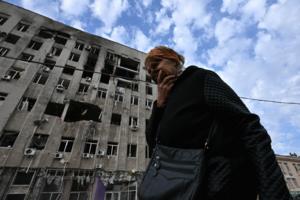
Commentary: Donald Trump's actions against Ukraine betray Ronald Reagan
Ukrainian President Volodymyr Zelenskyy holds the toughest job on the planet. And it just got tougher. Donald Trump has made a cottage industry out of offering Russian President Vladimir Putin strategic advantages in his assault on the people of Ukraine. Just recently, he lifted the sanctions on Russia that the late U.S. Sen. Lindsey Graham ...Read more
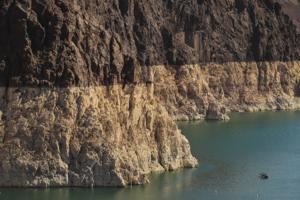
Michael Hiltzik: The Arizona-Nevada-California water war is heating up, and all three states will end up parched
No one interested in pondering what looks like an intractably difficult conflict need turn their attention to Iran or Israel. We have one much closer to home. It's the riddle of how to divide up the ever-dwindling supply of water from the Colorado River.
Seven Western states depend on that water impounded by Hoover Dam at Lake Mead, with ...Read more
Jackie Calmes: If you zoom out, Trump's utter failure is even more embarrassing
Being far from the United States for a couple weeks, scanning news from home for just minutes daily over morning coffee, gave me a new appreciation for the metaphors about the clarifying view from 38,000 feet or seeing the forest and not just trees.
President Donald Trump is perhaps best viewed at such distance. If anything, the big picture is ...Read more
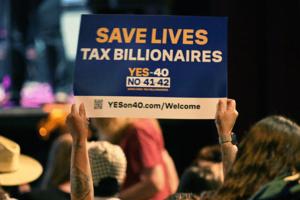
Editorial: The wealth tax: Where did all the money go?
Shocker alert: A new study concludes that California’s latest soak-the-rich tax proposal could result in a loss of revenue. Hard to believe.
California voters in November will decide on Proposition 40, a supposed “one-time” 5 percent net worth on the assets of billionaires. The rest of the nation — including Nevada — should pay close ...Read more
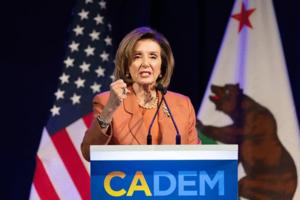
Mark Z. Barabak: With a foot out the door, Nancy Pelosi tries one last flex
SAN FRANCISCO — Nancy Pelosi is, beyond doubt, a figure who will long endure, her name forever pressed into the pages of the nation’s history books.
She is the first — and, so far, only — woman to wield the gavel as speaker of the House. She was indispensable to passage of the Affordable Care Act, better known as Obamacare. Working ...Read more
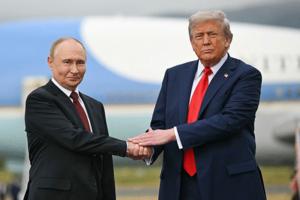
Trudy Rubin: Trump's open alliance with Putin betrays the US and helps Russia kill Ukrainians
While voters are rightly aggrieved over Donald Trump’s war of choice in Iran, they need to recognize that the president is ready to inflict an even greater foreign policy disaster on our country.
This week, the president openly aligned the American government with Russia against the democracies of Europe, including Ukraine.
Having dropped ...Read more
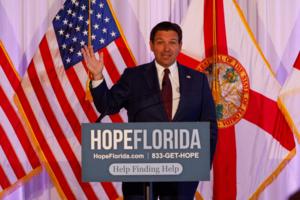
Editorial: Hoping for justice in Hope Florida scandal
A state appeals court has expunged an entire critical grand jury report on Hope Florida, as if it never happened. The only person we can see celebrating this is Gov. Ron DeSantis, who claims complete vindication.
As politicians scramble to cover their tracks, this odious coverup gives voters another reason why a central figure in the mess, ...Read more
Related Channels

ACLU
By The ACLU

Amy Goodman
By Amy Goodman

Armstrong Williams
By Armstrong Williams

Austin Bay
By Austin Bay

Betsy McCaughey
By Betsy McCaughey

Bill Press
By Bill Press

Bonnie Jean Feldkamp
By Bonnie Jean Feldkamp

Cal Thomas
By Cal Thomas

Clarence Page
By Clarence Page

Danny Tyree
By Danny Tyree

David Harsanyi
By David Harsanyi

Dick Polman
By Dick Polman

Erick Erickson
By Erick Erickson

Froma Harrop
By Froma Harrop

Jacob Sullum
By Jacob Sullum

Jamie Stiehm
By Jamie Stiehm

Jeff Robbins
By Jeff Robbins

Jessica Johnson
By Jessica Johnson

Jim Hightower
By Jim Hightower

Joe Conason
By Joe Conason

John Stossel
By John Stossel

Josh Hammer
By Josh Hammer

Judge Andrew Napolitano
By Judge Andrew P. Napolitano

Laura Hollis
By Laura Hollis

Marc Munroe Dion
By Marc Munroe Dion

Michael Barone
By Michael Barone

Mona Charen
By Mona Charen

Rachel Marsden
By Rachel Marsden

Rich Lowry
By Rich Lowry

Robert B. Reich
By Robert B. Reich

Ruben Navarrett Jr
By Ruben Navarrett Jr.

Ruth Marcus
By Ruth Marcus

S.E. Cupp
By S.E. Cupp

Salena Zito
By Salena Zito

Star Parker
By Star Parker

Stephen Moore
By Stephen Moore

Susan Estrich
By Susan Estrich

Ted Rall
By Ted Rall

Terence P. Jeffrey
By Terence P. Jeffrey

Tim Graham
By Tim Graham

Tom Purcell
By Tom Purcell

Veronique de Rugy
By Veronique de Rugy

Victor Joecks
By Victor Joecks

Wayne Allyn Root
By Wayne Allyn Root
Comics