Editorial: Pandering to Vladimir Putin won't bring peace to Ukraine
Published in Op Eds
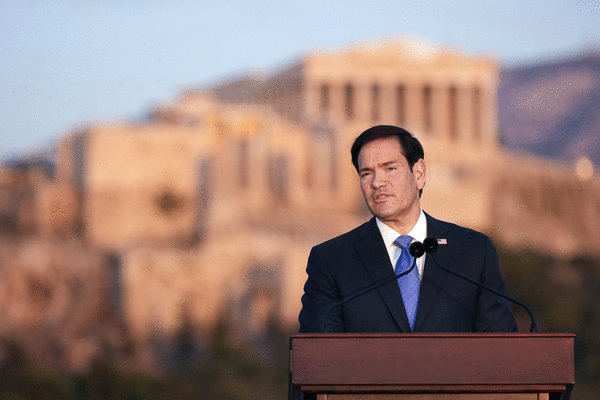
Speaking near the Acropolis earlier this month, Secretary of State Marco Rubio praised the ancient Athenians who heroically repelled Persian invaders. The administration he serves is treating Ukraine’s resistance very differently.
In hopes of lowering prices before the November midterms, the White House recently struck a deal easing sanctions on Russian diesel and demanded that Ukraine stop striking Russian refineries. Two days before provisions of the recently passed Graham Act were due to take effect, the president waived broad sanctions and tariffs targeting Russia and buyers of its oil and gas. He also suggested Ukrainians “get a new president.”
Beyond easing pressure on the Kremlin, the administration also reportedly threatened to withhold intelligence sharing with Ukraine and end a scheme that lets Europe buy American weapons to send to the embattled country. The mysterious throttling of Starshield, SpaceX’s military satellite service, suggests the threats were not idle.
For several days, slower satellite speeds crippled Ukraine’s ability to defend against jet-powered drones and conduct midrange strikes in Russian-occupied territory. U.S. missile warnings also went silent on several nights, depriving civilians of critical minutes to reach shelters. (Rubio has blamed the lapses on technical glitches.)
Ukraine is nearly out of the Patriot interceptors needed to defend itself. European purchases of American weapons account for 95% of the interceptors Ukraine receives, along with ammunition its air force needs to shoot down drones. The U.S. has reportedly slowed deliveries of those purchases, as well as transfers from friendly-country stocks.
And what has the U.S. gained in return? Not cheap fuel. The promised Russian supplies are far too small to offset a squeeze driven largely by the war in Iran.
Nor have the concessions produced the (lopsided) “energy truce” the White House declared. Ukraine held its fire for three days while Russia answered with 39 ballistic missiles, cutting power to over 600,000 Ukrainians. Russian strikes have all but shut Odesa’s grain ports.
This is not the moment to ease up on Russian President Vladimir Putin. Russia is now losing more men — an estimated 30,000 per month — than it can recruit. Ukraine’s drones and battlefield innovations have helped it roll back Russian advances in the east. Economic pressure on the Kremlin is mounting as the war commands ever-greater resources.
Russian officials say they’re willing to restart three-way talks with the U.S. and Ukraine early next month. A ceasefire on energy infrastructure, something Ukrainian President Volodymyr Zelenskyy has repeatedly suggested, remains a worthy goal. Russian compliance would be a test of whether further agreements are possible.
If Putin stonewalls again, however, the U.S. should pressure Russia, not the victim of its aggression. Congressional leverage will be critical, given the administration’s reluctance to antagonize the Russian leader. A bipartisan group of senators has already called the diesel deal “a gift to our adversary.”
While the Graham Act allows for waivers, Congress should scrutinize the justification — and look more closely at who ordered the Starshield slowdown. Lawmakers should use this year’s defense bill to protect intelligence sharing and European-funded arms deliveries. Some legislators have proposed extending Starshield access into Russia so Ukraine can target launch sites and storage facilities for jet-powered drones and ballistic missiles instead of refineries. Doing so would send a clear message to the Kremlin.
Europe also needs to find more ways to compensate for declining U.S. support. The urgent task is to get more Patriot interceptors and other air defenses to Ukraine before winter, whether by buying them from the U.S. or transferring existing stocks. The bloc should also fund more Ukrainian drone production and secure the scarce components needed to build Ukrainian missiles and interceptors. To finance Ukraine’s defense and reconstruction, Europe will need more joint borrowing or another look at how Russia’s frozen central bank assets can be exploited.
The stakes extend beyond Ukraine. Every ally relying on U.S. weapons and technology must now ask whether that dependence could be used against it. Adversaries may conclude that America’s friends, and interests, can be traded for diesel.
In Athens, Rubio warned the West against losing “the fire of passion, strength, courage, pride” — what the Greeks called thumos. He’d find plenty in Ukraine; it’s Washington that’s wavering.
____
The Editorial Board publishes the views of the editors across a range of national and global affairs.
©2026 Bloomberg L.P. Visit bloomberg.com/opinion. Distributed by Tribune Content Agency, LLC.


















































Comments