Ruth Pollard: Why everyone wants to meet with Kim Jong Un
Published in Op Eds
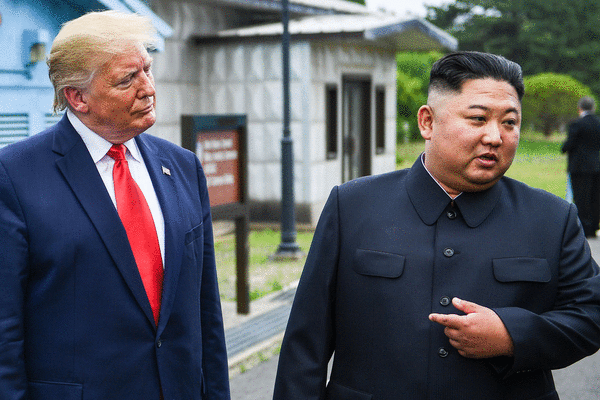
Kim Jong Un might be the world’s most in-demand leader. President Donald Trump wants to meet him during a visit to Asia next month. So, too, does South Korean President Lee Jae Myung and Japan’s Prime Minister Sanae Takaichi. He stood shoulder-to-shoulder with Xi Jinping and Vladimir Putin at a giant military parade in Beijing last year, and has an outstanding invitation to visit Russia.
It’s not just the diplomatic isolation that’s lifting. With a bridge between North Korea and China officially opening earlier this month, and a new border crossing with Russia launching in September, Pyongyang has deepened its economic ties with Beijing and Moscow, further blunting the impact of international sanctions.
His involvement in the Ukraine war has given Kim credible alternatives, something North Korean leaders have rarely possessed. The billions of dollars in arms sales and military support to Moscow have markedly improved his economic position and arguably increased his value to Beijing. That means Washington’s most powerful bargaining chip — sanctions relief — is worth far less than it once was.
Kim has plenty of reasons to breathe easier these days. When Trump and Xi met in Washington last month, neither mentioned North Korea’s denuclearization: Beijing has been avoiding the term for some time, while the U.S. used it as recently as May. Still, it’s likely not enough to convince Kim that another meeting with Trump is worth his time, particularly given their last summit in Vietnam in 2019 ended badly (1).
While the overtures from the U.S. president have been mostly met with silence, the regime has loudly rejected Lee’s call for talks aimed at formally ending the state of war between the two Koreas and halting Pyongyang’s nuclear buildup. It’s similarly disparaging about Takaichi’s proposal for a summit with Kim to resolve the issue of North Korea’s abduction of Japanese nationals.
They are not wrong to want contact. Facing a deteriorating security landscape — with North Korea’s expanding nuclear arsenal and rapidly improving conventional capabilities at its center — it’s clear that isolation isn’t going to keep the peace on the peninsula. Yet Kim can afford to be selective about who he grants an audience. As Bloomberg reported recently, his family-run dictatorship has amassed as much as $22 billion in foreign revenue from 2022 to 2025.
The shift in the balance of power has helped Kim reposition himself on the international stage — not as a pariah but as a member of a powerful group of anti-Western nations. The relationships he’s cultivating are producing immediate and tangible results, notes Jenny Town, a senior fellow at the Washington-based Stimson Center and a North Korea specialist. And that means there is no impetus for him to deal with states like the U.S. or Japan that make what he considers unreasonable demands, she told me.
That raises a difficult question for global powers. If the goal of talking to Kim is no longer denuclearization, then what is the strategy? Perhaps the reestablishment of communication channels and risk reduction is a more realistic outcome of any meeting with Pyongyang right now. The nuclear issue could be dealt with at a later date. But that prospect grows weaker with every move Trump makes, from cutting short joint military exercises with South Korea to praising Kim and acknowledging his nuclear arsenal. The priority should be on stabilizing the region and reducing the risk of war, and that means strengthening alliances between the U.S., South Korea and Japan, not undermining them.
Moscow’s war has been a boon for Kim way beyond the economic benefit. Thousands of North Korean troops have deployed to support Russian operations against Ukraine, along with engineers, mine-clearance personnel and drone operators. Those who return home come with invaluable combat experience and technical knowhow on modern warfare. It’s helping Pyongyang upgrade its defense capabilities, and there’s mounting evidence of more sophisticated technology transfer.
In the last month alone, North Korea has tested two types of submarine-launched strategic cruise missiles, and fired multiple ballistic missiles off its east coast. But beyond the showy displays of military might, it’s the smaller conflicts that have Korea watchers worried about the prospect of an accidental escalation on the peninsula. The north and south are currently locked in a dispute over landmine blasts along the border that wounded South Korean soldiers last month. It’s a dangerous flashpoint that signals there’ll be more of these flare-ups.
The problem is that Kim is both harder to pressure and stronger than ever — and it’s not clear what it will take to draw him back into talks.
____
(1) The summit wrapped up early and failed to produce any outcome.
____
This column reflects the personal views of the author and does not necessarily reflect the opinion of the editorial board or Bloomberg LP and its owners.
Ruth Pollard is a Bloomberg Opinion columnist covering Asia politics and policy. She previously covered South and Southeast Asia on the Bloomberg government team and was Middle East Correspondent for the Sydney Morning Herald.
_____
©2026 Bloomberg L.P. Visit bloomberg.com/opinion. Distributed by Tribune Content Agency, LLC.


















































Comments