Commentary: Veterans don't stop being veterans at the prison gate
Published in Op Eds
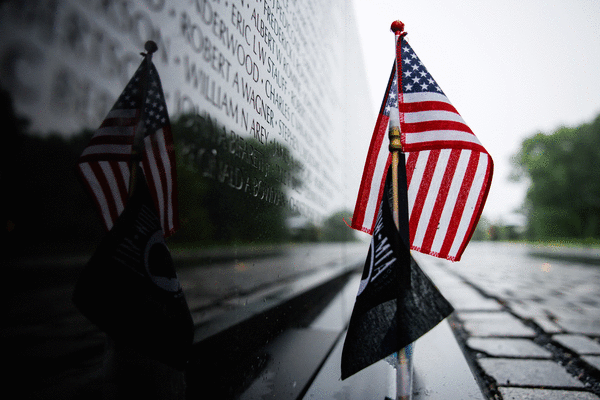
A veteran’s PTSD doesn’t disappear when they enter prison. Traumatic brain injuries don’t cure themselves. Addiction doesn't vanish behind bars. Yet many of the systems designed to help veterans manage those conditions stop at the prison gate.
When veterans are incarcerated, they often lose access to VA healthcare, struggle to use education benefits and face major cuts to disability compensation. The problem is not eligibility. The problem is continuity.
Most discussions about incarcerated veterans focus on what happens after release. How do we help them find housing? How do we reconnect them to treatment? How do we reduce recidivism?
Those are important questions. But they ignore a more basic one: Why are we waiting until release to reconnect veterans to services they were already receiving before incarceration?
Veterans in the criminal justice system often struggle with PTSD, addiction, trauma and other serious chronic health conditions. They also face a higher risk of opioid overdose and suicide than veterans who have never been involved with the legal system. Yet many lose access to the VA care that was helping them before they entered prison.
The solution should start with healthcare. Veterans who were receiving VA treatment for PTSD, addiction, traumatic brain injury or other serious conditions should not be cut off simply because they enter prison. Prison healthcare is not a substitute for VA care, especially for veterans with service-related conditions. The VA and the Bureau of Prisons should pilot a continuity-of-care model that allows eligible veterans to keep receiving VA-directed care for mental health and addiction through telehealth, care coordination and partnerships with federal correctional facilities.
This is not about excusing criminal behavior. It is about recognizing that treatment interruptions make reentry harder and the risks greater. A veteran stabilized on medication for opioid use disorder should not lose access because custody begins. A veteran receiving mental health care through the VA should not have to wait until release to reconnect with care.
The same principle should apply to education. Education is one of the most effective tools for reducing recidivism and improving employment after release. A veteran who enters prison with unused GI Bill benefits should not leave in the same position years later. If incarceration is supposed to prepare people to return successfully to their communities, then helping veterans earn a credential, complete coursework, or develop job skills should be part of that mission.
Disability compensation also needs a continuity approach. Under current law, a veteran rated 100% disabled can see monthly compensation drop from as much as $4,000 to less than $200 after 60 days behind bars. The disability has not changed. The veteran’s service has not changed. Only their custody status has.
____
Anthony Badial-Luna is an Air Force veteran and Master of Science Candidate in Georgetown University's Addiction Policy and Practice program. His research focuses on justice-involved veterans, addiction policy, and continuity of care during incarceration and reentry.
©2026 The Fulcrum. Visit at thefulcrum.us. Distributed by Tribune Content Agency, LLC.




















































Comments