Lisa Jarvis: The truth about the ACA's 'fraudsters'
Published in Op Eds
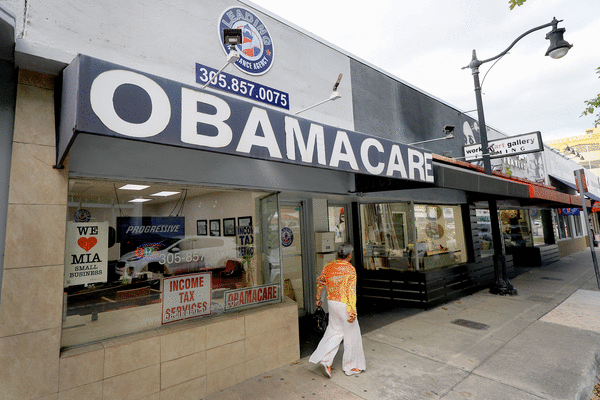
Millions of Americans have dropped their Affordable Care Act insurance coverage this year. It’s the predictable consequence of Republicans’ decision to allow the expiration of tax credits that put Obamacare plans within reach for many and helped drive the rate of uninsured in the U.S. to historic lows.
Without those subsidies, monthly insurance bills went up on average by 58%, according to health policy researchers at KFF — a cost that would have been even higher had many people not switched to cheaper, high-deductible plans.
The worst is yet to come. More Americans could drop their plans this year, and all the signs suggest coverage will get even more expensive next year.
New data from the Department of Health and Human Services shows that nearly 3 million fewer people are covered by ACA plans in 2026, down from a peak of 22.1 million people last year.
The HHS report goes to great lengths to attribute the fall off in enrollment to its efforts to root out fraud in the system — a framing that makes the steep drop in enrollment seem like a win. HHS claims that last year’s numbers were inflated by some 5.6 million people who were improperly or fraudulently enrolled in plans or were “phantom” enrollees who had been automatically or unwittingly signed up for premium-free plans by brokers.
No government program is without problems, and the ACA isn’t any different. The opportunity for bad actors to take advantage of vulnerabilities in the system has been well documented.
But HHS seems to be wildly overstating the magnitude of the issue. The only concrete evidence of fraud was buried in a separate document HHS issued last month, explains Sabrina Corlette, co-director of Georgetown University’s Center on Health Insurance Reforms. In it, HHS said it had received around 342,000 complaints of unauthorized enrollment last year — up from about 230,000 in 2024.
Those problematic enrollments have real consequences and are worth shutting down. But it also is a small fraction of the 5.6 million being cited by HHS.
Nor is it fair to assume that the people who dropped off are “phantom” enrollees simply because they didn’t file a claim in the previous year — a premise the right leaning think tank Paragon Institute has been pushing for several years.
Health policy experts and healthcare associations say that misunderstands the nature of insurance. As coverage becomes more affordable, younger, healthier people sign up — and that’s a group that is less likely to see a doctor in any given year.
Moreover, many people move in and out of the ACA marketplace, needing coverage for only a few months due to a job or life change, and they might not actually use their plan during that brief period. That doesn’t make them “phantom” customers.
The reality is that there are now millions of Americans facing difficult choices to afford health insurance — and soon there may be more.
People can stop paying their premiums at any time, and with growing economic anxiety in the U.S., some might decide health insurance is something they can risk forgoing. KFF expects enrollment could fall to as low as 17.5 million Americans by the end of the year.
ACA plans will likely get more expensive next year, which could further erode enrollment. States have started to report insurers’ proposed premiums for 2027, and so far they suggest a double-digit increase in costs. In New York, Rhode Island and Washington, average rates are going up by more than 20%.
Sudden swings in enrollment will affect the stability of the ACA market. When premiums rise, people who really need insurance — someone with a health condition or who regularly takes an expensive medication — are apt to maintain coverage, even if it means making financial sacrifices elsewhere. But people who are healthy and young are more likely to go without.
That leaves insurers with a smaller, sicker pool of people, a situation that can push up the price of coverage or even force insurers out of the market. That raises the threat of a death spiral, where prices go up and plan options dwindle until some parts of the country have no ACA coverage options at all.
And although some of the signs are there — prices are rising by the double digits and some insurers have pulled out of the ACA — the good news is there hasn’t been a total rush for the exits. And the ACA has survived similar crises before. When Congress repealed the provision that penalized people who failed to buy insurance coverage — a tax levy that ended in 2019 — health policy experts worried it spelled the end of the marketplace. But while enrollment fell, many millions of Americans stuck with their plans.
Nevertheless, Americans who buy coverage through the ACA will face bigger bills this year and next. Many will have to make impossible choices about their household budgets.
The Trump administration is working hard to convince Americans all of this is in the name of government efficiency. But don’t be fooled. Their policies are forcing consumers to make increasingly difficult decisions between their health and other life essentials — tradeoffs that get tougher each year.
_____
This column reflects the personal views of the author and does not necessarily reflect the opinion of the editorial board or Bloomberg LP and its owners.
Lisa Jarvis is a Bloomberg Opinion columnist covering biotech, health care and the pharmaceutical industry. Previously, she was executive editor of Chemical & Engineering News.
_____
©2026 Bloomberg L.P. Visit bloomberg.com/opinion. Distributed by Tribune Content Agency, LLC.



















































Comments