Editorial: All Chicagoans are frustrated with agonizing and persistent gun violence. More bureaucracy is no answer
Published in Op Eds
This past Juneteenth weekend saw a spate of shooting incidents that underscored a disturbing trend. In 2026, Chicago is backsliding on what had been strikingly positive declines in shootings and murders while peer cities like New York and Los Angeles continue to see improvement this year.
The most shocking of the weekend’s carnage was the mass drive-by shooting at a large Juneteenth gathering in Roseland on the South Side in which at least 14 were injured. Mayor Brandon Johnson responded with anguish and resolve to hold the shooters accountable; President Donald Trump, as he often does in the wake of Chicago violence, called on Gov. JB Pritzker to seek his help.
Even before this last violent weekend, in which eight people were shot dead in Chicago and nearly 40 others were wounded, the city’s homicides were 9% above the same point last year, according to Chicago Police Department statistics. Shootings were 5% higher.
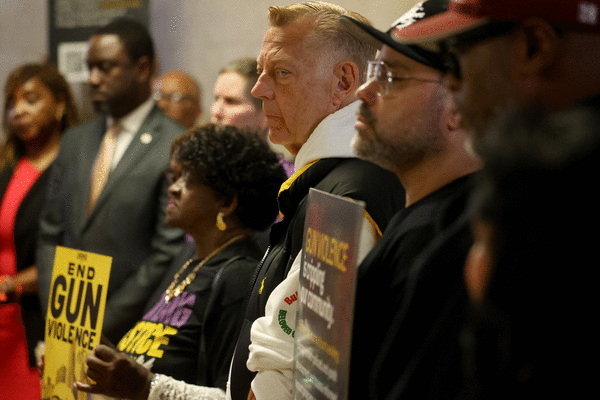
Concerned faith leaders in Chicago, such as the Rev. Michael Pfleger and the Rev. Ciera Bates-Chamberlain, have been ringing the alarm bells on gun violence for years now, including repeatedly in our Opinion pages. They now are going further and pushing local government to dedicate more resources to the issue in the form of a city Department of Gun Violence Reduction, dedicated to funding and pursuing various strategies outside of traditional law enforcement, such as community violence intervention.
On the surface, the idea is appealing. The faith leaders argue that the city’s approach to date has been scattershot, exacerbated by recent turnover on the fifth floor as mayors offer differing responses to the crisis. Establishing a permanent department focused exclusively on what all agree is an urgent priority for the city is a possible answer.
But when the theoretical moves into the realm of the practical, all sorts of problems surface.
Remarkably, after a few years of resistance, Johnson now is backing the pastors’ proposed ordinance, which seeks explicitly to wrest power from Johnson and future mayors over an issue that stands above most others in terms of public concern. That’s nonsensical and antithetical to the powers and obligations of his office —it’s anti-democratic, even.
Also problematic is that this proposal would call for spending more taxpayer money — perhaps considerably more — in a city facing budget deficits as far as the eye can see. The budget hole for the coming year well exceeds $1 billion, topping last year’s shortfall, which brought the mayor and the City Council to the brink of an unprecedented (and unthinkable) government shutdown.
Here are the basics of this initiative. The stand-alone Department of Gun Violence Reduction would supplant the existing mayoral Office of Community Safety, putting under the new department’s control $100 million worth of programs currently handled by other city fiefdoms.
Details remain sketchy, but among the benefits touted by supporters is that the department would enjoy contracting and procurement powers theoretically free from mayoral influence and could put violence interrupters and other CVI workers on the city payroll for the first time. CVI employees now are employed by nonprofit groups such as Chicago CRED, led by Arne Duncan, which are working with $150 million in commitments from Chicago’s business and philanthropic community, the state and Cook County. Additional funding comes too from the city of Chicago, although budget pressures have kept it from contributing at the $40 million level to which it previously committed.
Notably, the head of the new department would be given unusual independence from the mayor. The mayor would choose a department head from a list of recommendations by a 16-member advisory commission, which would reportedly include at least two faith leaders. Once selected, that department head could be fired by the mayor only for cause.
The idea is to insulate the department head from the political pressures that led to Mayor Johnson’s firing earlier this year of Garien Gatewood as deputy mayor for public safety. Gatewood’s work was lauded both by the business community and by pastors around the city, and he worked well with Chicago Police Superintendent Larry Snelling. Indeed, this page condemned the mayor’s action, which appeared both political and ill-considered.
We’re not clear if subsequent mayors would be stuck with a head of this department from a previous administration that they did not want. Obviously, that would be a bad idea. Tying the hands of mayors in perpetuity and shielding them from accountability for the scourge of guns is not how to respond to one mayor’s mistakes.
Mayors must be responsible for keeping the streets of Chicago safe.
Period. Full stop.
We’re surprised Johnson would agree to disempower his own office in this way. A Chicago mayor seeking to give up power is a rare sight indeed.
Additionally, any direct city employment of violence interrupters is a terrible idea for numerous reasons. CVI work by its nature is risky and entails the hiring of many who have criminal records. Exposing city taxpayers to potential liability when CVI hires return to their past ways, which is known to happen, is extraordinarily misguided. This page has been on the record numerous time supporting CVI as an effective preventative tool against violent crime, but we’ve also recognized CVI’s weaknesses. CVI should continue to be the province of the groups that with each passing year gain more experience in how to manage those who do this important work.
Chicago’s business community has made a very substantial financial commitment to CVI and they deserve to be consulted on any changes. We’re sure they would have concerns here.
Finally, about the last thing this fiscally stressed city should be doing is creating more bureaucracy. Though advocates say they intend for the department to be “budget neutral,” its creation would mean at least 19 new city jobs plus a highly paid commissioner, the Tribune reported.
Standing up a brand new department does not happen with a snap of the fingers and surely would end up costing more than its advocates claim.
Proponents say they’re working with Johnson on an executive order to create the new department. But what they really desire is an ordinance codifying it, which would protect it from future pesky mayoral interventions. A proposal to do so is expected to be introduced in the City Council later this summer — just in time for election-year budget wars to begin.
We sympathize with faith leaders’ frustration on the continuing violence epidemic in too many Chicago neighborhoods. We share their deep frustration.
They should work on electing a mayor who will more effectively marshal the substantial resources already dedicated to this cause.
___
©2026 Chicago Tribune. Visit at chicagotribune.com. Distributed by Tribune Content Agency, LLC.




















































Comments