POINT: Iran is turning defeat into a victory
Published in Op Eds
June 2025’s 12-Day War and President Donald Trump’s Operation Epic Fury have shattered the myth of Iran’s military might, inflicting heavy losses on the Islamic Republic and forcing it to the negotiating table. However, Tehran is already attempting to reclaim through diplomacy what it lost on the battlefield. It wants a quick deal, and that is dangerously premature.
U.S. requirements for a long-term peace are reasonable. In exchange for permanently halting uranium enrichment, sharply curtailing its ballistic missile program, and severing all support for its proxies across the region, Washington would unfreeze billions in frozen Iranian oil revenues and lift sanctions on banking, shipping and insurance. This would allow Islamic Iran to resume legal oil exports and use the revenue to repair and recharge its domestically brutal and regionally trouble-making regime.
Before any final deal could be reached, America and Iran had to let go of each other’s hair. They signed an interim memorandum of understanding on June 17. Under the 60-day renewable agreement, Iran committed to reopening the Strait of Hormuz, through which 20 percent of the world’s energy passes, in return for Washington lifting its naval blockade on Iranian ports, allowing Tehran to resume its oil exports. The language was left deliberately ambiguous to help both governments manage domestic opposition.
Iran wasted no time exploiting that ambiguity. The MoU required an end to military operations “on all fronts.” Iran interpreted this to include a ceasefire with Hezbollah. The United States and Israel obliged. Tehran, however, immediately claimed the text also required Israeli withdrawal from the security zone it had established in southern Lebanon, a demand that does not appear in the agreement.
In the early days of the MoU, Iranian Parliament Speaker Muhammad Qalibaf told his Lebanese counterpart that withdrawal would be negotiated only during the final-deal talks. Later on, Iranian officials changed their minds after it seemed that Hezbollah saw a strategic disadvantage.
If the fighting stopped while Israel retained control of Lebanese territory, Jerusalem would hold decisive leverage to demand that Hezbollah surrender its weapons to the Lebanese state, in return for Israeli withdrawal. This would destroy the group’s central narrative. For years, Hezbollah claimed its arms had liberated Lebanese land. Now those same arms would become the reason for a continued Israeli presence.
Rather than accept such a reversal, Hezbollah resumed attacks on Israel, prompting Israeli military responses. Tehran then accused Washington of violating the MoU by not reining in Israel. Iran threatened to close the Strait of Hormuz again and instructed its delegation to refuse to attend the scheduled negotiations with Vice President JD Vance in Switzerland.
The regime continues to test limits, manufacture crises, and seek to reverse its wartime losses at the bargaining table. Its conduct since the MoU was signed shows no fundamental change in behavior.
Trump has so far avoided repeating the mistakes past administrations made, but he cannot let his guard down against the treacherous regime.
History demonstrates that Tehran uses negotiations primarily to buy time, relieve pressure, and rebuild its capabilities. Ambiguous interim agreements have repeatedly allowed Tehran to pocket concessions while delaying or evading core demands.
The current moment offers a rare opportunity created by military pressure. That pressure should be maintained until Iran either fully accepts the three core conditions or the regime itself faces the prospect of collapse. Anything less risks turning a significant American military success into an Iranian diplomatic victory.
_____
ABOUT THE WRITER
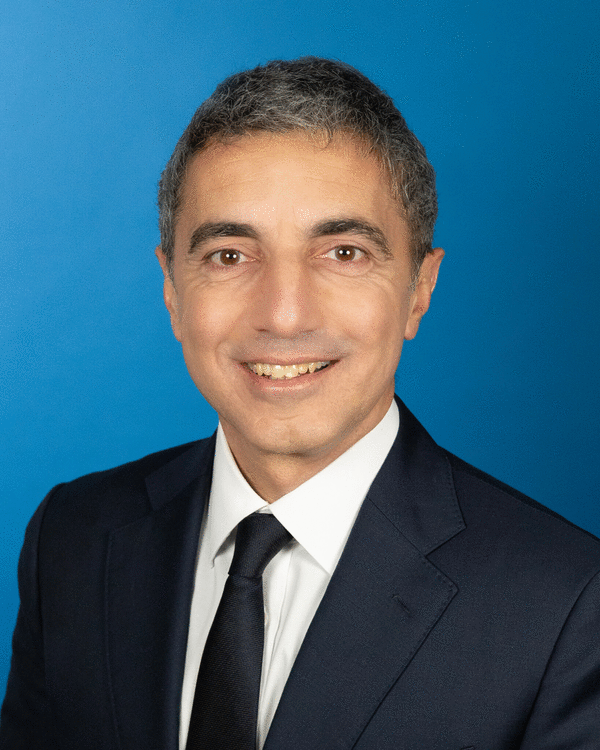
Hussain Abdul-Hussain is a research fellow at the Foundation for the Defense of Democracies. He wrote this for InsideSources.com.
_____
©2026 Tribune Content Agency, LLC

















































Comments