Politics
/ArcaMax
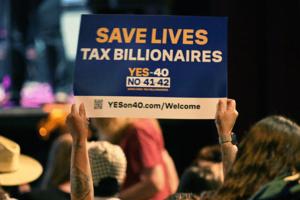
Editorial: The wealth tax: Where did all the money go?
Shocker alert: A new study concludes that California’s latest soak-the-rich tax proposal could result in a loss of revenue. Hard to believe.
California voters in November will decide on Proposition 40, a supposed “one-time” 5 percent net worth on the assets of billionaires. The rest of the nation — including Nevada — should pay close ...Read more

Mark Z. Barabak: With a foot out the door, Nancy Pelosi tries one last flex
SAN FRANCISCO — Nancy Pelosi is, beyond doubt, a figure who will long endure, her name forever pressed into the pages of the nation’s history books.
She is the first — and, so far, only — woman to wield the gavel as speaker of the House. She was indispensable to passage of the Affordable Care Act, better known as Obamacare. Working ...Read more

Trudy Rubin: Trump's open alliance with Putin betrays the US and helps Russia kill Ukrainians
While voters are rightly aggrieved over Donald Trump’s war of choice in Iran, they need to recognize that the president is ready to inflict an even greater foreign policy disaster on our country.
This week, the president openly aligned the American government with Russia against the democracies of Europe, including Ukraine.
Having dropped ...Read more
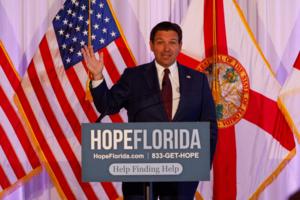
Editorial: Hoping for justice in Hope Florida scandal
A state appeals court has expunged an entire critical grand jury report on Hope Florida, as if it never happened. The only person we can see celebrating this is Gov. Ron DeSantis, who claims complete vindication.
As politicians scramble to cover their tracks, this odious coverup gives voters another reason why a central figure in the mess, ...Read more

Steve Lopez: Disney built the monorail in a year. LAX's people mover, almost 8, hasn't left the station
In the summer of 1957, Walt Disney spotted a monorail in Europe and decided he'd like to have one of his own. Design and construction began in 1958, and the following year, Disneyland had a monorail.
The LAX SkyLink people mover was approved by the L.A. City Council in 2018 and construction began in 2019, with a targeted completion date of 2023...Read more

Martin Schram: No proof? No problem!
President Donald Trump’s long-awaited 2026 October Surprises began erupting across our news screens in this past week. They sparked two very different types of outrage.
Trump’s War-and-Peace Outrage Surprises: In a bizarre and seemingly prohibited deal, Trump flip-flopped and agreed the U.S. would buy Russian diesel fuel – gifting ...Read more
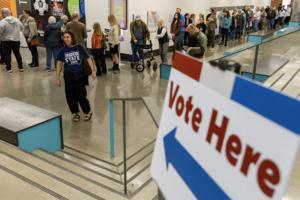
Mary Ellen Klas: Election fraud is hard. Convincing voters it exists is easy
You’ve likely heard the ominous what-if scenarios about election disruptions in November: immigration agents or federal troops roaming polling places, federal officials seizing ballots and voting machines, and President Donald Trump issuing an executive order postponing or canceling the election. Courts and legal experts have given solid ...Read more
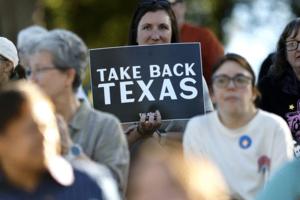
Ronald Brownstein: Partisan gridlock may be red and blue states' least-bad outcome
After years of widening political polarization in the U.S., signs are accumulating that red states and blue states are heading toward a stalemate.
The rules of daily life now diverge across the states to the greatest extent since the fall of Jim Crow six decades ago, a prospect that carries unsettling implications for the nation’s fundamental...Read more

Commentary: If you get kids off their devices, where are they going to go?
How do you get kids to stop spending so much time in the virtual world? It’s pretty obvious: Give them back the real one.
Kids desperately need free time, with each other, in person, in a place their parents let them go. That’s a pretty simple ask — it’s what you did after school, right? Hung out with friends? But right now it’s not ...Read more
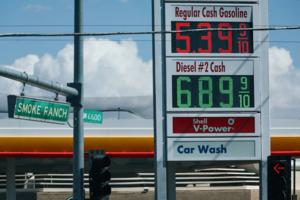
Commentary: Today's inflation is really an energy shock
Americans are frustrated with today’s high cost of living, especially fuel prices. Although incomes rose faster than prices last year, it’s been the opposite since February. The only good news is that this inflation will subside when overseas conflicts are resolved, but there is likely more pain to come for consumers until then.
The ...Read more

Commentary: Meet Halloween's most misunderstood animal
Every October, bats flutter through haunted houses, horror movies and Halloween decorations as symbols of darkness, danger and things that go bump in the night. Thanks to Dracula and generations of spooky stories, they’ve earned an undeserved reputation as tiny flying monsters.
The real bats flying overhead on crisp autumn evenings are among ...Read more

Editorial: Trump makes another push to help Russia beat Ukraine
President Donald Trump’s affinity for his pal Vladimir Putin has now torpedoed new congressionally mandated sanctions against Russia for its invasion of Ukraine. How low will Trump stoop to aid Putin?
The trade restrictions that Trump lifted were named after Sen. Lindsey Graham, which passed with huge bipartisan support after Graham suddenly ...Read more

POINT: Political yard signs create problems; just ask a realtor
Leading up to the 2024 presidential election, divisions were so high across the country that CBS News reported on the effects political yard signs had on home sales. CBS wasn’t the only outlet covering that topic.
“You may not have bought that ‘Make America Great Again’ sign on your next-door neighbor’s lawn, but if you’re looking ...Read more
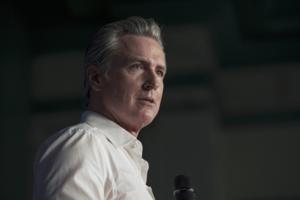
Commentary: A death sentence is too heavy a decision to be overturned lightly
President Donald Trump was right to cancel plans to livestream the execution of Fort Hood murderer Nidal Hasan. Carrying out a lawful sentence should be a solemn responsibility, never a public spectacle. California Gov. Gavin Newsom should exercise restraint of his own by rejecting blanket commutation of the state’s death sentences.
As a ...Read more
COUNTERPOINT: In praise of political yard signs
To some, they are a political pet peeve, a plague of partisan litter upon the landscape every two years.
Homeowners associations hate them. Some towns have even tried to ban them.
But Neil Levesque, the head of the prestigious New Hampshire Institute of Politics at St. Anselm College, has a message for people who hate political yard signs: “...Read more

Commentary: It's not just the economy. Democrats can capture more of the working-class vote
James Carville’s motto, “It’s the economy, stupid,” is dominating this year’s electoral cycle. It shouldn’t be.
We just did one of the largest survey experiments of its kind and identified a path that increases Democrats’ working-class support by 10.9 points while simultaneously increasing support from Democrats’ college-...Read more
Editorial: 'Like giving whiskey and car keys to teenage boys'
The federal government managed to become even more fiscally inept during the past fiscal year, running a deficit of $2 trillion, according to the Congressional Budget Office. That’s a $218 billion increase from the previous 12 months.
The sea of red ink comes as revenues have risen. Tax collections were up 3 percent in fiscal 2026, coming in ...Read more
Editorial: The danger to democracy is right on your TV
“Seven times.”
In an annoyingly repetitive TV ad, that’s how often congressional candidate Scott Singer claims he cut taxes as Boca Raton mayor.
A frame from a Scott Singer for Congress TV ad (YouTube.com) It seems as if the ad runs seven times an hour during Miami’s early-morning news.
South Florida viewers endure an endless barrage ...Read more
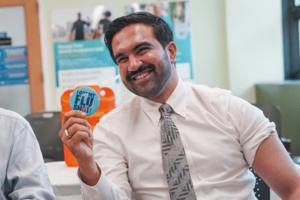
Lisa Jarvis: Flu season has landed early, and your vaccination is overdue
This fall, like every other, I tried to game the flu season. My goal, always, is to get my vaccine at just the right moment: before the first cases pop up, yet late enough so that its protective effects last beyond the holidays and well into January or February, when infections tend to peak. That typically means scheduling my appointment for ...Read more

Abby McCloskey: Do Republicans still care about abortion?
Abortion has fallen off the GOP agenda. In its place is a campaign against transgender issues, largely centered on children’s sports. Politically, I understand it. Ethically, I don’t.
Consider Texas. Democratic Senate candidate James Talarico is unabashedly pro-choice and supports restoring Roe v. Wade, this time as a federal law. But there...Read more
Related Channels

ACLU
By The ACLU

Amy Goodman
By Amy Goodman

Armstrong Williams
By Armstrong Williams

Austin Bay
By Austin Bay

Betsy McCaughey
By Betsy McCaughey

Bill Press
By Bill Press

Bonnie Jean Feldkamp
By Bonnie Jean Feldkamp

Cal Thomas
By Cal Thomas

Clarence Page
By Clarence Page

Danny Tyree
By Danny Tyree

David Harsanyi
By David Harsanyi

Dick Polman
By Dick Polman

Erick Erickson
By Erick Erickson

Froma Harrop
By Froma Harrop

Jacob Sullum
By Jacob Sullum

Jamie Stiehm
By Jamie Stiehm

Jeff Robbins
By Jeff Robbins

Jessica Johnson
By Jessica Johnson

Jim Hightower
By Jim Hightower

Joe Conason
By Joe Conason

John Stossel
By John Stossel

Josh Hammer
By Josh Hammer

Judge Andrew Napolitano
By Judge Andrew P. Napolitano

Laura Hollis
By Laura Hollis

Marc Munroe Dion
By Marc Munroe Dion

Michael Barone
By Michael Barone

Mona Charen
By Mona Charen

Rachel Marsden
By Rachel Marsden

Rich Lowry
By Rich Lowry

Robert B. Reich
By Robert B. Reich

Ruben Navarrett Jr
By Ruben Navarrett Jr.

Ruth Marcus
By Ruth Marcus

S.E. Cupp
By S.E. Cupp

Salena Zito
By Salena Zito

Star Parker
By Star Parker

Stephen Moore
By Stephen Moore

Susan Estrich
By Susan Estrich

Ted Rall
By Ted Rall

Terence P. Jeffrey
By Terence P. Jeffrey

Tim Graham
By Tim Graham

Tom Purcell
By Tom Purcell

Veronique de Rugy
By Veronique de Rugy

Victor Joecks
By Victor Joecks

Wayne Allyn Root
By Wayne Allyn Root
Comics