Editorial: Teens and vaping are an unhealthy mix
Published in Op Eds
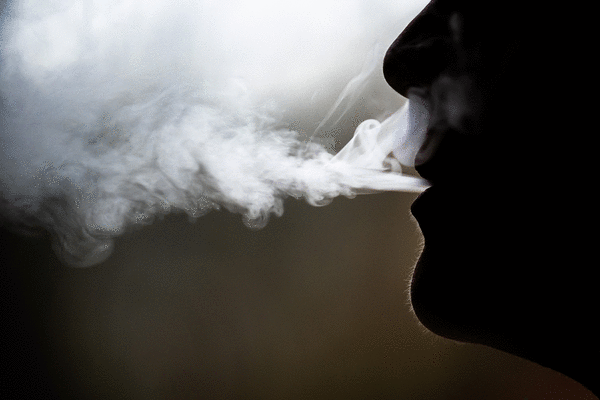
Vaping — the use of e-cigarettes to inhale nicotine, flavorings or marijuana through a battery-powered device — has become so commonplace that many now take it for granted.
But recent news from Bel Air High School, where at least four toilets had to be replaced after students tried to flush vaping cartridges, is a reminder of both reckless behavior and a deeper health concern: what young people are putting into their lungs.
If that anecdote feels minor, the broader landscape is not. Baltimore now has roughly 1,200 licensed tobacco retailers — about 15 per square mile — many of them smoke shops selling vaping products. The question is no longer whether these businesses are widespread, but whether the city has reached saturation. The Baltimore City Council is now considering tighter regulations. It’s overdue. This is one industry the city should not encourage, particularly given links between some shops and illegal marijuana sales.
Here’s a reminder to the folks in Bel Air and City Hall: The public health stakes are high, especially for teens. Vaping may seem less obnoxious (perhaps even healthier) than smoking cigarettes, but it is a serious health hazard.
Not only has vaping become the most commonly used tobacco product by middle and high school students (5.9% of U.S. students use such devices, according to the U.S. Centers for Disease Control and Prevention), but it is highly addictive. Nicotine disrupts adolescent brain development, impairing impulse control, mood, attention and learning. Vaping aerosols can also contain heavy metals and carcinogens, increasing risks of lung injury, asthma, bronchitis and cardiovascular disease.
So while we certainly would lament with Harford County taxpayers the cost of replacing bathroom plumbing at $200 a toilet, let’s not lose sight of the much higher stakes involved in poorly regulated vaping and teen health. Vaping is a multibillion-dollar industry, and its reach into youth culture is undeniable. CDC surveys show that many teens who vape want to quit, a telling indicator of how addictive these products are. Prevention, then, cannot begin in school bathrooms. It must begin earlier in homes, in communities and at the point of sale.
Are schools doing enough to teach students the dangers so they don’t start in the first place? Are parents having these much-needed conversations with their kids? Are retailers consistently checking IDs? Under Maryland law, you have to be at least 21 years old to purchase, and retailers are expected to check the photo ID of anyone under the age of 30. Where are we coming up short?
Most likely at every level. Because if the only answer to stop the trend is metal detectors at the entrances to Bel Air High School, we probably aren’t looking at the problem nearly broadly enough.
_____
©2026 The Baltimore Sun. Visit at baltimoresun.com. Distributed by Tribune Content Agency, LLC.





















































Comments