Editorial: Florida's proposed tax cut spares schools, but leaves voters to do the math
Published in Op Eds
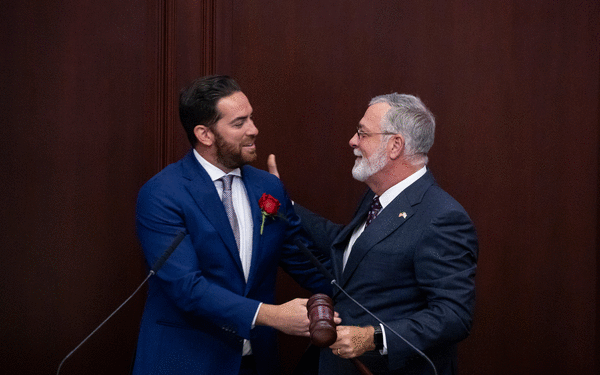
We can at least say that the property-tax cuts the Florida Legislature approved on Tuesday are an improvement from Gov. Ron DeSantis’ initial proposal from less than a week ago. The legislation exempts public education from massive funding cuts that could have devastated school districts.
But lawmakers still failed voters by not hammering out the real impacts of the proposal they voted Tuesday to place on the November ballot.
How much will Floridians lose in public services, such as public safety, parks and libraries, if voters approve the measure by at least 60%? Some outside groups estimate local governments would lose billions, but the lawmakers who put the issue on the ballot have no exact idea. And how could they? Florida had over a year to analyze the fiscal impact of increasing the homestead exemption from $50,000 to $250,000 on primary residences. But no study was done.
What lawmakers did Tuesday was essentially to punt these questions to voters. Now they’re the ones stuck wading through a sea of financial information to answer difficult questions.
Republicans on Tuesday zeroed in on Miami-Dade County as an example of overspending by local governments. They aren’t necessarily wrong. The $400 million budget deficit the county faced last year was eventually resolved, but projected financial headwinds in upcoming years will continue to put pressure on Miami-Dade and expose poor spending decisions since the pandemic.
Floridians need relief from exorbitant housing costs and should demand financial constraint from their elected leaders. But DeSantis and lawmakers are pitching that voters enshrine a half-baked solution into the Florida constitution — reversing it later on would be virtually impossible.
“Florida is being asked to fundamentally redesign local government finance before anyone can tell us the full fiscal impact. That’s not reform. That’s a leap of faith,” former Republican state Sen. Jeff Brandes posted on X Tuesday.
One would think that lawmakers would have taken this more seriously. That they would have spent more than a mere 24 hours debating how to balance tax relief with their responsibility to ensure communities have enough money for robust public safety and basic services. That they would have presented a more measured approach. For example, Democrats proposed sunsetting the tax cuts after a few years so lawmakers could reevaluate their impact, but that didn’t go anywhere.
The ballot language voters will see in November specifies “ensuring funding for core services” and “local governments to use remaining property taxes solely for core public needs including public safety, education and schools, infrastructure, and natural resources.”
What it doesn’t say is that the pot of money to pay for those things will become smaller — how much smaller will depend on the makeup of individual counties and cities. Bedroom communities in Miami-Dade with few commercial areas that rely heavily on homesteaded properties for their tax base, will be hit the hardest.
DeSantis last week talked about creating a trust fund to help financially-strapped counties — mainly small, rural ones. On Monday, he said backfilling those communities would equate to “budget dust” in Florida’s more than $110 billion coffers.
But lawmakers have thrown cold water on that idea. The House and Senate amended their legislation Monday to remove the requirement of the trust fund from the ballot language. The Legislature could still help local communities financially, but incoming House Speaker Sam Garrison, a Fleming Island Republican, has said he doesn’t support the idea of using state dollars to fill the local budget gap the tax cuts would create.
Republicans have acknowledged that the Legislature will have to iron out many of the details of what happens if voters pass the constitutional amendment in November. They are essentially asking voters to trust that they will do that correctly and fairly — without favoring communities based on political connections when they ask the state for money.
How ironic that lawmakers want Floridians to place their trust in state government after asking voters to kneecap their local governments — the government that’s closest to the people.
_____
©2026 Miami Herald. Visit miamiherald.com. Distributed by Tribune Content Agency, LLC.

















































Comments