NC approves stricter rules on voter ID, mail-in ballots -- but adoption is paused
Published in Political News
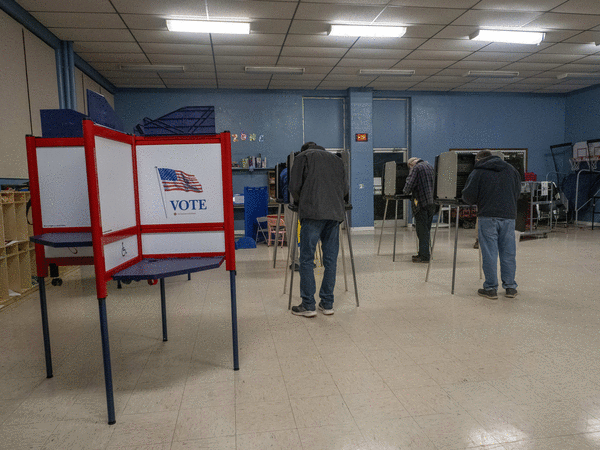
RALEIGH, N.C. — A regulatory commission gave final approval to a series of new rules targeting mail-in ballots and voter ID on Thursday, but at least some of them appear to have been blocked from taking effect in North Carolina’s elections this year.
The rules, which were passed by the Republican-majority State Board of Elections last month, would make it easier to disqualify ballots cast by voters who don’t provide ID and would set new standards for accepting or discarding mail-in ballots.
The Rules Review Commission (the final step for any agency rule) unanimously approved the proposals Thursday, but noted that it had received enough public objections on some of the rules to trigger a delay to their adoption.
State law dictates that if the commission receives 10 or more written objections to a rule, it must be delayed pending review by the state Legislature. Lawmakers have adjourned and said they do not plan to return until after the November elections. A spokesperson for House Speaker Destin Hall confirmed to The News & Observer on Thursday that this remains the plan for the House.
Brian LiVecchi, the chief of staff for the State Board of Elections, told the N&O that the board may consider adopting some of the proposed rules as numbered memos — a less permanent form of policymaking — ahead of the election.
“We probably will discuss that if anything’s deemed critical,” he said. “That’s kind of the irony of it: this guidance all used to be in numbered memo anyway, without any opportunity for public comment or public involvement ... By putting it in rules, we’re making it more transparent and giving the public an opportunity to have a say.”
One of the objections to the proposed rules came from Democratic Gov. Josh Stein, who wrote that they would “undermine voters’ trust that their ballot will be counted” in a letter sent to the commission Wednesday.
What were the proposed rules?
The rules in question would lower the threshold for disqualifying ballots cast by voters who didn’t provide a photo identification and set out new regulations for when to count mail-in ballots.
North Carolina’s voter ID law states that voters who don’t show ID at the polls can fill out an ID exception form and cast a provisional ballot. Under current rules, that ballot must be counted unless a county board of elections (all of which are composed of three Republicans and two Democrats) unanimously agree that the information in the form is false. The new rule would change that requirement to a majority vote, allowing a board’s Republican majority to throw out a ballot in a party-line decision.
The rule would also require the board to issue a written decision “based only on facts and not speculation” explaining its reasoning. The affected voter would be given notice and an opportunity to address the board and defend their ballot.
The voter ID rule received more than the 10 comments required to trigger legislative review, per documents posted Wednesday.
As for the rule on mail-in ballots, it would set out requirements for how to handle ballots returned with procedural errors.
Some deficiencies, like signing a ballot in the wrong place, would be considered “curable,” meaning a voter could fix the issue and have their ballot counted. Other issues, like an unsealed or opened ballot envelope, would be deemed “non-curable” and result in the disqualification of the ballot — though the voter would still be able to cast a new, corrected absentee ballot or vote in person.
Per numbers released Wednesday, the mail-in ballot rules have not received the requisite 10 objection letters to trigger a delay. However, the commission will continue to receive such letters until Friday at 5 p.m.
The state is scheduled to begin sending out mail-in ballots Sept. 4.
Also approved Thursday were rules dealing with recounts and conduct at polling places. The latter has also drawn objections for its prohibition on amplified sound at the polls. That rule will also be delayed.
_____
©2026 Raleigh News & Observer. Visit newsobserver.com. Distributed by Tribune Content Agency, LLC.




















































Comments