White supremacists spin a Justice Department indictment against a hate-monitoring group to legitimize extremism and expand recruitment
Published in Political News
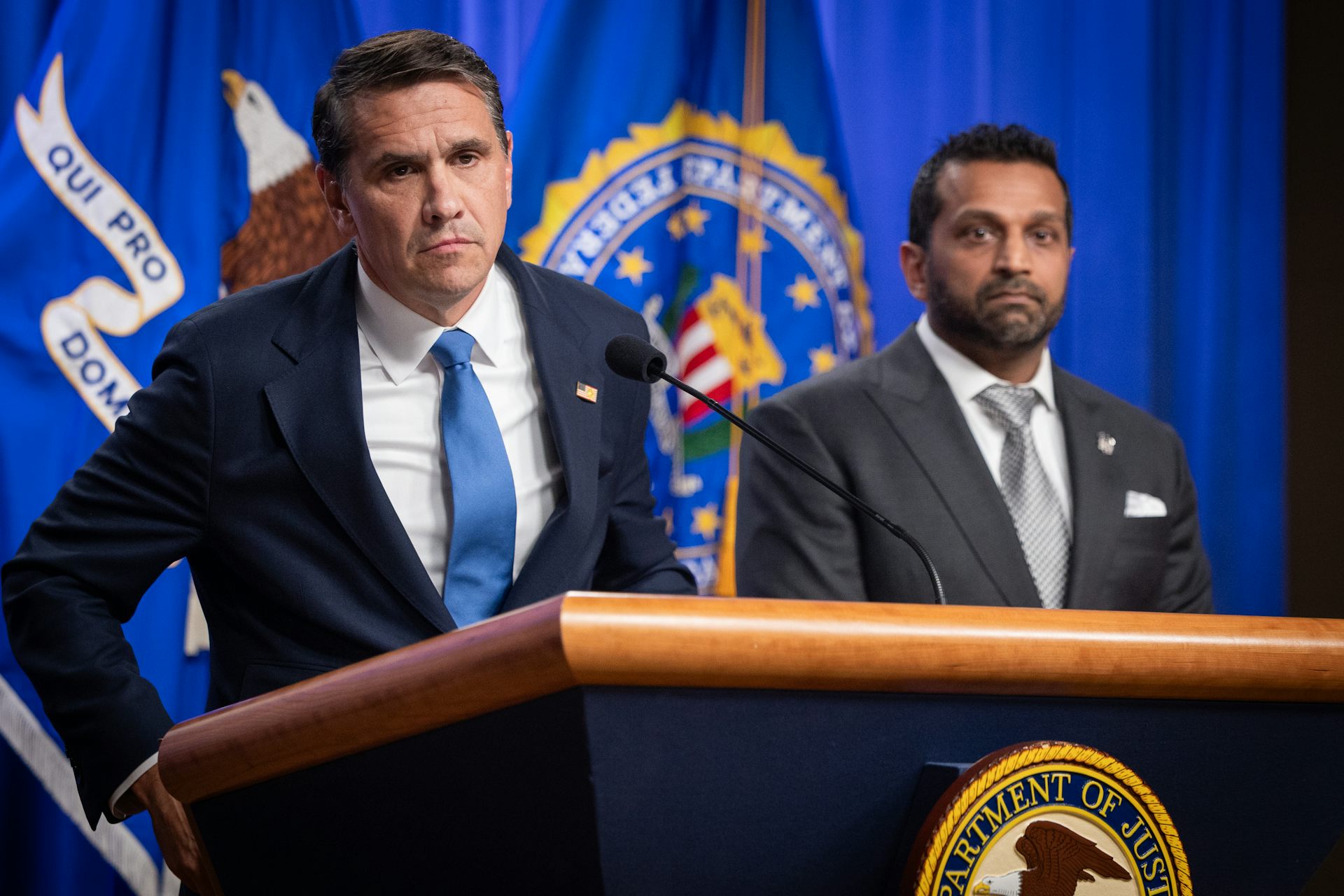
In April 2026, a federal grand jury returned indictments charging the Southern Poverty Law Center with wire fraud, bank fraud and conspiracy to commit money laundering.
The indictment alleges the SPLC, a nonprofit legal advocacy group, secretly funneled more than US$3 million in donated funds to people associated with violent extremist groups, including the Ku Klux Klan and Aryan Nations.
Prosecutors allege that the SPLC secretly paid members of those groups to act as confidential informants without telling donors. Eight informants received the money between 2014 and 2023, according to U.S. Attorney General Todd Blanche.
The SPLC has denied the charges and seeks their dismissal, with lawyers for the group adding that the charges constitute “vindictive prosecution.” The SPLC’s interim president, Bryan Fair, has stated that the informant program “saved lives” and reflected decades of dangerous civil rights work.
Critics of the prosecution at Lawfare, a media site focused on the U.S. legal system, argued that the indictment is among “the most cynical criminal cases ever brought by the Department of Justice.” They noted that the SPLC had no legal duty to disclose the confidential nature of its informant program to donors.
Within hours of the Justice Department’s indictment, I found that white supremacist influencers on Telegram, Gab and other social platforms were celebrating the arraignment. They portrayed the charges as proof that journalists and civil rights groups documenting extremist movements could no longer be trusted.
The indictment became a rallying point to discredit not only the SPLC but the wider body of research on hate groups and political extremism. I believe that these narratives will be used to help justify increasingly radical and, in some cases, violent responses.
Some conservative advocacy groups and right-wing media outlets – including Moms for Liberty and the Daily Signal – immediately stripped the indictment of its legal context. In online posts, they recast it as established proof that the SPLC had been deliberately creating extremist activity rather than investigating it.
A Telegram search I conducted on May 6 identified 22 posts mentioning the SPLC across at least six white nationalist channels. Most appeared within 72 hours of the indictment. The posts did not engage in sustained discussion. They repeated a small set of claims.
The Super Sincere Alpha GOONMAXXING Aryan Sigma Patriot channel wrote: “The SPLC is a hate group.”
Other channels cited the indictment as proof that the SPLC had been paying sources to manufacture the very extremism it claimed to fight. In the White Lives Matter Official Telegram channel, users were urged to “become an activist for your race” while referencing the SPLC as an opposing force.
The similarity across channels and social media is notable. The same framing appeared repeatedly within a short time window. This suggests rapid circulation of a shared narrative across networks rather than independent commentary.
Comments on the Southern Poverty Law Center indictment by members of the Commander George Lincoln Rockwell channel – named for the founder of the American Nazi Party – demonstrate how antisemitic conspiracy theories work, not as explicit rhetoric but as a broader narrative.
Internet discussions portrayed the SPLC as a politically motivated or illegitimate actor. Posts in Patriot Front Updates, for example, circulated allegations of fraud and money laundering while criticizing the SPLC and its efforts to identify and challenge white nationalist activity.
I found that this criticism of the SPLC also became connected to a broader antisemitic conspiracy narrative – one that portrays the organization as operating on behalf of purported Jewish interests rather than simply as an advocacy organization with political and ideological commitments.
These narratives circulated alongside the “great replacement theory,” which falsely claims that shadowy elites are encouraging immigration and demographic change to replace the white population and diminish its political and cultural influence. It’s a conspiracy theory that the SPLC and others have documented as central to contemporary white nationalism.
In this logic, the indictment is not an isolated fraud case – it is evidence that a coordinated network of institutions has been systematically suppressing white identity.
Scholars of white nationalism have long identified victimhood narratives as central to that movement’s appeal. By portraying white people as under attack or unfairly displaced, these narratives transform social change into a story of persecution and provide a powerful justification for political mobilization.
My research on white nationalism shows how contemporary extremist movements rely less on formal membership and more on decentralized digital spaces. It is there that narratives, grievances and identities are continuously reinforced.
In these environments, major news events like the SPLC indictment become opportunities.
Extremist movements have long used mainstream controversies as recruitment opportunities.
Participants often interpret external events through narratives of threat, injustice and persecution. In doing so, they transform moments of controversy into evidence that their worldview is correct.
In the 1990s, for instance, the deadly standoffs between federal officers and the Branch Davidians religious sect near Waco, Texas, and survivalist Randy Weaver in Ruby Ridge, Idaho, became foundational persecution narratives for militia and Christian Identity movements. These groups saw the sieges as proof that the federal government was hunting gun owners and religious dissenters.
In online extremist communities, these events can become powerful tools for reinforcing group identity and attracting individuals who are searching for explanations or belonging.
With a real-world legal event like the SPLC indictment, extremists can point to government action as evidence that their worldview is being validated. The result is a narrative that appears responsive to current events, even when the connection is shallow or distorted.
Legal scholars have noted that the Justice Department indictment fits within the Trump administration’s broader pattern of redirecting domestic terrorism policy away from white supremacist groups.
The Trump White House’s 2026 Counterterrorism Strategy does not mention violent far-right groups as a domestic terrorism threat at all.
That context matters for understanding how the SPLC case landed in extremist spaces: not as an isolated fraud allegation but as institutional permission. The indictment has become a symbol before the evidence has been weighed.
In today’s fragmented digital media environment, symbols travel faster than facts, especially when they confirm what a radicalized audience already wants to believe. I believe the real danger is not that white supremacists believe the SPLC is guilty. It is that the controversy, whatever its legal outcome, has already done its work.
This article is republished from The Conversation, a nonprofit, independent news organization bringing you facts and trustworthy analysis to help you make sense of our complex world. It was written by: Art Jipson, University of Dayton
Read more:
Trump administration’s indictment of the Southern Poverty Law Center breaks with norms – and may lack evidence of criminal wrongdoing
US refugee policy for white South Africans is part of a century‑long effort to keep some English‑speaking nations white
Active Clubs are white supremacy’s new, dangerous frontier
Art Jipson does not work for, consult, own shares in or receive funding from any company or organization that would benefit from this article, and has disclosed no relevant affiliations beyond their academic appointment.






















































Comments