Why Gen Z turns everything – even murder – into a joke
Published in Political News
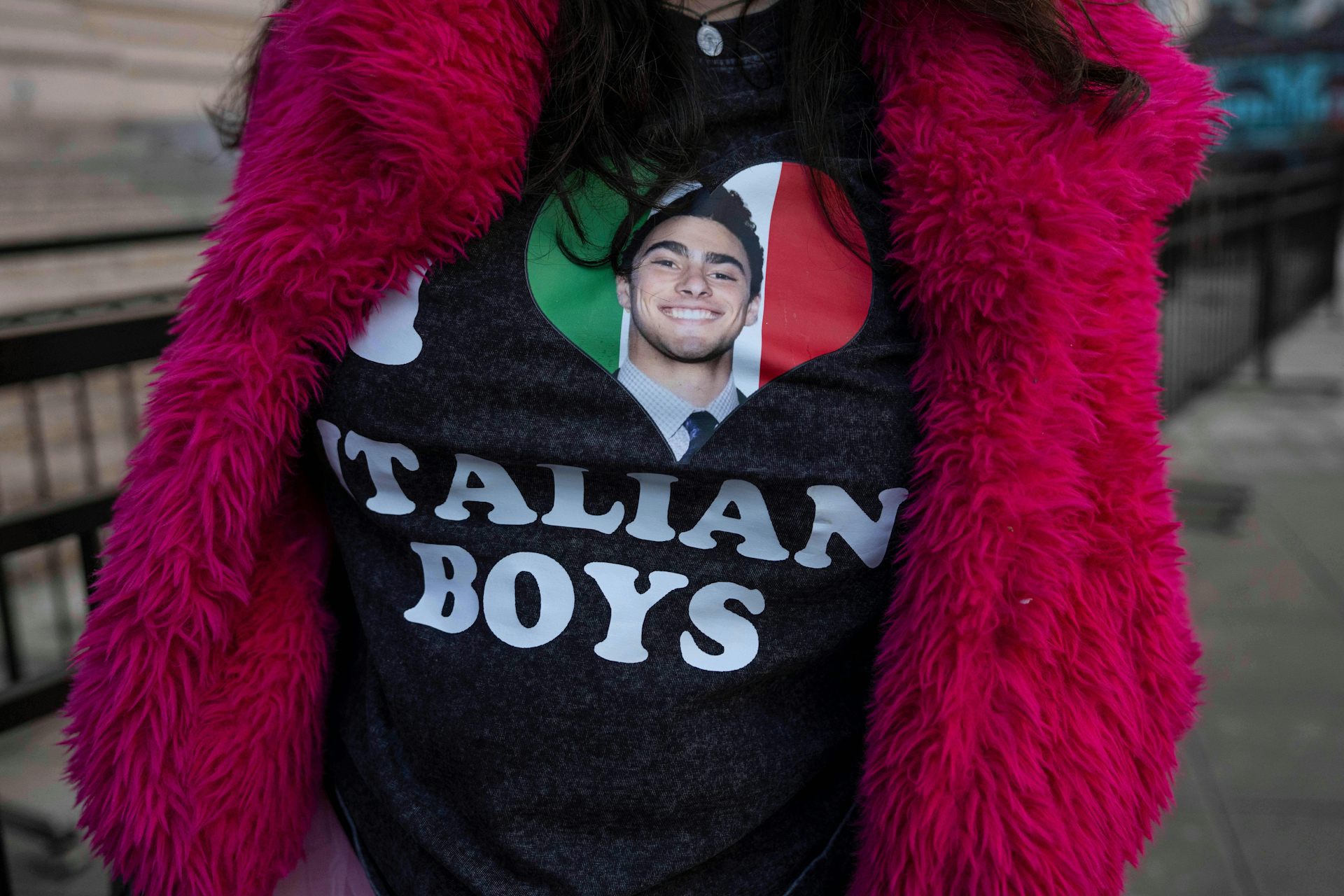







After Luigi Mangione was arrested in December 2024 in connection with the killing of UnitedHealthcare CEO Brian Thompson, the internet did what it often does: It turned something serious into a joke.
Although Mangione has pleaded not guilty to second-degree murder in New York and to federal stalking charges, viral memes at the time romanticized him as a popular – and incredibly attractive – man of the people who made corporate elites within the American health insurance industry afraid.
Some of these memes adhered to conventional forms of political satire. One, for example, quoted a speech from the movie “A Bug’s Life,” in which a villainous grasshopper argues for the need to punish the movie’s ant protagonist to keep the other ants in line. In this meme, the political point was clear: Elites preserve power by making examples of insignificant ants who dare to challenge them.
The point was less clear with other memes, including celebrations of Mangione’s fashion-forward shackled ankles in court and mock Burger King advertisements referencing the fact that a McDonald’s employee had been the one to call law enforcement on him: “Burger King: We won’t turn you in to the Feds.” Rather than being ironic, they are unserious.
Nonetheless, memes like those received serious reactions from social commentators and political pundits who interpreted them as evidence that America’s young adults are nihilistic and morally indifferent.
As an experimental psychologist who studies moral judgments about real-world controversies, I have examined these attitudes toward Mangione and the humor surrounding him online.
I believe these reactions are better understood not as a rejection of value but as a refusal to participate in conversations that feel selective and disconnected from young people’s broader economic and political frustrations. In my assessment, Gen Z’s dark and nonsensical humor does not show a lack of moral values, but it’s instead the product of its desire to engage in more authentic conversations about what they believe.
Research shows deep levels of alienation among Gen Z, or young people born between 1997 and 2012. Having grown up with smartphones and social media, this generation has come of age in an increasingly online world. Despite the internet’s capacity for instantaneous interaction, followers have proved a poor replacement for friends.
Gen Z is among the most socially isolated and psychologically distressed generations on record. Compared with prior generations, fewer friendships and romantic relationships have left many young adults craving connection and solidarity. This alienation is also evident in their skepticism toward institutions and traditional narratives about values.
Many are pessimistic about achieving the American Dream and question the value of higher education. What was once considered the optimal vehicle for living a better life is instead viewed as a barrier.
If the American Dream feels out of reach, and college seems like an expensive obstacle, calls to take them seriously may feel inauthentic, alienating and absurd.
Discussions about values require some seriousness if they are to resonate with their audience.
If, for example, a commencement speaker praising the value of artificial intelligence is met with jeers from graduates – as former Google CEO Eric Schmidt was in May 2026 – the speaker’s message is immediately rendered inert.
These students’ jeers fell short of offering an argument against the speaker’s claims; instead, they created an atmosphere that prevented those claims from receiving consideration. For graduates pessimistic about AI’s implications for the labor market, claims professing its value feel inauthentic.
Together, their jeers not only provided an escape from what felt like an alienating and inauthentic message about the value of AI, but they also created a sense of solidarity through a shared suspension of seriousness.
Far from being unique to Mangione, this suspension of seriousness recurs throughout online meme culture.
The OceanGate implosion prompted similar memes, including one depicting a pod of orcas with the caption “The water is safe, send more billionaires.”
Even Charlie Kirk’s assassination became material. In a trend known as “Kirkification,” users superimposed his face onto images ranging from the Mona Lisa to women in bikinis, transforming a grim event into a shared absurdity.
In my assessment, Gen Z’s creation and circulation of memes offers an escape from otherwise serious conversations – for example, conversations about the value of the UnitedHealthcare CEO’s life. This may be especially true when demands to condemn Mangione appear to ignore inequities within an American health insurance system perceived as corrupt and unjust.
Although commentators often dismiss Gen Z’s humor as nonsensical or nihilistic meme slop, scholarship suggests that it acts as a collaborative coping mechanism, driven by a desire for authenticity.
Memes about Mangione, or even campus lookalike contests centered on him, fall short of offering a precise moral argument in favor of largely suspending seriousness.
This style of humor can be seen in Mangione’s alleged decision to leave a backpack containing Monopoly money in Central Park. It was seen, too, on shell casings recovered after Kirk’s killing, which included video game commands, a sexually suggestive internet saying and “if you read this you are gay lmao.”
With the help of approximately a dozen undergraduate students, I examined the psychological and situational factors associated with Gen Z’s reactions to Mangione and other events – like Kirk’s assassination and the Kamala Harris is “Brat” phenomenon during the 2024 presidential election – in two studies currently under review.
Our findings indicate that favorable attitudes toward Mangione were associated not only with superficial factors, such as his perceived attractiveness, but also with higher levels of political cynicism.
Perceived systemic bias in the American justice system, for example, was addressed in a meme depicting Mangione walking into court with the text “You can kill dozens of kids and get a lesser sentence because their lives don’t matter as much as a CEO’s.” Federal prosecutors were seeking the death penalty against Mangione for a charge a judge dismissed in January 2026.
Casting Gen Z’s reactions as nihilistic obscures the values and institutional distrust connected to them and fails to appreciate their egalitarian and pragmatic ideals. Dismissing them may deepen the alienation that allowed the death of a father of two to become a joke.
Although political commentators disagree about how to interpret the response to Mangione, many accept a seemingly basic principle: Killing should never be justified.
Yet decades of research on moral judgment shows that people do not apply that principle consistently. Instead, in certain situations, like in the famous “trolley problem,” people frequently judge killing to be morally permissible – especially when that killing is expected to promote the well-being of others.
Simplistic and sweeping moral injunctions not only fail to appreciate people’s actual moral attitudes, but they also eliminate the possibility of having authentic and nuanced conversations.
Those conversations need not end by endorsing Mangione as a sympathetic figure. However, an open and authentic conversation about Mangione cannot be realized in spaces that require all discussion of the event to be reduced to affirmations that, as has been advocated by some, “Murder is bad. Period.”
Such requirements can make conversations about significant moral issues – even controversial ones, like the morality of Mangione’s alleged actions – little more than demands for conformity. In this case, those boundaries risk ignoring and, thus, further alienating Gen Z.
Gen Z’s humor shows that almost anything can become a joke. I believe the danger of that is not that young people reject values, but that continued alienation may leave them laughing when seriousness is most required.
This article is republished from The Conversation, a nonprofit, independent news organization bringing you facts and trustworthy analysis to help you make sense of our complex world. It was written by: Evan Clarkson, Utah Valley University
Read more:
Luigi Mangione isn’t the first alleged criminal to capture many people’s imaginations – and hearts
How should we look to history to make sense of Luigi Mangione’s alleged murder of UnitedHealthcare CEO Brian Thompson?
The Gilded Age novel that helps explain our fascination with Luigi Mangione
Evan Clarkson does not work for, consult, own shares in or receive funding from any company or organization that would benefit from this article, and has disclosed no relevant affiliations beyond their academic appointment.





















































Comments