Declassified intelligence is not the same as proof
Published in Political News
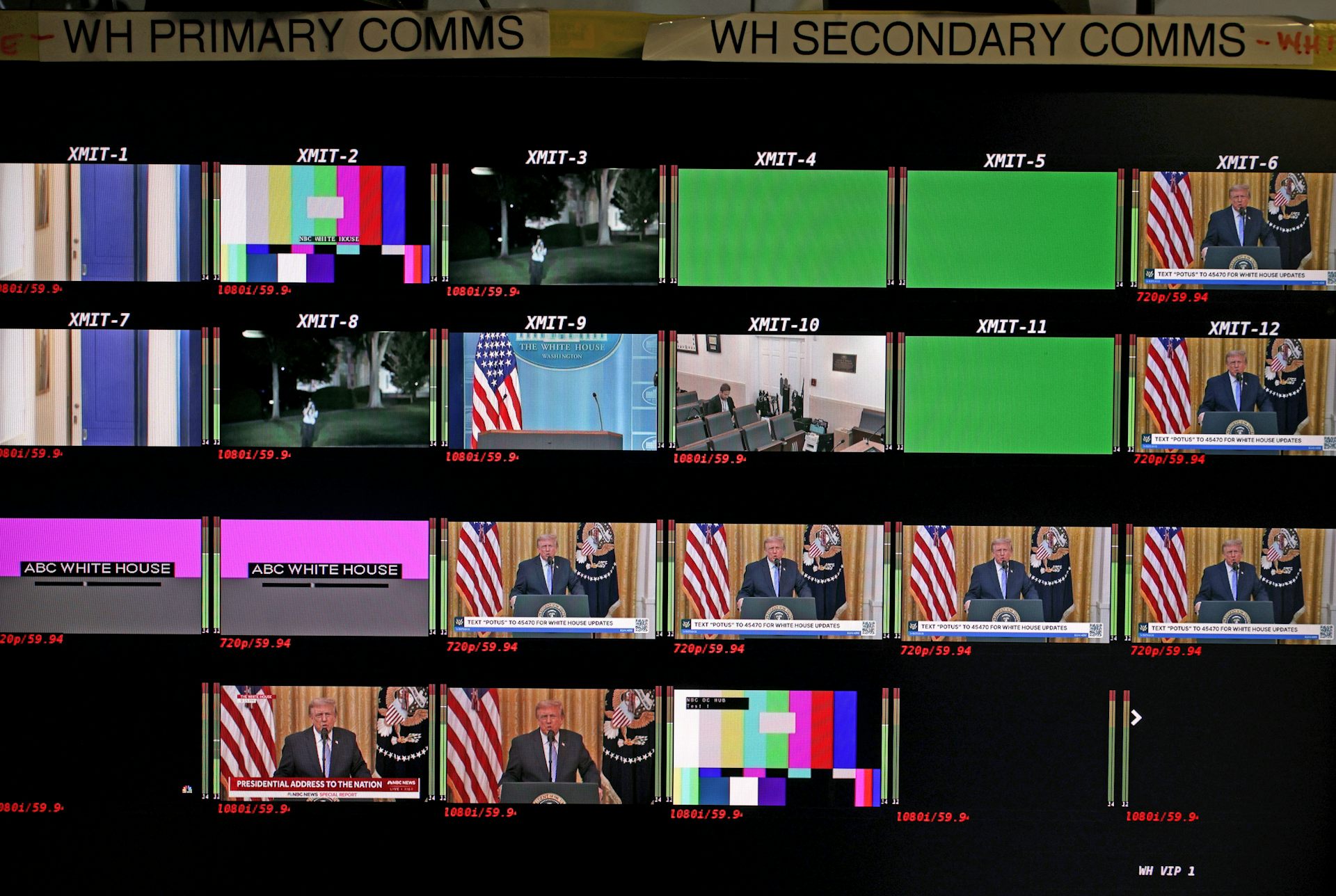


President Donald Trump used a nationally televised address on July 16, 2026, to unveil a collection of declassified documents. He said these documents, which the White House posted online during the address, show serious vulnerabilities in American election systems, extensive Chinese acquisition of U.S. voter data, and an intelligence community effort to suppress reporting on those threats.
A common misconception is that declassification works like a curtain being pulled back: A “Top Secret” marking comes off, and the public sees the truth. In reality, a released record may be raw reporting, a fragment of a communication, a source’s claim or a draft assessment. Each carries a different relationship to reliability and analytic judgment.
I’m an international affairs professor with nearly 30 years of experience in the U.S. intelligence community, including executive roles in the Central Intelligence Agency, National Counterterrorism Center and National Security Agency. I would advise anyone reviewing this release – or any declassified intelligence – to keep one distinction in mind before drawing conclusions: Declassification changes who may see information, but it does not determine whether the information is true, important, current, corroborated or representative of the broader intelligence record.
The 17th-century French statesman Cardinal Richelieu is commonly credited as saying, “If you give me six lines written by the hand of the most honest of men, I will find something in them which will hang him.” It’s an apt warning here – not because intelligence collection is indifferent to truth, but because of what it deliberately preserves.
Intelligence agencies collect widely and retain material across a full spectrum of reliability, including reporting that was later contradicted, downgraded or explicitly discounted, because judging what matters is supposed to happen through analysis over time, not by declining to collect something in the first place.
In my experience, that means the government’s holdings almost certainly contain a report that appears to support nearly any serious allegation someone could make about a public official, a foreign government or a disputed national event – sitting alongside the later reporting and analytic judgment that determined how much weight, if any, it deserved.
Mistaking a document’s existence for proof of its content – without the context of what came after it – is, in my assessment, the most common way declassified material can get misread.
The phrase “intelligence report” adds to the confusion. It is often used as though it describes one kind of document. It does not. A report might be an unevaluated database entry, a clandestine source account, an intercepted communication or a finished assessment such as the President’s Daily Brief. These documents sit at different points in the intelligence cycle: planning, collection, processing, analysis, dissemination and evaluation. Evaluation, though it’s listed as a step in the cycle, is continuous.
A human-source report includes both what a source said and how the intelligence officer handling that source assessed the source’s access, reliability and possible motives. Those judgments help analysts weigh the reporting. They do not make it definitive. A well-placed source can misunderstand what he heard. A generally reliable source can still be wrong.
Signals intelligence can create a different kind of false confidence. Intercepted communications can appear definitive, but a single intercept shows only that something was said. It does not establish that the speaker knew the truth, that the communication was complete or that later reporting supported it.
Finished intelligence exists to weigh those questions. Analysts compare reporting streams, test assumptions, identify gaps, assign confidence levels and state what remains uncertain. Finished products can still be wrong.
This is why intelligence work runs on a cycle, with evaluation happening at every stage, not only at the end. That discipline is what keeps flawed or incomplete information from being mistaken for settled fact.
That distinction matters in any declassification, but it becomes especially important when the process is rushed.
Removing a classification marking is only one part of the process. Review also asks what release might expose beyond the text: a human source, collection method, foreign liaison relationship, ongoing operation or analytic context needed to keep the public from being misled.
One document can also involve several agencies. A report about a foreign leader might draw on information from a CIA source, quote communications collected by the National Security Agency and discuss a diplomatic relationship managed by the State Department. Large-scale declassification is therefore normally interagency work, not simply the decision of one office.
The Biden administration’s decision to declassify intelligence on Russian preparations leading up to the February 2022 invasion of Ukraine moved unusually fast by intelligence standards. I was involved in that process while serving at the CIA. But the speed served a specific purpose: warning allies and shaping Russian calculations before an invasion occurred. The review process was compressed, not abandoned.
Readers should ask practical questions when declassified material appears: Is this document raw reporting, an intercept, a source account, a draft or a finished assessment? Was it released with the caveats, later reporting and interagency review needed to judge its weight? If it is being used to challenge an intelligence assessment, does the release show how analysts evaluated that material, what other reporting they weighed and why they accepted or discounted it?
None of these questions requires assuming bad faith. They are the same questions intelligence professionals ask before turning information into judgment. A raw report in a classified system is evidence that something was reported. It is not, by itself, proof that the report was true.
This article is republished from The Conversation, a nonprofit, independent news organization bringing you facts and trustworthy analysis to help you make sense of our complex world. It was written by: Brian O'Neill, Georgia Institute of Technology
Read more:
How is classified information typically shared and can officials declassify secrets whenever they want? A national security expert explains
Why the director of national intelligence needs more than political loyalty to do the job
Republicans control Congress, so why is Trump’s SAVE America Act stuck?
Brian O'Neill does not work for, consult, own shares in or receive funding from any company or organization that would benefit from this article, and has disclosed no relevant affiliations beyond their academic appointment.



















































Comments