Graham Platner’s campaign implosion highlights the hollowness of America’s political parties and how they can be hijacked by insurgents
Published in Political News
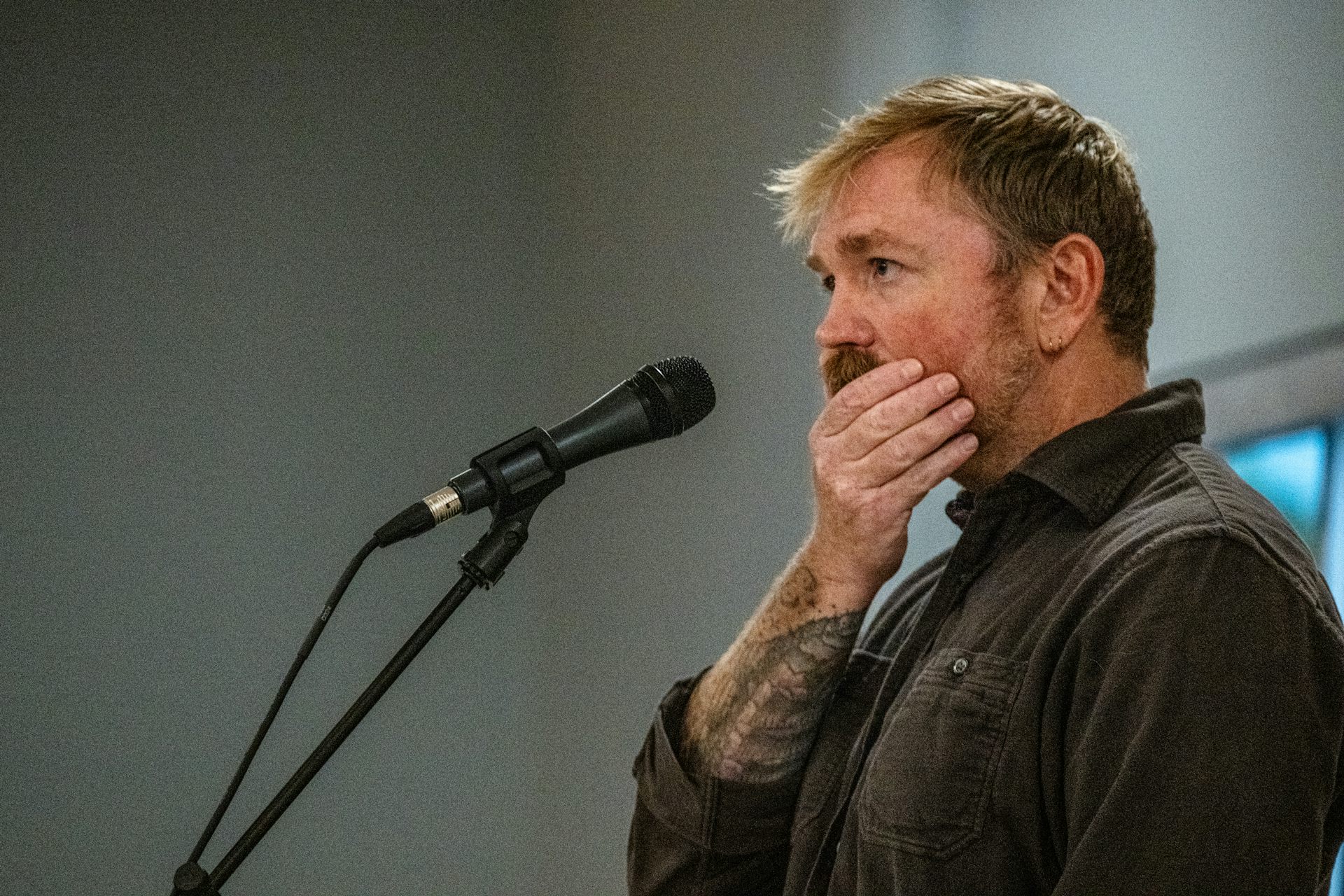
It wasn’t a surprise, but it was a bombshell.
On July 6, 2026, Politico published the detailed account of a Maine woman who said she had been sexually assaulted by Maine Democratic Senate nominee Graham Platner almost five years ago. Platner called the allegation “categorically untrue,” then said he was “taking the time to reflect on the best path forward.”
Platner had gained the fervent support of progressives in Maine and outside. But he had been dogged by accusations of, variously, racist, misogynist and dishonest behavior – he claimed not to have known the meaning of an SS tattoo on his chest. But his supporters remained behind him.
Soon after the assault allegations appeared, the Platner campaign was in trouble. His early political champion, Sen. Bernie Sanders, took a day to echo what party officials and once-supportive social media stars had almost immediately demanded: that Platner drop out of the campaign. By the evening of July 8, Platner had suspended his campaign.
Politics and legal affairs editor Naomi Schalit spoke with political scientist Nicholas Jacobs, who has followed the campaign and talked with Platner directly in 2025.
An NPR host yesterday opened an interview with a Maine reporter by observing, “A lot going on in your little state.” Maine has two senators, just like other states. Why is this such a high-profile race?
I thought when I moved to Maine in 2019 from Virginia, I was going to the quiet countryside. Politics has been anything but since then. Maine was destined to be in the national spotlight this year because Republican Sen. Susan Collins is up for reelection, running for her sixth consecutive term in office. Every time she is up for reelection, she is viewed as a vulnerable incumbent, if not the most vulnerable incumbent, in the Republican Party. So we were destined to get lots of outside money and outside attention before the whole Platner story even began.
In the past, candidates generally emerged from a pipeline – electoral experience, vetting by the party. They did not emerge out of candidate recruitment by outsiders or party critics. But nationally we’re seeing that kind of insurgent recruitment, including with Platner. Is this a new kind of politics?
Political scientists have been thinking about that question for quite a long time. As far back as the early 1970s they started thinking about how changes to the structure of these party organizations, in particular the rules governing the nomination process, began to produce a different type of candidate. Those changes sat side by side with different types of technologies that I think also increased the likelihood of a candidate-centered campaign.
Now, you could say we’re living in an anti-establishment era, which might mean that voters on the right and the left are more disposed or more likely to favor candidates who are running against the establishment.
As unusual as Graham Platner is, this style of politics is increasingly more common. In 2010, scholars were becoming attuned to something known as the “invisible primary.” That’s where a lot of endorsements among party elites and interest group activists, well before voters had any say in the primary process, meant these insiders had come to some sort of consensus on who the candidate should be.
There’s a flip side of that, which is mirrored in Donald Trump in 2016 and in some of these progressive insurgencies of the past couple of years. Would-be candidates themselves and activist organizations are able to put forward potential contenders for nomination outside of that traditional system where you work your way up through legislative office. That’s clearly what happened with Platner.
In 2025, individuals associated with the Bernie Sanders presidential campaign – now sort of the Bernie Sanders machine – came up to Maine looking for candidates. They found a guy who did an ad against some Norwegian salmon commercial fisheries, realized he was cut straight from central casting, and that’s how we got Graham Platner.
Is there a connection between Platner’s populism and why his deeply engaged supporters weren’t able to look past his obvious problems?
Donald Trump, as a populist candidate, has been able to let scandal after scandal just roll off his shoulders. The left was very critical of Trump supporters forgiving him, to the extent that even Trump himself famously says he can stand in the middle of Fifth Avenue, shoot someone and people will still support him.
There’s an equivalency with Platner, and some of it has to do with a populist style of politics. Platner and Trump really excel, as all populists do, in defining who they’re against, at identifying the enemy, whether it’s immigrants, the deep state, the swamp, the oligarchy or the establishment.
Both Platner and Trump have viewed the national media as an enemy. Every scandal, every attack, every criticism that’s levied at the leader of a populist movement seems to vindicate their idea that there’s some larger force out there trying to take them down. The sexting scandal that broke about a month ago, it was the Platner campaign itself that said this was a hit job, a smear from The New York Times.
There is a sizable mass of individuals in the state, including some elected Democrats, who view this latest set of allegations of sexual assault that Politico reported as a fabricated hit job from the Democratic establishment.
If the critics are the enemy, then Maine’s Democratic Party has a serious problem in terms of who gets to be the next candidate.
Not every Democrat in Maine is ride or die with Platner, nor were they when he did a very impressive job in getting the most votes ever in the Democratic primary last month, after Gov. Janet Mills had suspended her campaign.
The Mills campaign really never mobilized. By early spring here in Maine, when Mills tried to fight back, she ran one set of ads calling out some post that Platner had written diminishing sexual assault, particularly in the military. The left in the state attacked her pretty strongly, saying, “You’re going to weaken our candidate. This isn’t right.”
The fact that a lot of the women who were featured in the ad were Democratic Party stalwarts kind of played into this idea that it was the establishment taking on the insurgency. Several months later, it seems they might have had a point.
Are there lessons from what happened with Platner?
The simple, shallow lesson is this was just bad campaign strategy.
People came in and recruited Platner and just didn’t do enough opposition research. So the next time that they come in and pull somebody out of central casting, they just would want to hire better lawyers to dig up dirt on their own candidate.
But what’s problematic about this is something else.
I sat down with Platner in October 2025. I asked him, “Well, why are you wearing the Scarlet D – for Democrat – around your neck? Why would you do that?
And he said, "The only reason I’m doing it is to get access to Act Blue, so I can raise money.” Act Blue is the Democratic Party’s main fundraising platform.
Editor’s note: The Conversation has reached out to the Platner campaign for a comment and will update this story if it receives one.
So you have this individual who doesn’t want to be a Democrat. He’s openly said he’s not going to vote for the Democratic leadership. He’s an acolyte of Bernie Sanders, who also doesn’t want to call himself a Democrat. What are such individuals able to do? They’re able to take over the Democratic Party.
This is the same type of problem that we saw in 2016: An individual who never really wanted to be a Republican, who was a Democrat for much of his life, bursts out on the scene and ends up taking over the Republican Party.
So the deeper, longer-term problem is the hollowness of America’s organized political party life. I get that there are very few defenders of our two-party system, but our politics, our political system, our Constitution only work with two healthy, robust political parties.
When they can be hijacked by outsiders, parties are not able to do the work of selecting candidates, of building consensus, of doing the work of democratic persuasion. You might say it becomes an entirely different political game altogether.
This story has been updated to reflect Platner’s withdrawal from the Senate race.
This article is republished from The Conversation, a nonprofit, independent news organization bringing you facts and trustworthy analysis to help you make sense of our complex world. It was written by: Nicholas Jacobs, Colby College; Institute for Humane Studies
Read more:
Iran ceasefire was always going to break – here’s why
‘Let the people judge me’: how Marine Le Pen and Nigel Farage learned a potent populist tactic from Donald Trump
How Trump’s call to FIFA tested the limits of rules‑based order
Nicholas Jacobs does not work for, consult, own shares in or receive funding from any company or organization that would benefit from this article, and has disclosed no relevant affiliations beyond their academic appointment.





















































Comments