In 2 landmark decisions, the Supreme Court expands gun rights for concealed carry holders and casual drug users
Published in Political News
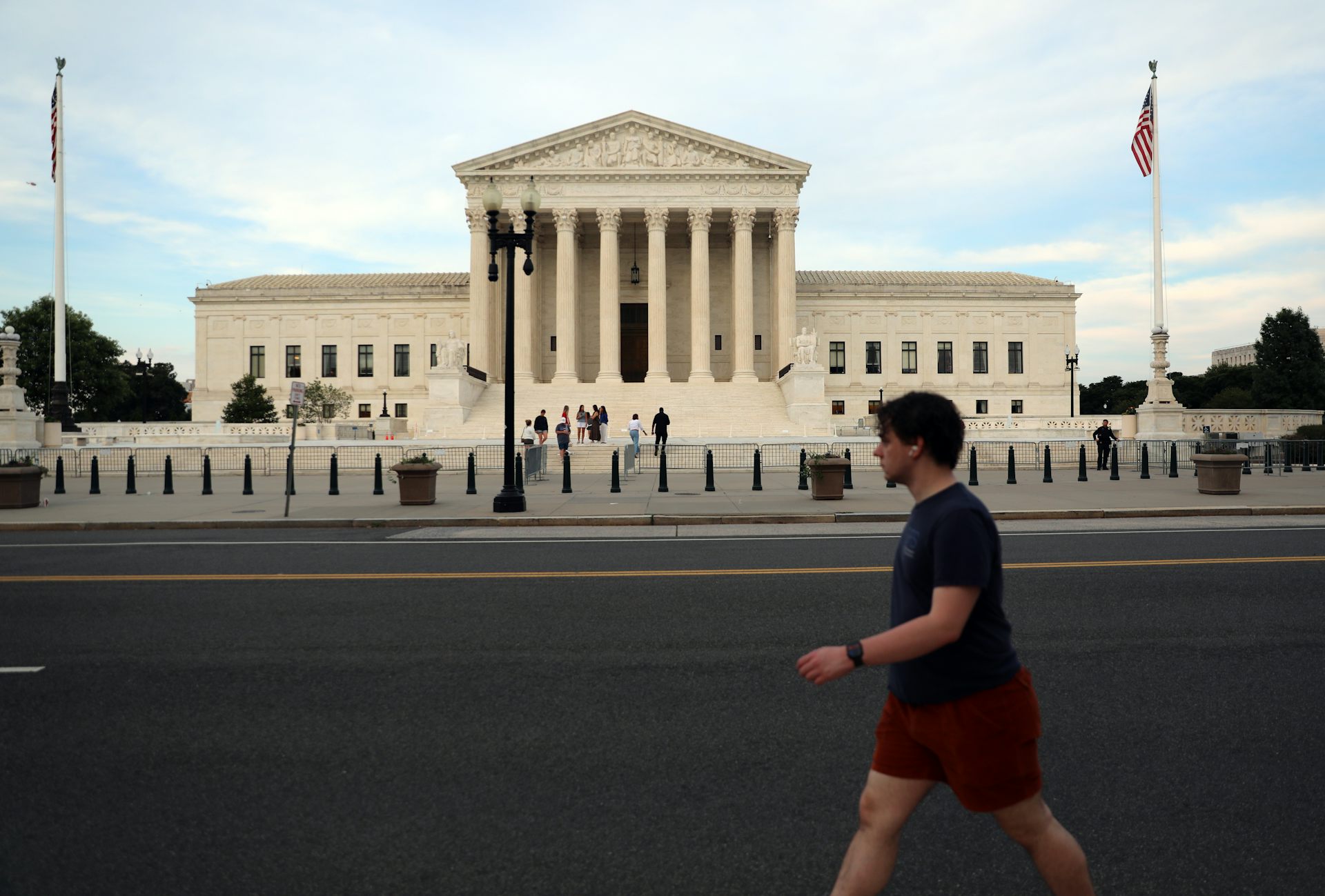
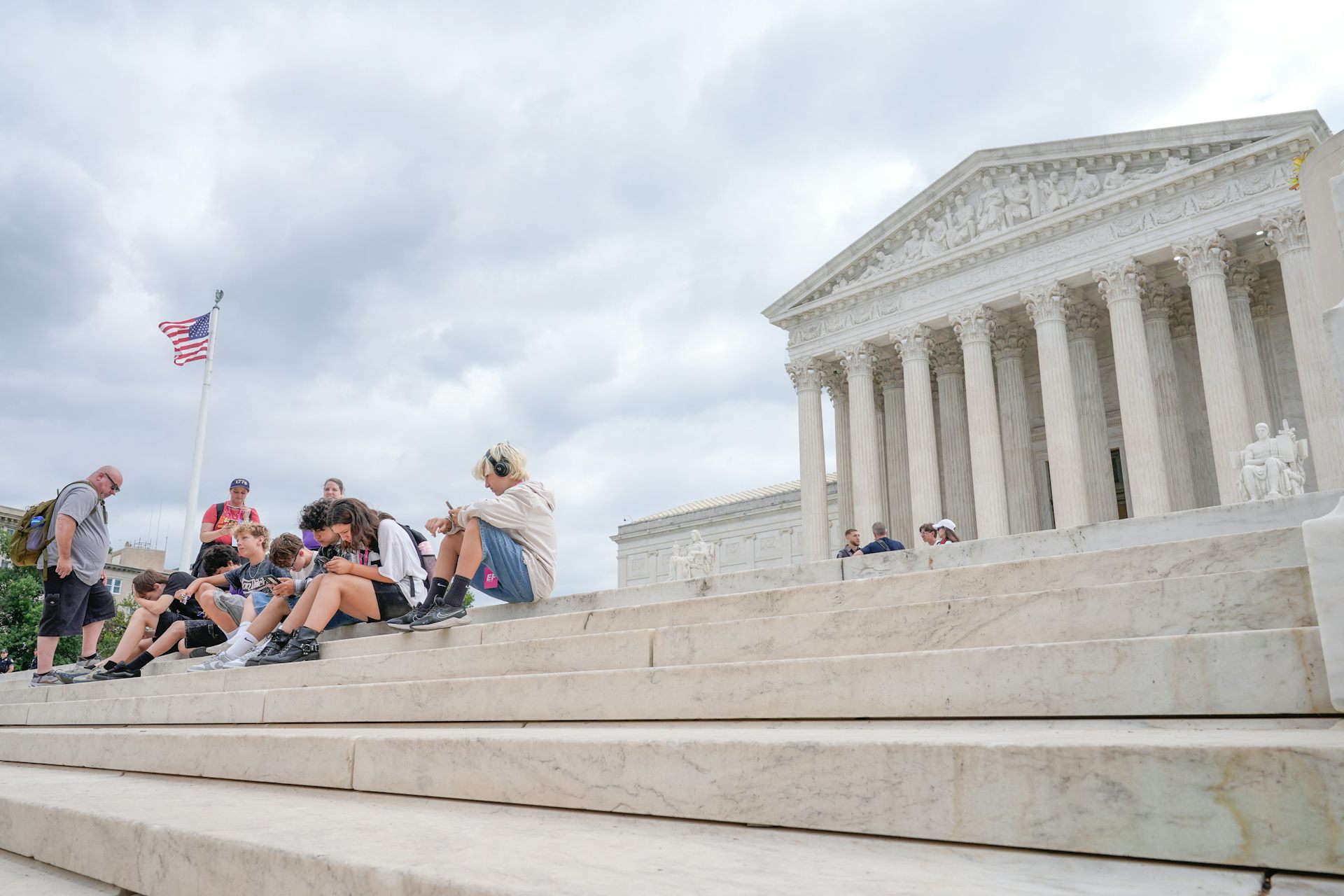

Two Supreme Court rulings in June 2026 reinforced the trend toward broad gun rights under the Second Amendment, overriding attempts to limit concealed carry and to punish the ownership of guns by drug users.
The ruling in the concealed carry case, Wolford v. Lopez, was no surprise. It followed the expected 6-3 division of the conservative and liberal wings of the court to block the state of Hawaii from making concealed carry a practical impossibility.
As a longtime observer of the Supreme Court, I believe the unanimous ruling in the second case, U.S. v. Hemani, is more surprising from the conservative court. That’s because it strikes down the long-standing federal law restricting gun ownership by consumers of controlled substances. The ruling suggests the current court is so pro-gun it has decided it must also be pro-drugs.
In Wolford v. Lopez, the gist of the ruling comes in the first sentence: “For years, the State of Hawaii made it almost impossible to obtain a license to carry a firearm.”
After the Supreme Court’s 2022 Bruen ruling recognized the right to carry a concealed handgun in public for personal defense, Hawaii continued to attempt to restrict the right. The state’s recent gun law flipped the script on allowable concealed carry regulations: Rather than the normal limitation that a property owner can ban concealed carry by posting a sign, all concealed carry was assumed to be banned unless the owner posted a sign allowing it.
As Justice Samuel Alito, the author of the decision, summarized the effect of the law, citizens would “be barred from entering many places that people routinely visit in the course of their daily routines, such as gas stations, convenience stores, restaurants, coffee shops, drug stores, grocery stores, ‘big box’ stores, home improvement stores, barber shops or hair salons, dry cleaners, and laundromats.”
If those restrictions make concealed carry impractical for ordinary citizens, then “this regime hobbles what the Second Amendment protects: the right of Americans to carry arms for self-defense as they go about their daily lives,” Alito wrote.
Justices Ketanji Brown Jackson and Sonia Sotomayor see the regulation as nothing remarkable or unconstitutional, but just property owners exercising their rights to ban guns. The majority sees this as subterfuge.
Under the current court, a core individual right – free speech, free exercise of religion, or personal defense with firearms – can be regulated but not eradicated, limited but not eliminated. For the court majority, the Hawaii regulation was a transparent attempt to stamp out concealed carry in the state.
The 1968 Gun Control Act initiated the federal restriction on the combination of guns and drugs, specifically targeting marijuana users.
The amendments in 1993, the Brady Law, and in 1994 the Violence Against Women Act expanded the restriction to apply to “any person who is an unlawful user of or addicted to any controlled substance.”
From 1968 to 2026 it seemed reasonable to believe that drug use and gun use were incompatible because each can kill you. In combination, they seem even more likely to have that result. As Justice Neil Gorsuch noted in the Hemani ruling, “We appreciate that drugs and guns can sometimes make for a dangerous mix.”
Nonetheless, the court ruled unanimously that the federal law overreaches for two interrelated reasons, one about constitutional law and the other about the facts surrounding marijuana use.
In 2021, the New York Rifle & Pistol v. Bruen ruling set the constitutional standard for firearms regulations that do not violate the Second Amendment: They must fit within the nation’s historical tradition. This places the burden on the government to identify examples of similar regulations with a long-standing pedigree. They do not have to be “a historical twin,” but they do have to be grounded in the same “how and why” of the current law.
In its 2024 U.S. v. Rahimi ruling, the court employed the new historical standard to uphold the federal law denying gun rights to people who are under a domestic violence protective order.
At the time of the founding there were no specific laws addressing guns and spousal abusers, but there were laws that disarmed those who went “armed offensively” or “to the fear and terror of any person.” The court considered those comparisons to be close enough.
Regarding drugs, advocates of the federal law outlawing gun ownership for users and addicts argue that historical examples of laws restraining “habitual drunkards” provide the necessary analog.
The court disagreed because those laws focused only on those whose habits rendered them “practically incapacitated.”
In 2022, Ali Hemani, a Texas marijuana user who owned a gun for self-defense, was indicted under a federal statute that makes it a felony for anyone who “is an unlawful user of or addicted to any controlled substance” to possess a firearm.
In the court’s view, Hemani’s kind of moderate marijuana use simply does not qualify given that “he admits to using marijuana about every other day. But how much marijuana does Mr. Hemani use, in what potency, and to what effect? Is he routinely unable to manage his affairs, a risk to himself or his family? Or does he use a mild gummy as a sleep aid a few times a week?”
The court insists that habitual drunkard laws at the time of the nation’s founding applied only to those who could not manage their own affairs, but did not apply to social or even heavy drinkers.
There is copious evidence that the founders themselves – not just Sam Adams, but also John Adams and James Madison – were serious drinkers. Even George Washington “often drank three glasses of madeira in the evening – ‘not enough to be considered a heavy drinker in his day,’” according to the historical research cited in the Hemani ruling.
The implication seems to be that alcohol was normal then, while marijuana has become normal now.
The ruling hinges on evolving perceptions of recreational drugs, especially marijuana. Does pot make users irrational? Does a marijuana habit indicate that someone is irresponsible?
If drug users are more likely to leave a gun unattended, more likely to mistakenly perceive a person as threatening, maybe because they have become paranoid, or more likely to react irrationally when someone steals their Cheetos, then the law may have a rational foundation. But the court’s view is that the government must demonstrate danger connected with drug use, not merely infer it.
The background of the ruling is the increasing acceptance of marijuana use. Even Alito, a conservative, penned a concurrence joined by liberal justice Elena Kagan noting that “marijuana consumption is increasingly common in this country … And from a practical standpoint, law enforcement widely tolerates the use of marijuana.”
The unanimous ruling notes that the federal government recently moved marijuana from Schedule 1, with no accepted medical use and high potential for abuse, to Schedule 3, which includes drugs such as anabolic steroids or Tylenol with codeine. Gorsuch points out that “surveys suggest there now may be more adults in this country who regularly use marijuana than consume alcohol.”
The court seems to have concluded that they can’t fight the new logic: Americans have a constitutional right to guns; Americans smoke weed; so weed can’t justify a denial of constitutional rights.
To meet the new standards, future gun regulations that come to the court will need to have a clear historical pedigree as well as target a group for whom Americans have less sympathy, such as spousal abusers, rather than increasing affinity – pot users.
This article is republished from The Conversation, a nonprofit, independent news organization bringing you facts and trustworthy analysis to help you make sense of our complex world. It was written by: Morgan Marietta, University of Tennessee
Read more:
How the US Supreme Court decides its cases – a step‑by‑step guide
Medication abortion: Decisions from federal courts, the FDA or Trump’s Department of Justice could try to end access via telehealth
US Supreme Court opens the courthouse door to lawsuits tied to Cuba’s property seizures 6 decades after the fact
Morgan Marietta does not work for, consult, own shares in or receive funding from any company or organization that would benefit from this article, and has disclosed no relevant affiliations beyond their academic appointment.



















































Comments