COUNTERPOINT: Pundits call it socialism, but many Americans call it common sense
Published in Op Eds

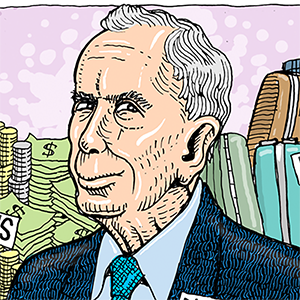
The debate over capitalism vs. socialism often looks like a battle of cartoon caricatures: Monopoly Man versus the Marx Monster.
Across the planet there are countless flavors of capitalism and socialism, unique mashups of free markets and government policies. Into this muddle wade the right-wing ideologues who fear the red “socialist” demon hiding in every corner.
If Fox News existed in the 1950s, they would’ve labeled Republican President Dwight Eisenhower a socialist for taxing the wealthy and making broad public investments to expand homeownership, enable debt-free higher education, and build infrastructure and technology that expanded the modern middle class.
Yet, what do these labelers call modern-day China, a country that mints hundreds of billionaires a year and dominates global markets with private production? Are they socialist or capitalist?
Meanwhile, social democracies, like Canada and the northern European countries, have progressive tax systems and strong social safety nets. Sweden, with its generous welfare state, has higher rates of entrepreneurship than the United States.
These countries also have higher rates of social mobility than the U.S. — meaning it’s easier for lower-income people to escape poverty and become stable. The American Dream, apparently, has moved offshore.
These welfare states, with their higher taxes on the wealthy, exist comfortably alongside healthy market economies. However, in the U.S., whenever a politician proposes that billionaires pay their fair share of taxes so we make public investments in opportunities for everyone else, they are labeled socialist or even communist.
These criticisms conflate a set of policy proposals, most of them quite popular, with an economic system where the government owns the means of production. However, this well-trod attack doesn’t seem to be working anymore, especially for younger generations.
Younger voters see the grotesque inequalities of wealth and power that distort the economy and block opportunity for the non-rich. They witness how large corporations have captured Congress and blocked popular reforms to defend consumers and counter monopolies.
They watch with alarm as billionaire-backed private equity firms buy up healthcare facilities and squeeze consumers in every corner of the economy. They see how both major political parties have been captured by the billionaire donor class and failed to address stagnant wages and rising basic costs.
All generations now understand that the old American Dream has expired, with seven in 10 experiencing economic insecurity. These folks still hope hard work could lead to a decent life — to own a home, take a vacation, pass opportunities to their children, and retire before they die. They feel the constant stress of knowing they’re one job loss, illness, disability or divorce away from living in their car.
Without a strong party representing working people’s concerns, political realignments are happening in both parties. A new generation of progressives and a handful of self-described Democratic Socialists argue the economy should work for everyone, not just the billionaire class.
They believe new technologies — such as AI — should serve everyone, not just billionaire tech bros and their global conglomerates. They believe the government has an important role in expanding healthcare, blocking oligarchy and breaking up big corporations.
They advocate for expanding affordable housing to aid people struggling to find decent housing in a hyper-speculative market. Instead of subsidizing private developers, they advocate for housing owned by nonprofit organizations, resident cooperatives, and — egads! — government entities, like housing authorities.
These progressives believe we should stop subsidizing the fossil fuel industry and end tax breaks to the Jeffrey Epstein class. They support investments to help us transition to sustainable energy, lower energy costs and reduce climate disruption.
The right-wing pundits — and some so-called moderates, too — are hoping that when they trot out the “socialist” bugaboo, your mind will freeze and you’ll start frothing at the mouth. They’re afraid that you will ask why the current system isn’t working and wonder if there are alternatives. Pay no attention to the man behind the curtain!
When someone brandishes the word “socialism” like it’s a stink bomb, take a courageous look at the actual ideas — higher taxes on the rich? Medicare for all? A raise for working people? — being proposed. There might be more common sense than you thought.
_____
ABOUT THE WRITER
Chuck Collins directs the Program on Inequality and co-edits Inequality.org for the Institute for Policy Studies. His latest book is “Burned by Billionaires: How Concentrated Wealth and Power Are Ruining Our Lives and Planet.” He wrote this for InsideSources.com.
_____
©2026 Tribune Content Agency, LLC




















































Comments