Commentary: How we dispose of an apple core matters to our climate
Published in Op Eds
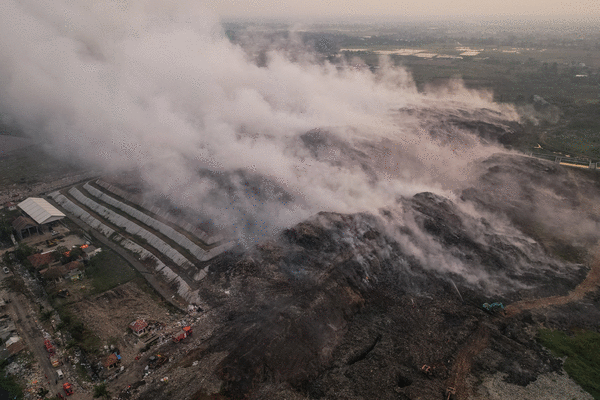
On June 30, the vast Jatiwaringin landfill outside the Indonesian capital of Jakarta caught fire. Large fires were smoldering for about 10 days on this open dump site that has been receiving hundreds of thousands of tons of trash every year since 1993.
Authorities worked hard to extinguish this multisite fire while toxic fumes were engulfing the area. Some local residents were evacuated, and many experienced serious respiratory and other health issues. An Indonesian environmental nongovernmental organization reported that the fire was most likely caused by methane gases emanating from organic waste on the dump.
This tragic fire appears removed from our lives because there are no unregulated dump sites in the United States. But this disaster deserves a second look: Massive amounts of methane gases stored in landfills are also part of our reality, only they are managed with technological help and precautions.
A quick detour via the apples we love to eat is helpful here. Statistically, every American eats 65 apples per year and leaves 65 apple cores behind. That makes a total of about 22.1 billion apple cores trashed every year. The weight of an apple core is about 25 grams, resulting in a total weight of American apple cores of about 500,000 metric tons of organic waste. Most of it goes into household trash, enters the solid waste stream and ends up in landfills. (To be fair, some are composted.)
Collectively, these apple cores produce about 25,000 tons of methane gas, using low estimates. Not a small amount. For comparison: A flight from Los Angeles to New York City for one person in economy class produces about 0.5 metric tons of carbon dioxide. And methane is about 30 times more potent than carbon dioxide when calculated over a 100-year period.
Do apple cores matter, or are these useless reflections? Because of the vast volume of our apple consumption (and trashed apple cores), these reflections are worth doing. What if only half of all apple eaters were to compost or throw their apple cores in an appropriate place in their yard, under a bush in a park, or other responsible places to let them decompose and not produce methane? (Exposure to oxygen prevents the production of methane.)
Such simple and easy acts would prevent 12,500 tons of methane gas in our midst. Small collective practices can make a difference, in this case by reducing tons of methane trapped and to be regulated in landfills. Not to mention how composted potato or orange peels would further reduce the methane buildup. As one observer of the Jatiwaringin fire noted, trapped methane gases combined with more frequent heat waves and tiny sparks are time bombs.
Apple cores under a bush or in a compost bin cannot solve the climate crisis, but it is the small thoughts and steps that initiate more reflection and larger transformations. Redirecting an apple core is a powerful act that can initiate further individual and political changes. The larger issue at stake here is composting and the use of existing municipal facilities and opportunities — for example, food scrap drop-off programs and backyard composting bins, as offered by the city of Chicago. We need to take better care of our apple cores (and potato peels), start a yard compost pile or municipal bin, and ask for communal organic waste pickup services.
The fire at the Jatiwaringin landfill that ended up covering an area of 60 football fields was extinguished in mid-July. But methane gases continue to accumulate in landfills across the globe. Apple cores are an easy start to reduce this smoldering crisis.
____
Petra Kuppinger is a professor of anthropology at Monmouth College in Monmouth, Illinois.
_____
©2026 Chicago Tribune. Visit at chicagotribune.com. Distributed by Tribune Content Agency, LLC.





















































Comments