Commentary: Rodeos belong in the dustbin of history
Published in Op Eds
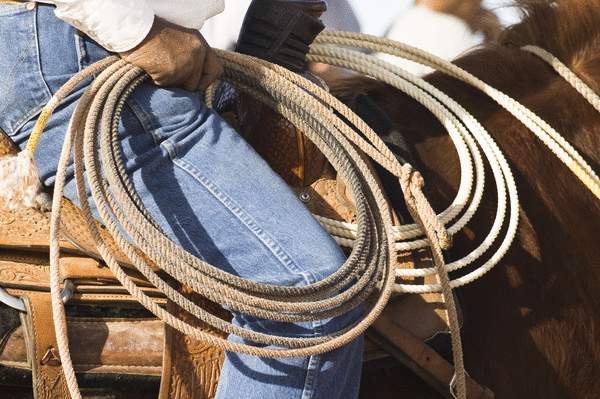
It’s been a miserably hot summer across most of the country, but for animals exploited on the rodeo circuit, the worst is still to come.
August is a busy month of the summer rodeo season, and some animals forced to participate likely won’t live to see September. A horse recently collapsed and suffered from violent seizures before dying at a South Carolina rodeo. In Texas, a steer was euthanized after sustaining an undisclosed injury and a horse lost his life after breaking his leg at a California rodeo. The list of injuries and fatal incidents goes on and on.
Animals have sustained broken necks and backs and experienced aneurysms and heart attacks during rodeos. It’s little wonder since they’re routinely hit, kicked, spurred, slammed into the ground and goaded into participating in violent displays.
In calf roping, a common event at rodeos across the U.S. and Canada, terrified young calves race desperately out of a chute to which they’ve been confined and are violently yanked to the ground. A flank strap is bound tightly around the midsections of horses and bulls used in the bucking and bull-riding events, causing the animals to buck wildly in an effort to rid themselves of it.
At a particularly egregious rodeo-style event in Washington state, the “suicide race” (that’s what it’s called) sends horses careening downhill in an almost vertical 210-foot drop to a river below. Horses frequently end up falling down the steep slope after losing their footing or colliding with another horse. Some have had to be euthanized after sustaining catastrophic injuries, and others have even drowned.
In an attempt to broaden their appeal to families, some rodeos are even encouraging kids to abuse sheep in “mutton bustin’” events. Terrified sheep are forced to carry screaming children—who may kick them and pull their tails and ears—all around an arena. These events teach young people to harass, frighten and harm animals for fun.
Laws don’t protect animals in rodeos, who are specifically excluded from the federal Animal Welfare Act. Many states also exempt rodeos from their anti-cruelty laws because they don’t regulate “normal agricultural practices” and/or “livestock.”
Most rodeos are self-policing, and it’s essentially a free-for-all. The Professional Rodeo Cowboys Association’s “humane rules” are meaningless—they’re rarely enforced, and when they are, the fines imposed on the participants are minuscule compared to the big prize money they’re vying for. They also allow devices that inflict pain on the animals: electric prods “when necessary” and spurs, which are supposed to be “dull,” even though they usually aren’t.
When these animals are too worn-out or broken-down to continue, no bucolic pastures await them in retirement. Instead, they typically get a one-way ticket to a slaughterhouse.
People who care about animals shouldn’t support any event that causes them pain and suffering. Please, steer clear of all rodeos.
____
Jennifer O’Connor is a senior writer with the PETA Foundation, 501 Front St., Norfolk, VA 23510; www.PETA.org.
_____
©2026 Tribune Content Agency, LLC.



















































Comments