Adrian Wooldridge: AI will make our politics even more emotional
Published in Op Eds

Politics has always been about emotions as well as reason and self-interest. Great politicians such as Winston Churchill have been able to stir our most profound feelings. Great political moments such as Nelson Mandela’s walk to freedom from Robben Island have moved people to their core.
Yet emotions can sometimes get out of control, and in so doing drive out reason and damage self-interest. In the 1930s, two of the world’s most civilized countries, Italy and Germany, were seized by a paroxysm of emotion and then almost brought the world to its knees. There are worrying signs that political emotion is getting the upper hand once again, supercharged by new forms of artificial intelligence.
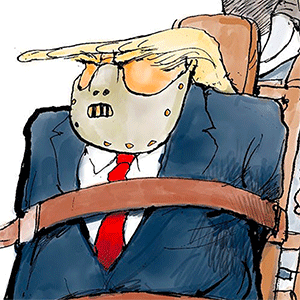
“In 2016, I declared I am your voice,” Donald Trump told a meeting of conservative activists in 2024, expressing emotional politics at its rawest. “Today I add, I am your warrior, I am your justice. And for those who have been wronged and betrayed, I am your retribution.”
Politicians on both the left and right routinely talk in primary colors of “friends” and “enemies.” Progressive and nationalists routinely take to the streets to march. A report published on July 29 found that 2025 was the deadliest year for Jews living outside Israel, with the United Kingdom recording the biggest rise in antisemitic incidents.
Why are so many people so emotional? The underlying reason is that we have forgotten the lessons of the 1930s and 1940s and progressively dismantled the barriers that the postwar generation, in their pain and wisdom, erected to prevent history from repeating itself.
The right dismantled the mechanisms that John Maynard Keynes and others put in place to smooth capitalism’s rougher edges. The left handed “power to the people,” notably in primaries, forgetting that the people who are most likely to take advantage of it are enthusiasts. The permissive society was supposed to make people more likely to express love and kindness. But Trump, himself a product of that permissive age, has demonstrated that it is just as likely to give people the freedom to express darker emotions.
The politics of identity has turned up the heat on an already simmering pot. Progressives thought that you could put issues of race, gender, and sexuality at the heart of politics without risking any blowback. But the right has not only pushed back against these new gods but also resurrected gods of its own such as faith, flag and family. Can there be anything more explosive than clashing visions of what we most value as human beings? And can there be anything less open to the politics of bargaining and compromise?
Too many people scapegoat the tech revolution for creating our world of roiling emotions. That said, that revolution is turning up the heat. The volume of material available at the touch of a key encourages people to retreat into their own bubbles — and to stop listening to people who occupy different bubbles. The ease of communication via social media encourages people to form tribes that define themselves by their hostility to other tribes. Social media also removes the filters that prevent people from broadcasting their red-hot takes on difficult issues.
Internet businesses have adjusted their business models to cope with the attention economy in which human attention is the most valuable resource. One study suggests that each emotional or moral word in a tweet increases the chances that it will be retweeted by 20%. The best way to achieve the internet nirvana of virality is to say that “they” are threatening “us” in a particularly heinous way. Tech companies do not behave in this way because they are uniquely evil. They do so because they are profit-maximizing organizations.
Tech companies have also assembled a powerful set of tools for exploiting emotions, by measuring, mining or manipulating them. Search companies have long been able to trawl our internet histories to build pictures of our preferences and moods and then sell that information to advertisers or political influencers. The popularity of emojis, five billion of which are used each day, has made this mining even easier. But we are now seeing significant advances in what Eva Illouz, an academic at the School for Advanced Studies in the Social Sciences in Paris, calls “emotional technologies.”
Wearable health apps can detect people’s health, including their stress levels, by monitoring their heartbeat and breathing. Mental health apps can detect signs of emotional problems by listening to people’s tone of voice, while meditation apps can monitor your inner karma. Smart cars can monitor their drivers to reduce speed or take control of the steering wheel if they get into an argument with their passengers or succumb to road rage. Public relations companies have invented training programs which, by monitoring eye movements, blinking and other facial expressions, can tell CEOs whether they come across as sincere or insincere.
Then there is the paradox of AI: Intelligent machines that are supposed to be the apogee of reason, and on the verge of artificial general intelligence, can also be used to heighten emotions. We like to think of, say, Grok’s occasional weakness for spouting Nazi talking points as an aberration that can be eliminated. But what happens if bad actors such as Russia build AI systems that dole up emotive lies with the suave confidence of an Ivy League professor?
There is even a subset of AI, variously dubbed “emotion AI,” “affective computing” or “artificial emotional intelligence,” that brings the growing power of AI to measuring and understanding human emotions. One aim of emotion AI is to reduce the species barrier, as it were, between people and machines by empowering smart machines to understand human feelings. They do this by ingesting as much emotion-laden data as they can and trying to imitate it. “The machine plugs directly into human emotions,” says Illouz, “which in turn become organized by the machine.”
Bringing political passions under control will take a lot more than better regulation of the internet. We need to revisit Alexander Hamilton’s dictate, in Federalist 15, that the reason government was instituted in the first place was because “the passions of men will not conform to the dictates of reason and justice, without constraint.” We also need to rethink some fundamental assumptions of the 1960s and 1970s. Is it wise to devolve power to activist groups or is there a merit to smoke-filled rooms? Should universities and other public-facing institutions take such a loud stand on divisive issues of identity? Or should they choose to remain neutral?
But creating a better system of regulation for the internet is a necessary starting point because the internet is so powerful and evolving so rapidly. The case for more public regulation is overwhelming given the economic incentives for private companies to exploit emotions. We need to make a sharper distinction between freedom of rational speech and freedom to vent and stir dangerous emotions. You can prevent people from inciting hatred on X without damaging the liberal ideal that truth comes from the clash of opinions. We need to prevent companies from designing algorithms that feed on people’s basest emotions. Above all, we need to keep a close eye on what politicians are doing with these new “emotional technologies.”
This might involve a little interference in companies’ freedom to make money and politicians’ ability to use the latest technological breakthrough to get their message across. But the danger of allowing the world’s most powerful technologies to do what they will with humanity’s most dangerous passions justifies a little caution.
_____
This column reflects the personal views of the author and does not necessarily reflect the opinion of the editorial board or Bloomberg LP and its owners.
Adrian Wooldridge is the global business columnist for Bloomberg Opinion. A former writer at the Economist, he is author of “The Aristocracy of Talent: How Meritocracy Made the Modern World.”
_____
©2026 Bloomberg L.P. Visit bloomberg.com/opinion. Distributed by Tribune Content Agency, LLC.




















































Comments