Editorial: Hochul's school phone ban a great success to copy
Published in Op Eds
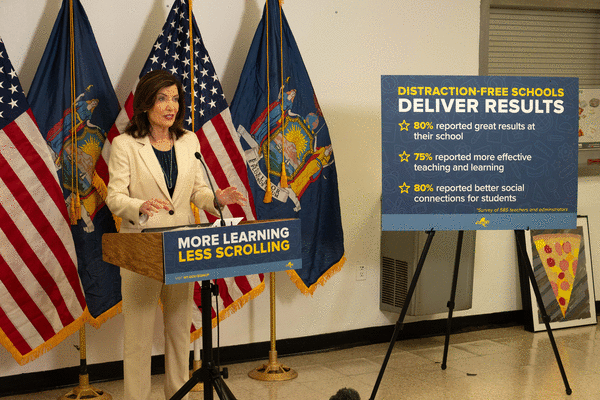
The results of a survey on Gov. Kathy Hochul’s “bell-to-bell” statewide ban on smartphones in school during its first academic year were exactly as we predicted: An A+. Other states should follow, as it keeps kids focused on their class work and their teachers, not being lost to online distractions. The only downside is that it should have been enacted years earlier.
Educators overwhelmingly found the ban to be positive for their schools and their students, prompting behavior like increased attention and stronger social ties. The fears of some parents of being out of contact with their children were just overblown silliness.
The impact of the ban is an admittedly difficult thing to measure; while evaluators can point to things like test results and grades as more determinative proof of the success of pedagogical decisions, the idea of student focus or socialization is obviously more subjective.
Yet we can all intuitively understand the power of something like a screen limitation, if only because practically all of us at this point suffer some measure of the screen addiction that is so pronounced among our students. Anyone who’d visited a school in the run-up to a phone ban could see it: students in hallways, lunchrooms and even classrooms themselves, eyes focused on the glow of screens and oblivious to friends and instruction.
We support efforts by individual schools and districts to go even further than the ban and encourage limited school-day interaction with screens, as well as Hochul’s examination of a potential further regulation of screens for younger children in particular. In the same way that certain materials aren’t necessarily developmentally appropriate for children under a certain age, some technologies might not be, either.
As the Daily News reported, 38 schools in Upper Manhattan’s District 6 just wrapped up a very successful week with limited use of instructional screens for a week. This was matched during non-school hours with families participating in activities from a neighborhood clean-up and book exchange, to improv and arts and crafts.
Of course, banning phones in schools and calling the youth attention and mental health crises solved would be like celebrating the end of vehicular deaths and injuries the moment after seat belt laws went into effect. We can’t downplay their impact but they are just one of a series of interventions necessary to ensure that young people are using their devices responsibly.
Remember how controversial it was a year ago? The city dillied and dallied before Hochul pushed for a statewide ban. She was willing to take the blame, but there would be no blame, so Hochul gets the credit.
Smartphones are a boon, a powerful computer in the palm of your hand. But texting or checking emails or playing games or sinking in social media, however enjoyable, are not part of school work. With these little machines gone, teachers can teach better and students can learn better.
And learning is the point of attending school, which is a legal requirement for youngsters. There is no value having young bodies in school buildings if their minds are elsewhere. Hochul’s ban keeps the body and mind together by putting the smartphone away, as she says, bell-to-bell. Waste your time before school and waste your time after school if kids and parents think that’s best. But since the taxpayers are spending billions for instructional time, it’s best to use it for real learning.
_____
©2026 New York Daily News. Visit at nydailynews.com. Distributed by Tribune Content Agency, LLC.




















































Comments