Politics
/ArcaMax

Editorial: The safety of your ballot is in your hands
President Donald Trump reads the polls, too.
Terrified of a “Blue wave,” he’s working furiously to keep Democrats at bay and democracy on the ropes. First, he promised $5,000 checks to all Americans — a flat-out bribe, payable if Republicans remain in power. Then Trump told cheering supporters to “cheat like hell!”
There’s no ...Read more
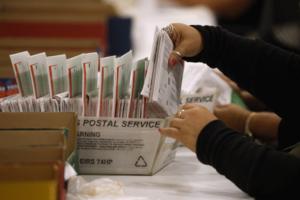
Editorial: Supreme Court refuses to let Trump sabotage elections
The U.S. Supreme Court sided with democracy last week when it put a stop, at least temporarily, to President Donald Trump’s yearslong attempt to derail free and fair elections.
In an unsigned emergency decision, the court’s 7-2 majority (Associate Justices Clarence Thomas and Samuel Alito dissented) upheld an injunction and ruled that “...Read more
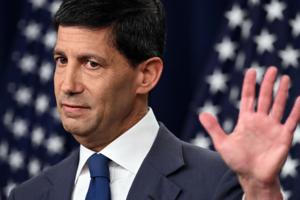
Editorial: Kevin Warsh does his job, not Trump's command
Fed Chair Kevin Warsh and the other 11 members of the central bank’s Federal Open Market Committee last week carried out their mission to control inflation by managing monetary policy and raised the key interest rate to 4%, even though President Donald Trump has been demanding that borrowing costs be cut.
Actually, more than demanding, as ...Read more

LZ Granderson: The cruel politics that pit struggling Americans against each other
The funny thing about American capitalism is that it requires abundance to truly thrive, and yet capitalists prefer the illusion of exclusivity and scarcity to control the market.
It wasn't too long ago when the Great Recession exposed the phrase "free market" as a synonym for "less accountability." We also learned then that "job creators" just...Read more

Commentary: The Trump family's corruption costs America
Donald Trump Jr.’s lavish Bahamas wedding was already a bad look, coming amid America’s brutal affordability crisis and when gaping inequality is on the rise. But the news that it was largely funded by Russian oligarch Umar Kremlev shifted this story from distasteful to dangerous. It is more concerning still that this is no isolated incident...Read more
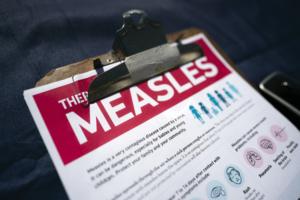
Commentary: The measles outbreak is evidence of a broken system
U.S. measles cases now number nearly 3,300, with no sign that the outbreak has abated. This is the highest number since 1991, when 9,643 cases were reported, a total that reflected a decline from previous years following the addition of a second dose of the measles vaccine to the childhood immunization schedule. The federal government’s ...Read more

Commentary: How to stop data centers from grabbing too much power
The rapid expansion of data centers has become one of the most tangible expressions of the artificial intelligence revolution. But debate about their environmental, economic and social impact threatens their future development. And rightly so. Although the digital economy is often seen as weightless, every cloud service and AI application ...Read more

Justin Fox: Trump's push to cut federal jobs lacks a goal and a vision
Wondering why so many things seem to have been going wrong this year, from contaminated lettuce to measles outbreaks to air-traffic-control-related flight cancellations? The reduction in federal government capacity caused by the Trump administration’s job cutbacks may be a factor.
The administration has made shrinking the federal workforce a ...Read more

Commentary: Raise taxes on billionaires federally, not state by state
I favor higher taxes on the ultra-wealthy. But I worry that California’s proposed tax on billionaires will inflict lasting damage on the economy and undermine the state’s status as a global home for innovation.
A growing body of economic research suggests that high taxes can make states less attractive to entrepreneurs. If California drives...Read more

Gautam Mukunda: AI's greatest threat is biological, not robotic
Anthropic PBC researcher Jacob Coxon quit last week and posted on social media that it was because “the people building AI earnestly believe that it could kill us all by the end of the decade.” Evan Hubinger, who leads the artificial intelligence company’s alignment science team, put the odds above 10% in the next 10 years. Anthropic Chief...Read more

Commentary: Is the Iran war turning young voters away from Republicans ahead of the midterms?
President Donald Trump won a surprising number of Gen Z voters in 2024, with a particularly strong performance among young men. Although Kamala Harris still won a majority of the 18-29 age cohort, Trump received the largest share of the youth vote for a Republican candidate since George W. Bush in 2004. But as the midterm elections approach and ...Read more

Commentary: Bring your cat indoors -- Before it's too late
When police in Salem, Ohio, received a call for assistance for an injured cat, they couldn’t have been prepared for what they found. He had been shot with a crossbow, lost the use of his legs and, with the bolt still lodged in his body, lain in agony for days before a kind person discovered him. Despite the shocking nature of this crime, it ...Read more
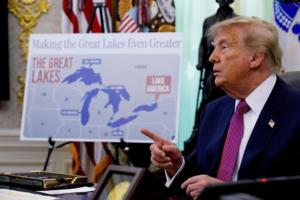
Commentary: Why Trump's renaming fixation is frightening
Heard the latest? President Donald Trump, after deciding that Lake Ontario will henceforth be known as Lake America, has floated the idea that New Mexico should be renamed New America. This continues a trend that began on Trump’s first day in office, when he issued an executive order renaming the Gulf of Mexico the Gulf of America. Can ...Read more
Abby McCloskey: Finally, a Mamdani policy even Republicans can love
It used to be conservatives who wanted to tread carefully with new things. These days, it’s progressives sounding the alarm on artificial intelligence. And I’m not just talking about the risk of human extinction.
Two of the country’s largest school systems have dramatically restricted AI access for students this year. They also happen to...Read more

Jackie Calmes: Trump loves to throw around taxpayers' money
Donald Trump Jr. has a lot more in common with his dad than just a name, sharing the president's penchant for shady dealings and for kleptocratic Russians. Sometimes the two proclivities go together. That was the case in May, we learned this week from ProPublica, when Don Jr. married his second wife during a three-day Bahamian bacchanal ...Read more
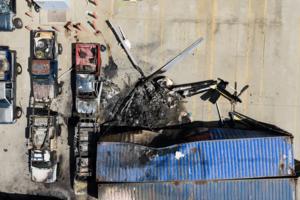
Patt Morrison: News helicopters are very LA It's a dangerous job
LOS ANGELES -- They’re as far away as a couple of thousand feet over your head, and as close as your radio and cellphone.
They were aloft before GPS, before Waze and Google Maps, and they still are.
Where, literally, would Angelenos be without the flying eyes that guide us to our destinations through our traffic mangles and bring us close to...Read more
Mark Gongloff: AI is already damaging human life. We gave it a head start
The AI-industrial complex is in turmoil after several of its executives and engineers warned the technology could kill some or all humans, possibly before the 2036 election. This could be real cause for alarm or just brilliant marketing. Whatever the case, artificial intelligence is already harming humans through environmental devastation ...Read more
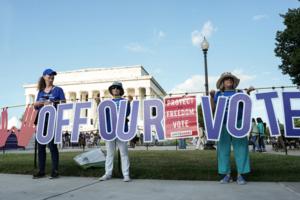
Noah Feldman: The Supreme Court's conservatives have a clear logic on voting
This week, four of the six conservative justices helped to block the Trump administration’s mail-in ballot scheme from going into place this Election Day. That’s a relief, but such partisan shenanigans aren’t permanently out of the question.
First, we can’t assume federal attempts to interfere with state-run elections are forever off ...Read more
Editorial: Power down regulations to power up debate
A major change by the Trump administration will reduce future power prices around the country. Unfortunately, it took a unilateral act of the executive branch rather than an act of Congress.
On Monday, EPA Administrator Lee Zeldin announced sweeping changes to the U.S. power sector. The agency is rolling back greenhouse gas requirements on ...Read more
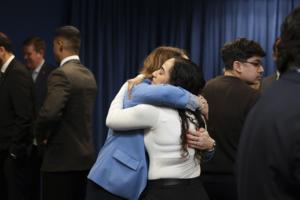
Editorial: Chicago's domestic violence homicides are falling. What's working?
Just weeks ago, Crystal Salter was cuddling in bed with her two young daughters.
Salter was soaking up time with her girls. Until her boyfriend stormed in with a gun and shot her multiple times in the face and torso. He was found later in his car, having turned the gun on himself.
How can a child ever feel safe again having witnessed something...Read more
Related Channels

ACLU
By The ACLU

Amy Goodman
By Amy Goodman

Armstrong Williams
By Armstrong Williams

Austin Bay
By Austin Bay

Betsy McCaughey
By Betsy McCaughey

Bill Press
By Bill Press

Bonnie Jean Feldkamp
By Bonnie Jean Feldkamp

Cal Thomas
By Cal Thomas

Clarence Page
By Clarence Page

Danny Tyree
By Danny Tyree

David Harsanyi
By David Harsanyi

Dick Polman
By Dick Polman

Erick Erickson
By Erick Erickson

Froma Harrop
By Froma Harrop

Jacob Sullum
By Jacob Sullum

Jamie Stiehm
By Jamie Stiehm

Jeff Robbins
By Jeff Robbins

Jessica Johnson
By Jessica Johnson

Jim Hightower
By Jim Hightower

Joe Conason
By Joe Conason

John Stossel
By John Stossel

Josh Hammer
By Josh Hammer

Judge Andrew Napolitano
By Judge Andrew P. Napolitano

Laura Hollis
By Laura Hollis

Marc Munroe Dion
By Marc Munroe Dion

Michael Barone
By Michael Barone

Mona Charen
By Mona Charen

Rachel Marsden
By Rachel Marsden

Rich Lowry
By Rich Lowry

Robert B. Reich
By Robert B. Reich

Ruben Navarrett Jr
By Ruben Navarrett Jr.

Ruth Marcus
By Ruth Marcus

S.E. Cupp
By S.E. Cupp

Salena Zito
By Salena Zito

Star Parker
By Star Parker

Stephen Moore
By Stephen Moore

Susan Estrich
By Susan Estrich

Ted Rall
By Ted Rall

Terence P. Jeffrey
By Terence P. Jeffrey

Tim Graham
By Tim Graham

Tom Purcell
By Tom Purcell

Veronique de Rugy
By Veronique de Rugy

Victor Joecks
By Victor Joecks

Wayne Allyn Root
By Wayne Allyn Root
Comics