Trump administration revives conspiracy theories about Cuba’s alleged manipulation of activism in the US
Published in Political News
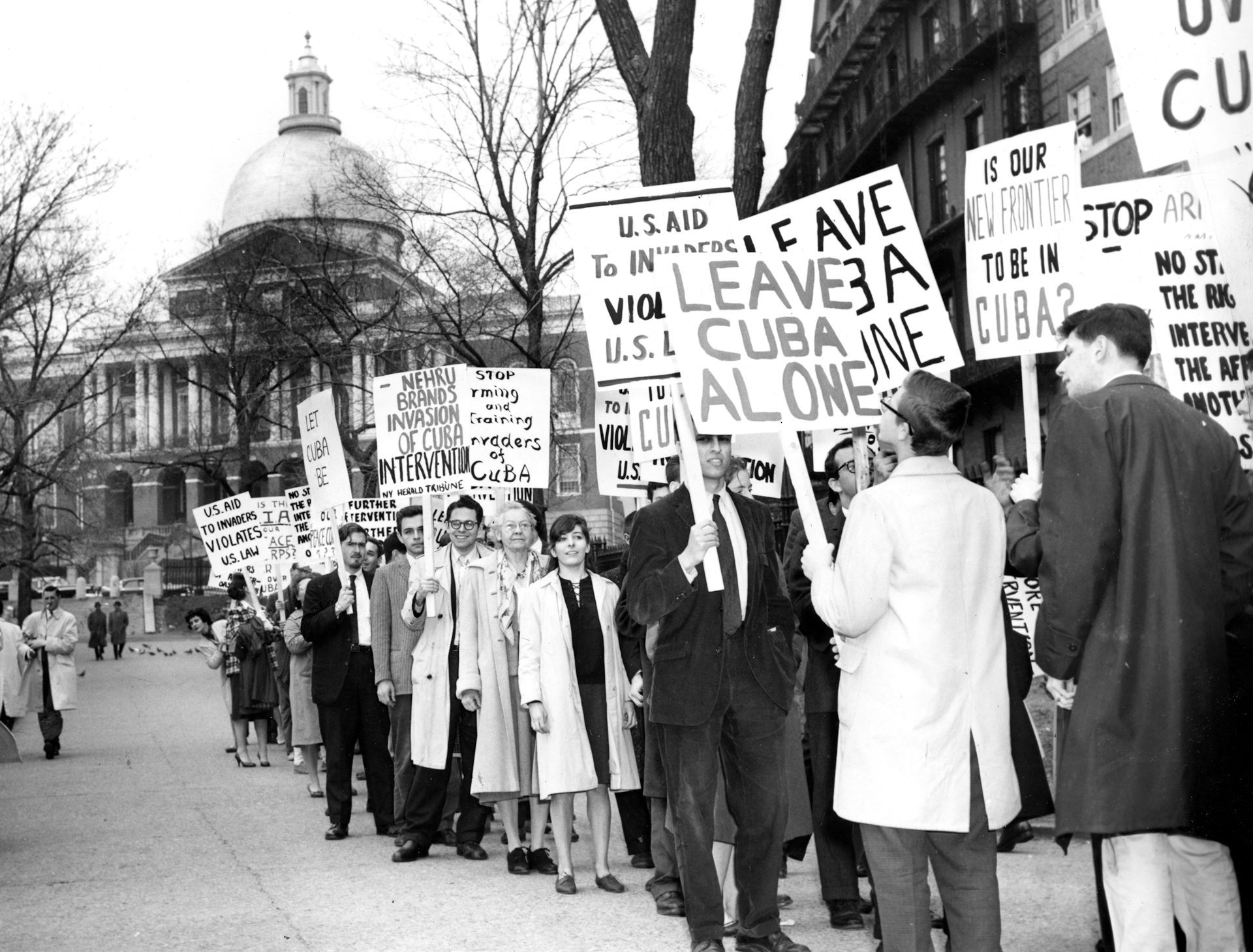
For nearly 70 years, Cuba has “waged a sustained campaign of subversion against the United States,” according to a newly released State Department report.
“Cuba: The Capital of 21st Century Communism” sounds an alarm without offering any new insights into Cuban intelligence operations or explaining how the Caribbean island could be undermining its northern neighbor when its own economy is on the verge of collapse.
Instead, the State Department re-ups an old conspiracy theory that partly blames Cuba’s communist leaders for contemporary U.S. social conflicts, such as the widespread protests held after the murder of George Floyd in 2020 and what it calls “the rise of Antifa.”
Those movements “can be linked, in some way, shape, or form, to Cuban influence,” the State Department asserts.
This report is new, but its claims are old. I have often come upon similar conspiracy theories about communist machinations in my research regarding U.S.-Latin American relations in the 20th century.
Beginning in the 1960s, rumors spread that Cuban communists were engaged in the U.S. Civil Rights Movement. Those stories, like those the State Department is now telling, are false and peaked in the late 1960s.
The 1959 Cuban Revolution did inspire many Americans to reassess their nation’s Cold War policies.
Some people in the U.S. admired how Cubans overthrew dictator Fulgencio Batista, repelled the U.S.-backed 1961 Bay of Pigs invasion by Cuban exiles, and attacked neighboring dictatorships, such as those of the Dominican Republic’s Rafael Trujillo and Nicaragua’s Anastasio Somoza.
Some appreciated how Cuba desegregated its beaches and hotels, although, to be sure, it does have a complicated legacy of racism that endures to this day.
Many of the Americans who admired Cuba formed the Fair Play for Cuba Committee, a group that lobbied for normalizing U.S.-Cuban relations, in 1960.
Immediately, conspiracy theories arose along these lines: Because many activists who supported Cuba’s communist government also supported civil rights in the U.S., therefore all civil rights activism was somehow shaped by Cuba.
Along with airing accusations that Martin Luther King Jr. and other civil rights leaders were communists, the Manion Forum, an anticommunist media outlet, asked whether the “Communist Hand of Cuba” was “fingering Haiti, Venezuela, Panama, Birmingham?” The suggestion: Communists were directing civil rights protests in Alabama.
The John Birch Society, an organization that also alleged that communists were behind the Civil Rights Movement, agreed.
These claims were repeated throughout the 1960s by the Alabama Legislative Commission to Preserve the Peace, which regularly conflated all civil rights protests with communism. And the U.S. Senate’s Subcommittee on Internal Security echoed this narrative when it held hearings in 1960 and 1961 on what “Fair Play for Cuba” did.
The State Department’s 2026 report on Cuba cites the subcommittee’s hearings as its only evidence that the Fair Play for Cuba Committee was subversive. Although more than 65 years have passed, the government has offered no new evidence.
These conspiratorial fears reached their zenith at the height of the Black Power movement, which emphasized racial pride and economic empowerment, when protests against the Vietnam War were widespread.
Although few Americans have ever completely endorsed the Cuban regime, many U.S. leftists did admire Cuba’s educational and healthcare achievements, which contributed to their own ideas about how to address U.S. poverty.
U.S. institutions of all kinds opposed to civil rights reforms spread conspiracy theories that communism, not domestic grievances, guided all these efforts to treat people of color more fairly.
Lawmakers who opposed desegregation into the 1960s repeated the Senate Subcommittee on Internal Security’s reports that the Venceremos Brigade, a pro-revolution organization that helped Americans visit Cuba starting in 1969, was a “screen and tool of the Cuban intelligence apparatus.”
The most frequently cited example of the alleged links between Cuban communism and U.S. civil right protests was a man named Robert F. Williams, a U.S. military veteran and North Carolina civil rights leader.
Williams fled to Havana in 1961 due to threats from the Ku Klux Klan and local authorities because of his support for the use of violence to fight back against racist oppression in the South.
There, Williams published a newsletter, The Crusader, to encourage Black people to engage in self-defense rather than nonviolence, whether during civil rights protests or confronting racist aggressors.
Williams, who was Black, represented many people of color tired of the continuing repression and racism they faced, grievances that inspired the Black Power movement.
Anticommunist conspiracy theories quickly used Williams’ residence in Cuba as proof that the Caribbean country was the force behind civil rights and antiwar protests.
The 1965 Watts riots in Los Angeles were an outgrowth of entrenched racism. Instead, the Citizens’ Council, a white supremacist organization, claimed Williams instigated the riots.
Typically a moderate when it came to anticommunism, U.S. Sen. Thomas J. Dodd, a Connecticut Democrat, blamed Williams’ Radio Free Dixie radio broadcasts for sparking unrest in Los Angeles and encouraging similar uprisings across the United States.
Williams spent some years in China after his stay in Cuba, returning to the United States in 1969. Criminal charges against him were dropped with little fanfare, since conspiracy theorists were now focused on other radical civil rights figures who followed his example.
Conspiratorial literature subsequently highlighted the stints that Black Power leader Stokely Carmichael and feminist scholar Angela Davis spent in Cuba.
Very few civil rights leaders, whether nonviolent or militant, moved to the island for good. Despite the new report’s emphasis on these links as the central channel through which Cuban communism influenced contemporary U.S. social movements, the State Department does not identify any prominent activist living there today.
These conspiracy theories are more than exaggerations for a broader audience. Such beliefs distract from important issues relating to Cuba that I believe are more urgent, such as assessing the impact of U.S. policies on the island or finding the best way to establish a democratic government there.
The State Department provides no evidence to support its assertion that Cuba is “extraordinarily influential over left-wing politics in the United States today.” Instead, the report names several examples that are indirect, exaggerated and hard to follow.
Take the Standing Rock protests against oil pipelines that would jeopardize Native Americans’ resources. The report ties those protests to the National Lawyers Guild, a group of progressive lawyers the report accuses, in turn, of being part of “Cuba’s U.S. network.”
Then there’s the Black Lives Matter movement, which protested structural racism. The report mentions that a woman who spent some time in Cuba 50 years ago went on to participate in the Weather Underground terrorist group and then served a prison sentence in the U.S. would later serve on the board of a foundation that helped launch a Black Lives Matter nonprofit as its fiscal sponsor.
The State Department also offers no substantive evidence of current meddling in U.S. affairs beyond the social media posts that Cuba-linked sites have made at a much smaller scale than those emanating from Russia, China and elsewhere.
It seems absurd that the Cuban government, which can’t afford to import the oil it needs for its economy to function, would be able to afford to do this meddling now, if it ever could. But the report doesn’t delve into how Cuba can possibly be masterminding activism in the U.S. while struggling to get the lights back on at home.
This article is republished from The Conversation, a nonprofit, independent news organization bringing you facts and trustworthy analysis to help you make sense of our complex world. It was written by: Aaron Coy Moulton, Stephen F. Austin State University
Read more:
The John Birch Society is still influencing American politics, 60 years after its founding
Did Biden really steal the election? Students learn how to debunk conspiracy theories in this course
JFK conspiracy theory is debunked in Mexico 57 years after Kennedy assassination
Aaron Coy Moulton received funding from the New England Regional Fellowship Consortium, the Dirksen Congressional Center, the Hoover Presidential Foundation, the Frances S. Summersell Center for the Study of the South, the University of Wyoming American Heritage Center, and the University of Connecticut Archives & Special Collections.


















































Comments