Trump tries to curb birthright citizenship after court loss
Published in Political News
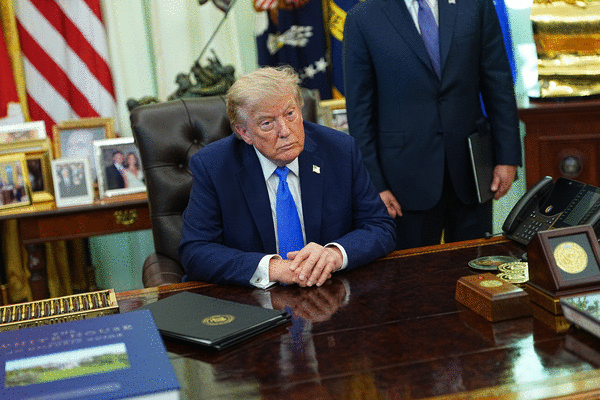
WASHINGTON — President Donald Trump signed a pair of executive orders aimed at denying citizenship to certain people born in the United States, his second attempt to curb birthright citizenship after the Supreme Court knocked down an earlier directive.
Under one measure signed Thursday, mothers deemed to be seeking entry to the U.S. for the sole purpose of having a child in the country, a practice known as “birth tourism,” may be denied visas, barred for entering or removed upon arrival.
The other directs agencies to refrain from granting citizenship to those born to people deemed to be alien enemies, foreign terrorists and foreigners employed by diplomatic outposts or international organizations. Babies born in U.S. territories could potentially be barred from gaining citizenship if Congress passes a law to that effect.
“We had a very unfortunate decision in the Supreme Court concerning birthright,” Trump told reporters during an Oval Office signing. “So we’re making adjustments because it’s very unfair.”
The orders are almost certain to be challenged in court as a violation of the 14th Amendment of the U.S. Constitution, which guarantees citizenship to nearly everyone born in the country.
The highest court in June struck down a sweeping executive order seeking to overturn the policy that Trump signed during the first day of his second term. The case marked a key test of what it meant to be an American. Trump had sought to limit birthright citizenship to babies with at least one U.S. citizen or permanent resident parent.
Trump repeatedly groused about that decision and, in its aftermath, pledged that his administration would look for other ways to cut back on birthright citizenship.
The president and Stephen Miller, his top adviser on immigration, have focused intensely on birthright citizenship in their drive to cut down the number of people of foreign origin in the U.S.
Administration officials argue that singling out birth tourism would pass legal muster, because they say that parents often fraudulently misrepresent their reasons for coming to the U.S. when obtaining visas. Some legal experts disagree that the president has the unilateral power to scale back the practice on his own.
“This was meant for the babies of slaves,” Trump told reporters, referring to the 14th Amendment. “This wasn’t for wealthy multimillionaires.”
(Jeff Mason contributed to this report.)
©2026 Bloomberg L.P. Visit bloomberg.com. Distributed by Tribune Content Agency, LLC.















































Comments