The World Cup and human trafficking: What the research reveals about the real risks at major sporting events
Published in Political News
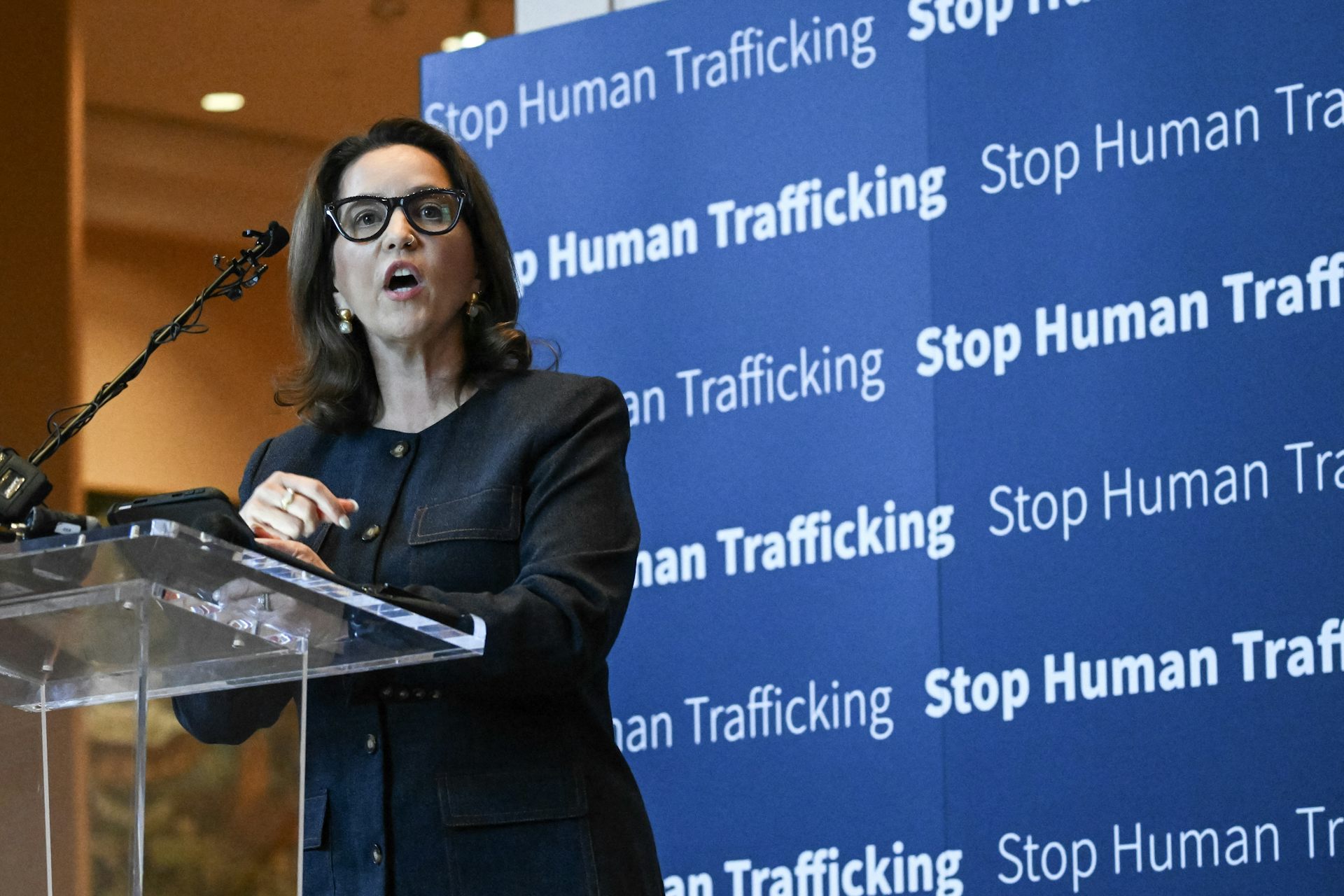
As U.S. cities prepare to host the FIFA World Cup, familiar warnings about human trafficking “spikes” at major sporting events have reemerged.
Media outlets point to elevated risks, advocacy groups roll out awareness campaigns, and city authorities and law enforcement ramp up anti-trafficking efforts.
This is all well intentioned. But as experts in human trafficking and the commercial sexual exploitation of children, we believe the talk of an increased risk might be misplaced. Two decades of empirical research across events such as the Super Bowl, Olympic Games and prior World Cups show no consistent evidence that human trafficking increases because of large sporting events. Further, framing trafficking as episodic and event-based can be counterproductive.
The belief that major sporting events produce spikes in human trafficking has circulated for more than two decades, gaining international prominence around the 2004 Olympic Games and reappearing consistently during subsequent FIFA World Cup tournaments, Olympic Games and Super Bowls.
The narrative persists largely because it appears intuitively plausible: Large influxes of tourists, temporary workers, nightlife activity and commercial spending are assumed to increase demand for commercial sex generally and also exploitative labor.
While these events do temporarily increase tourism and commercial sex markets, trafficking itself is not event-driven.
Studies examining arrest records, hotline calls and social service engagement during major events find fluctuations consistent with increased visibility and reporting, but not necessarily increased victimization.
Research shows that while some major sporting events correspond with increases in online commercial sex advertisements, those increases are not unique to the event and are comparable to other large conventions, holiday weekends or tourism-driven gatherings. For example, a National Institute of Justice-supported study analyzing escort advertisements during large public events concluded that Super Bowls “did not stand out” relative to other events in terms of changes in the commercial sex market.
Similarly, anti-trafficking organizations within the United States such at the Polaris Project and Anti-Trafficking Review have noted that increases in calls to the National Human Trafficking Hotline during major sporting events likely reflect intensified publicity campaigns and greater hotline visibility rather than confirmed increases in trafficking itself.
Scholars have described this phenomenon as a “flashlight effect,” in which increased media attention, specialized law enforcement operations and public awareness efforts generate more reports, arrests and detections because more people are actively looking for trafficking indicators – not necessarily because more exploitation is occurring.
In other words, heightened awareness campaigns may produce detection effects rather than there actually being more incidents. Conflating the two leads to misinterpretation of trends and misallocation of resources.
The narrative that people face an increased risk of becoming the victims of trafficking at big sporting events is based on a number of myths and misconceptions. One is that traffickers will travel to host cities to abduct or exploit unknown victims.
In reality, most trafficking – both sex and labor – involves recruitment through existing relationships: intimate partners, family members, acquaintances or trusted community ties. Grooming, coercion and economic dependence unfold over time, often long before any event occurs. Event-focused enforcement strategies therefore risk targeting the wrong mechanisms of exploitation while neglecting root problems.
Another common myth is that trafficking tied to these events primarily involves the sex trafficking of women and girls by organized criminal networks. This framing obscures the prevalence of labor trafficking and the diverse nature of victims. Evidence from several national datasets shows that labor trafficking occurs across industries likely to scale up during major events such as hospitality, construction, food service and cleaning services.
However, labor trafficking often gets overlooked. Moreover, victims can include men, boys, LGBTQ+ people and U.S. citizens – many of whom do not fit the sensationalized narrative that dominates event-related discourse.
These myths are not benign. Rather, they have measurable consequences. First, they distort policy by shifting resources toward short-term, high-visibility enforcement – through law enforcement stings, raids and temporary task forces. This comes at the expense of more sustained investment in trauma-informed care and programs that address root causes, such as housing stability.
Second, they contribute to victim misidentification. Individuals who do not resemble the “typical victim” portrayed in media – such as those with convicted of violent crime, substance use or complex trauma histories – may be overlooked or even criminalized.
In addition, these myth-driven campaigns can inadvertently increase surveillance and policing of marginalized communities, including immigrants, sex workers and unhoused individuals, without improving safety or access to services.
While it could be argued that any increased attention to human trafficking is welcomed, there is a downside: Treating the problem as episodic and event-based can obscure the developmental and cumulative nature of trafficking.
Trafficking is closely linked to adverse childhood experiences, poly-victimization – that is, being exposed to multiple different forms of victimization across one’s lifespan – and structural inequities.
Focusing on high-profile events like the World Cup limits the ability of communities fighting human trafficking to build longitudinal, prevention-oriented strategies that intervene early and across child welfare, education, healthcare and housing systems.
To bolster prevention, we believe public attention and resources must move from panic to precision. That means aligning interventions with evidence. It also means investing in cross-sector identification and referral systems, expanding labor trafficking detection, supporting survivor-led services and addressing the structural conditions that create vulnerability at all times – not just every four years.
This article is republished from The Conversation, a nonprofit, independent news organization bringing you facts and trustworthy analysis to help you make sense of our complex world. It was written by: Kathleen Murray Preble, University of Texas at Arlington and Jennifer E. O'Brien, University of Texas at Arlington
Read more:
Florida’s new reporting system is shining a light on human trafficking in the Sunshine State
Movies and myths about human trafficking
Why are First Nations peoples so opposed to Brisbane’s Olympic stadium at Victoria Park?
Kathleen Murray Preble has received funding in the past and/or currently from the Missouri Foundation for Health (MFFH), the Missouri Collaborative Against Human Trafficking (MCAHT), and DOJ Bureau of Justice Assistance. The opinions expressed in this article represent those of the author and do not reflect the views of the DOJ, MFFH, the MCAHT, UTA, or the University of Texas System.
Jennifer E. O'Brien has received funding from the Centers for Disease Control, National Institutes of Health, and the National Institute of Justice. She is affiliated with The University of Texas at Arlington School of Social Work.
The opinions expressed in this article represent those of the author and do not reflect the views of The CDC, NIH, NIJ, The University of Texas at Arlington, or the University of Texas System.





















































Comments