How much should politics influence science, and vice versa? National Science Board’s ousting resurrects an existential debate
Published in Political News



“On behalf of President Donald J. Trump,” read 22 emails sent from the White House Presidential Personnel Office on Friday afternoon, April 24, 2026, “I am writing to inform you that your position as a member of the National Science Board is terminated, effective immediately.”
The email was signed “Thank you for your service.”
The distinguished scientists and engineers who made up the National Science Board did not know the firings were coming. Several had been reappointed by Trump himself during his first term. The board was scheduled to meet the following week to finalize a report on the state of American science.
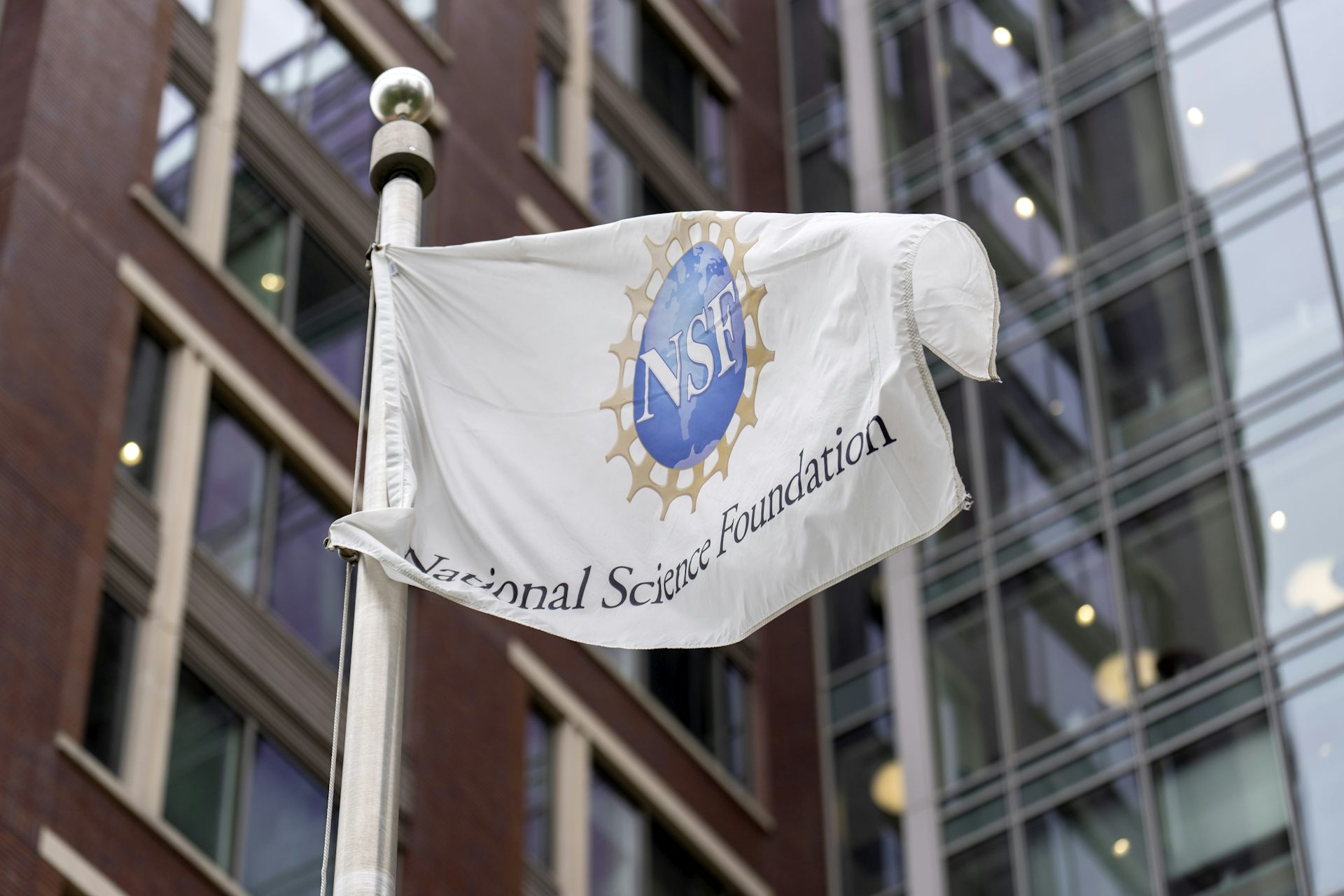
When asked why the entire board was removed, a White House spokesperson cited the Supreme Court’s 2021 decision in United States v. Arthrex, Inc., stating that the case raised constitutional questions about the National Science Board, its independence and its role in the agency it oversees, the National Science Foundation. Specifically, whether non-Senate confirmed appointees can exercise the authorities that Congress gave the board when it authorized the NSF in 1950.
We have been studying and doing science policy. One of us (Wagner) has worked closely with the National Science Board several times and regularly uses their database on scientific and engineering progress. The other of us (Olds) led the National Science Foundation’s Directorate for Biological Sciences from 2014 to 2018 and has previously called for reform of the board.
We argue that the dismissal is not just a political act dressed in constitutional language; it is the resurfacing of an argument almost as old as the National Science Foundation itself — one that nearly killed the agency in its cradle.
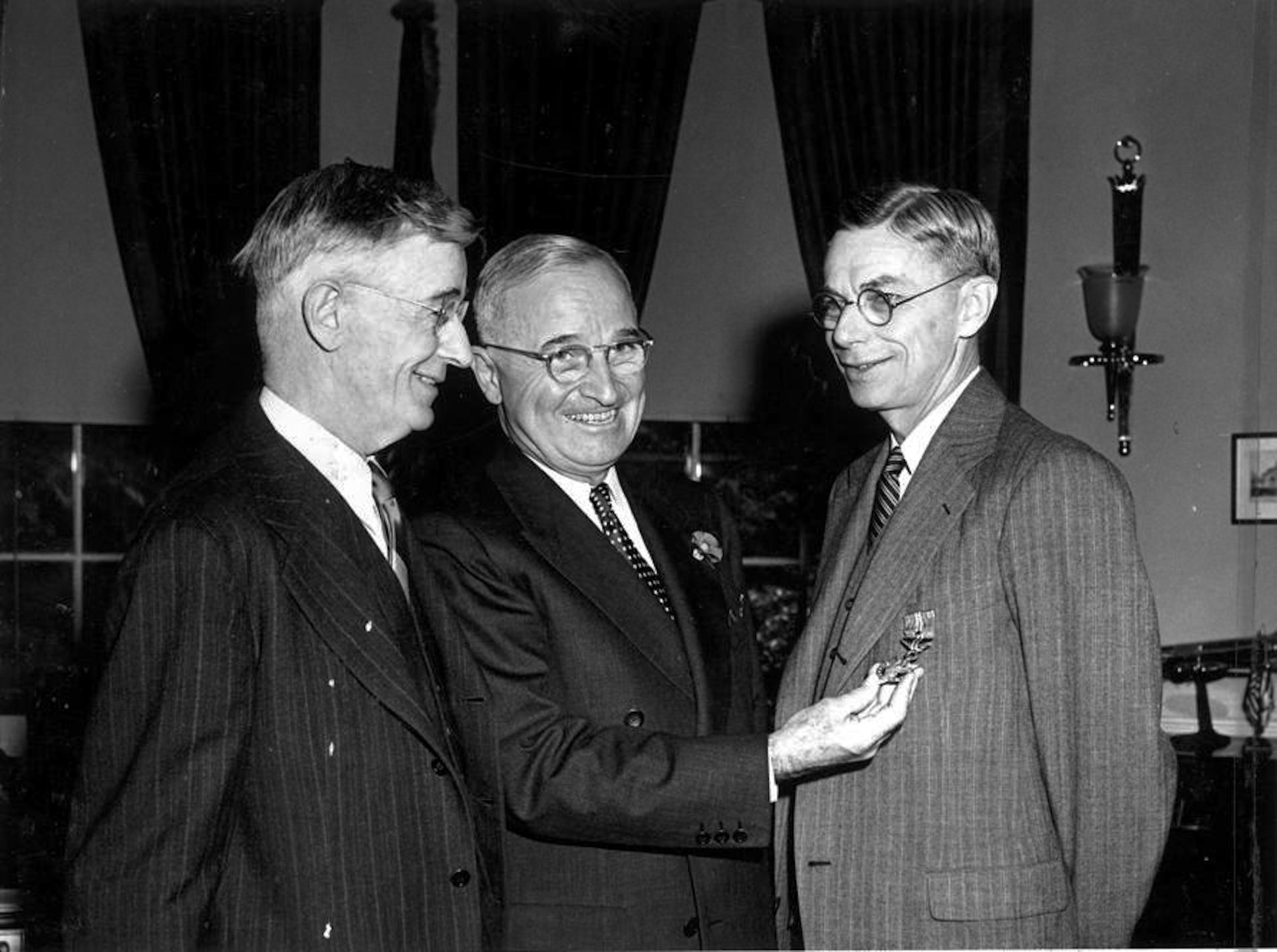
In 1945, the science advisor of President Franklin D. Roosevelt, Vannevar Bush, proposed that a new federal science agency be governed by a part-time board of eminent volunteer scientists. This agency came to be called the National Science Foundation, and the board – not the president – was designated to choose its director for a six-year term.
Bush’s intent was to insulate basic research from political pressure. But with Roosevelt’s death in April of that year, it would be up to the following president, Harry Truman, and Congress to make the final decision.
Harley Kilgore, a senator from West Virginia, objected to the board’s formation and its independent role. He argued that vesting public authority in scientists not directly accountable to the president was constitutionally suspect and democratically unsound. The board should not choose the director. President Truman’s 1947 veto signaled agreement.
A series of lively hearings on the creation of the National Science Foundation served to forge the post-war science system. Out of these debates came the 1950 compromise that finally established NSF and the National Science Board, giving each side something.
The director would be appointed by the president and confirmed by the Senate. Above the director sat the National Science Board – also presidentially appointed and Senate-confirmed, but serving staggered six-year terms designed to outlast any single administration. The board would set NSF policy, approve major grants and report independently to the president and Congress on the state of American science. The director would handle operations.
The structure was deliberately uneasy. It was meant to allow scientific judgment and political accountability to coexist without one absorbing the other.
For 75 years, the National Science Board has carried out three functions. It has overseen the agency’s largest research investments – telescopes, polar research stations, supercomputing facilities. It has produced periodic reports on the state of American science, first issued in 1972. And it has served as an independent voice to advise the president and Congress on long-term scientific priorities.
The board’s remit has expanded over time. The 1968 Daddario Amendments broadened the NSF’s mandate. The America COMPETES Acts of 2007 and 2010 added duties around workforce and research infrastructure. The CHIPS and Science Act of 2022 brought research security and coordinating emerging technologies into the board’s portfolio.
Through all of this, the dual governance structure held. The board functioned as a bridging device – a mechanism by which scientific judgment could inform federal decisions without scientists becoming political officers, and political priorities could shape research agendas without dictating findings.
The Trump administration’s removal of all sitting members of the National Science Board echoes a debate from the agency’s founding: Should officers with federal authority over spending operate beyond the president’s discretion? An independent board with power over a federal agency is a constitutional outlier, regardless of its competence or track record. The contrary view, which has governed the National Science Board for 75 years, is that expert bodies can be shielded from political pressures.
The Supreme Court has moved partway toward the president’s position in recent years. Seila Law v. CFPB (2020) struck down protections against the removal of the head of an independent agency. Loper Bright Enterprises v. Raimondo (2024) ended a court’s ability to defer to an agency’s interpretation of ambiguous laws.
U.S. v. Arthrex, Inc (2021) – the case the Trump administration cited in its justification for dismissing the National Science Board – held that certain officers who were not confirmed by the Senate had been improperly exercising authority reserved for executive branch officials.
Members of the National Science Board are presidentially appointed and were historically confirmed by the Senate, though this requirement was eliminated by the Presidential Appointment Efficiency and Streamlining Act of 2011.
These legal questions will likely be tested in court.
The National Science Board’s ousting sits atop a deeper conflict between science and the state.
The 1950 compromise that founded the National Science Foundation rested on a teetering wager: that scientific inquiry, partially insulated from political control, would over time produce goods useful enough to the American public to justify being unencumbered by political steering.
For 75 years, this wager paid off. American science led the world. The measures the compromise built – peer review, the National Science Board, reports on scientific progress – allowed political and scientific judgment to inform each other without collapsing into one another.
The current moment tears the Band-Aid off this old conflict and the complex system underneath. If political accountability requires that no expert body be insulated from presidential control, the 1950 settlement that founded the NSF cannot survive in its present form. Then the question becomes what could replace the NSF – and whether the benefits the state has come to expect from American science can be produced under different arrangements.
The historical record on political intervention in scientific operations is consistent. Soviet biology under Trofim Lysenko. German physics under the Nazis. Chinese science during the Cultural Revolution. In each case, the institution of science survived in name but stopped producing what science is supposed to produce: verifiable, trusted knowledge. While the names on the doors stayed the same, the work changed to serve politics.
The firing of the National Science Board has brought back the old question that Truman thought he had answered in 1950: how much politics should intervene in science. Now, that question is shaking the very foundations of U.S. science.
This article is republished from The Conversation, a nonprofit, independent news organization bringing you facts and trustworthy analysis to help you make sense of our complex world. It was written by: Caroline Wagner, The Ohio State University and James Olds, George Mason University
Read more:
‘This year nearly broke me as a scientist’ – US researchers reflect on how 2025’s science cuts have changed their lives
Challenging the FDA’s authority isn’t new – the agency’s history shows what’s at stake when drug regulation is in limbo
New research shows men still outnumber women as experts in science news
The authors do not work for, consult, own shares in or receive funding from any company or organization that would benefit from this article, and have disclosed no relevant affiliations beyond their academic appointment.



















































Comments