War, morality and the questions we keep confusing
Published in Political News
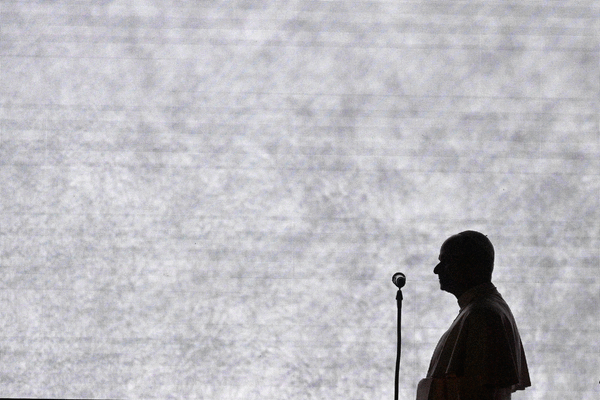
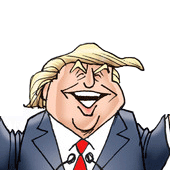
When Pope Leo XIV speaks about war, his message is clear: Violence degrades human dignity, and peace must remain the goal even when it feels out of reach. When Donald Trump speaks about conflict, his clarity takes a different form: Threats must be confronted, adversaries deterred, and, at times, force becomes unavoidable.
To many observers, this sounds like disagreement. It is something more fundamental — two different responsibilities, shaped by two different roles, answering two different questions simultaneously.
The emergence of Leo as the first American pope only sharpens this divide. For the first time, an American-born moral leader is speaking to the world not from a national-interest perspective, but from a global vantage point that transcends borders. His words carry no military weight, no enforcement mechanism, no immediate consequence beyond persuasion. Yet they are intended to do something different: to call the world toward a higher standard.
Political leaders operate in a different arena. Their responsibility is not to articulate moral ideals in the abstract, but to manage real-world threats in real time. When leaders like Trump speak about adversarial regimes or rising tensions, they are not primarily asking what is morally pure. They are asking what prevents the worst possible outcome. Their decisions are measured not only by principles but also by consequences.
This is where the confusion begins — not in the answers, but in the questions themselves.
When Leo condemns war in absolute terms, he is not ignoring reality; he is fulfilling a different purpose. The papacy has long served as a moral witness, reminding the world of what it ought to be, not merely what it is. His language reflects a commitment to human dignity that cannot be negotiated without losing its force. To soften that message would be to abandon the very role he occupies.
When Trump or any political leader defends the possibility of force, they are not necessarily rejecting morality; they are operating within constraints that moral leaders are not bound by. A nation must protect its citizens, anticipate threats and sometimes act before harm is fully realized. In that context, the question is rarely “What is ideal?” but rather “What is necessary?”
These are not competing answers to the same question. They are answers to entirely different ones.
One asks: What do we owe to each other as human beings?
The other asks: What must be done to preserve order in a dangerous world?
When these questions are collapsed into a single debate, both sides appear inadequate. The moral voice seems detached from reality, while the political voice appears morally compromised. But this perception is less a failure of either position than a misunderstanding of their purpose.
Early Christian teachings emphasized radical nonviolence and personal transformation — a vision rooted in love, restraint, and sacrifice. Over time, as those teachings encountered the demands of governing societies, they were adapted into frameworks that could account for conflict, security, and justice. The tension between moral ideal and practical necessity was never resolved. It was managed.
What we are witnessing now is that same tension, playing out in real time.
Leo speaks to what humanity should strive toward, even if it feels unattainable. Political leaders speak to what must be managed, even when it falls short of that ideal. Both roles are necessary. And both, on their own, are incomplete.
A world governed only by moral clarity would struggle to survive its first serious threat. A world governed only by necessity would gradually lose sight of why survival matters in the first place.
The challenge is not to eliminate the tension between these perspectives, but to recognize it. When we expect moral leaders to provide tactical solutions, or political leaders to speak in absolutes, we ask them to become something they were never meant to be.
The more useful task is to understand the limits of each.
Leo cannot secure a border or neutralize a threat. Trump cannot speak with universal moral authority detached from national interest. But together — or more accurately, in tension with one another — they reveal the full complexity of leadership in a fractured world.
What appears to be disagreement is often something deeper: a reflection of the dual reality we all inhabit, where ideals guide us and constraints define us.
Until we learn to separate those two, we will continue to hear conversations like this as conflict, rather than what they truly are — different voices answering different questions — each necessary, neither sufficient on its own.
____
Joe Palaggi is a writer and historian whose work sits at the crossroads of theology, politics, and American civic culture. He writes about the moral and historical forces that shape our national identity and the challenges of a polarized age.
____
©2026 The Fulcrum. Visit at thefulcrum.us. Distributed by Tribune Content Agency, LLC.
















































Comments