This Sunshine Week, Florida reflects an alarming national trend of blocking the public’s access to information
Published in Political News
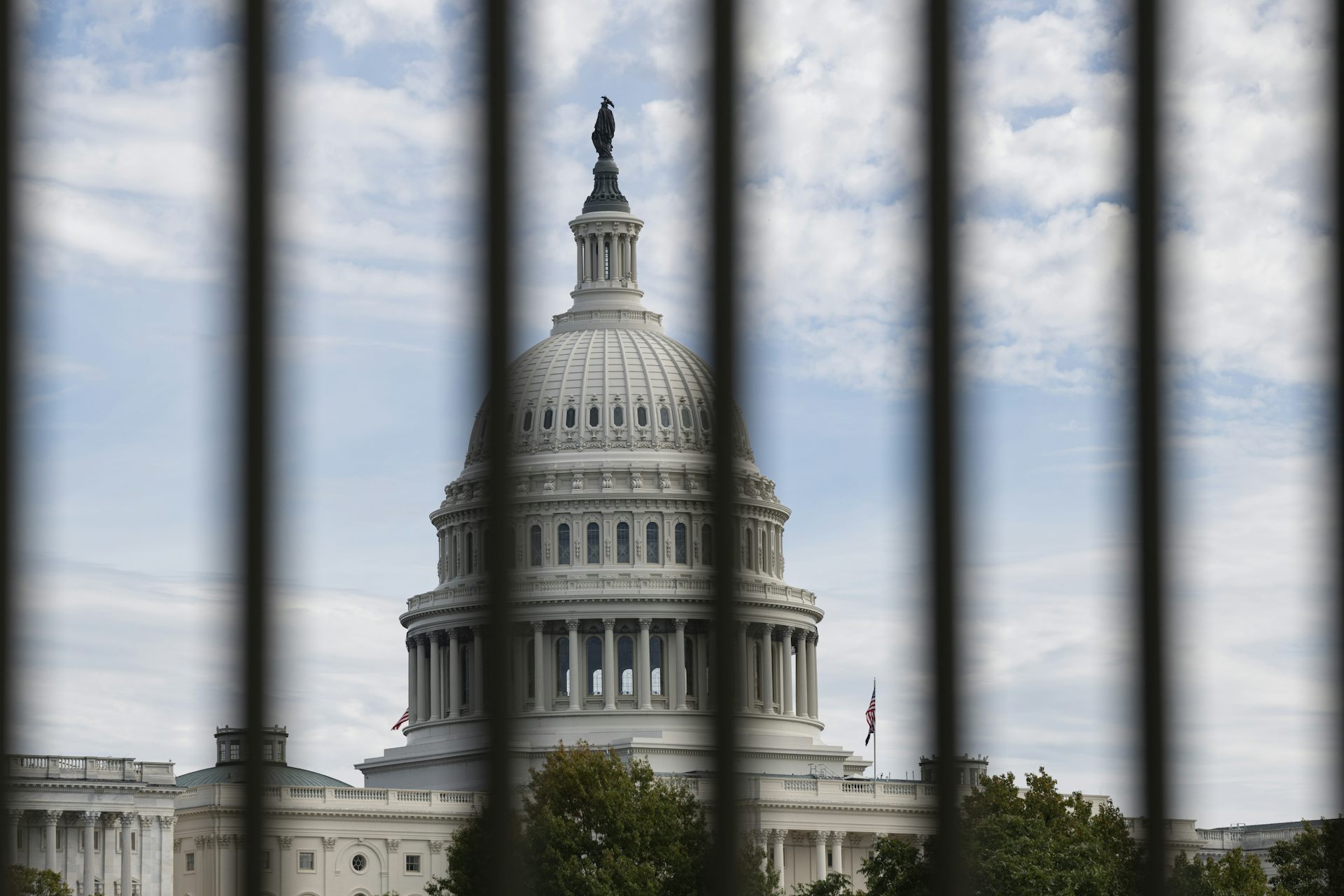
By all measures, the ability to see what the government is up to in the United States has plummeted to new depths since the beginning of the second Trump administration.
For National Sunshine Week in 2025, I wrote about secrecy creep, the adoption of federal secrecy protections implemented by state and local authorities. In Florida and throughout the United States, this threatens the public’s right to be informed about its government.
A year later, this creep toward secrecy has become an all-out slide.
As director of the Joseph L. Brechner Freedom of Information Project at the University of Florida, I track the state of government transparency in the U.S. What has changed since January 2025 is unprecedented.
Florida is a good example of this slide. Once viewed as a leader in transparency, the Sunshine State now charges exorbitant copy fees that discourage average people from requesting public records.
According to the nonprofit MuckRock, 24% of public records requests in Florida come with a copy fee, averaging US$1,623. Only Oregon charges fees more often, at 28% of the time. Fees are intended to help agencies cover the cost of large requests, but they tend to be arbitrary and are often used as a way to get pesky people to go away.
And that’s assuming you even get the information you want. One of my own studies from 2019 indicated that, on average, if you requested a public record in Florida, you would receive it about 39% of the time, placing the state 31st in the nation.
In 2025, MuckRock put the percentage dipping lower, at 35%. In March 2026, it was at 34%.
In Florida, more and more government agencies are thwarting the public’s right to know, including attempts to hide the details behind Alligator Alcatraz, the temporary immigrant detention center built in the Florida Everglades in June 2025. The state’s Department of Government Efficiency, or DOGE, office has pushed cities to be more transparent while withholding its own records.
Members of the state Legislature are attempting to strengthen the public records law. This would improve transparency in Florida’s state government, but I’d argue it doesn’t go far enough. Other states, such as Ohio, Pennsylvania and Connecticut, have implemented stronger laws, including independent enforcement of their sunshine laws, to ensure their governments comply.
State and local governments appear to be taking their cues from the federal government.
President Donald Trump’s administration heralds itself as the most transparent in history, pointing to the president’s willingness to talk informally to the press or directly to the public through social media.
While that may be one definition of transparency, the federal government’s willingness to provide documents that show what the government is doing – not just what it says it is doing – has been eviscerated under the second Trump administration. Examples include:
Refusing to provide tax returns, again, unlike every other president in modern history, and then suing the IRS for $10 billion when some returns were leaked.
Removing government websites and databases.
Firing the national archivist and the director of the Office of Information Policy, the agency within the U.S. Department of Justice that oversees government agencies’ compliance with requests under the Freedom of Information Act, or FOIA.
Firing and pushing out experienced staffers assigned to handle FOIA requests as part of the 2025 U.S. DOGE purges. This led some agencies, such as the Department of Energy, to apply unorthodox practices, including closing out pending requests.
Axing the new Open Government Federal Advisory Committee, which was launched to find ways of improving FOIA.
Pulling out of the Open Government Partnership, which the U.S. helped found in 2011 to foster transparency around the globe.
Typically, the Department of Justice releases annual statistics on FOIA requests every March. When I examined initial reports posted in January, when just 11 agencies had provided their reports, backlogs – that is, requests that remain unresolved after a year – had increased 67% from the previous fiscal year. The time to process simple requests nearly doubled.
In order to understand how secrecy in the United States now compares to historical precedent, I reached out to people who have researched freedom of information for decades, some going back to the 1970s.
I asked them a simple question: How does the current state of affairs in freedom of information compare historically?
Here is what they told me:
Jane Kirtley is a longtime FOIA scholar from the University of Minnesota who wrote in 2006, “The Bush administration’s contempt for the public’s right to know amounts to an organized assault on freedom of information that is unprecedented since the enactment of the Freedom of Information Act 40 years ago.”
Today, in comparison? “Abysmal,” she wrote to me via email. “It was abundantly clear from the moment Elon Musk and his ‘musketeers’ invaded and pillaged government electronic records that we have entered a new era of deletion, obfuscation, fabrication and utter contempt for the concept of data integrity and the public’s right to know.”
Thomas Susman, who helped craft the 1974 FOIA amendments and currently assists the American Bar Association, wrote in 2005 that increasing delays and backlogs threatened FOIA’s intended purpose.
In February 2026, he wrote to me that the “arc of the FOIA universe has for six decades bent toward greater public access to government information − until now. If ‘democracy dies in darkness’ (according to The Washington Post’s official slogan), America’s democracy is threatened with becoming dead meat. We’ve survived the Civil War, the Great Depression, Vietnam, Watergate and more. If we fight back hard enough, this too shall pass, though not quickly, and likely with lasting scars.”
Patrice McDermott directed Open the Government from 2006 to 2017 and pointed in 2007 to an underlying tension throughout government: “the ability – and willingness – to harness the promise of digital information for public access and accountability while not abusing its potential for control of that information.”
Today, she writes that, as Benjamin Franklin put it, we “have a Republic … if (we) can keep it” and are committed to the fight for our constitutional form of government.
Perhaps advances can be made to reverse the secrecy trend and carry out the intentions of the Freedom of Information Act, as expressed by Lyndon B. Johnson upon its adoption nearly 60 years ago: “I signed this measure with a deep sense of pride that the United States is an open society in which the people’s right to know is cherished and guarded.”
This article is republished from The Conversation, a nonprofit, independent news organization bringing you facts and trustworthy analysis to help you make sense of our complex world. It was written by: David Cuillier, University of Florida
Read more:
The sun is setting on government transparency in Florida – and secrecy creep is affecting the rest of the US, too
Growing secrecy limits government accountability
Secrecy versus sunshine: Efforts to hide government records never stop
David Cuillier has received funding from the Democracy Fund and John S. and James L. Knight Foundation to study the state of freedom of information. He is a board member of the National Freedom of Information Coalition and he coordinates national Sunshine Week.




















































Comments