Politics
/ArcaMax

Illinois 4th District race: Chuy García's handpicked successor Patty García defends path to Congress
CHICAGO — Patty García’s path to Congress was paved long before Election Day. The challenge now for the first-time candidate: Shaping how the voters she wants to represent see her.
Her pitch was clear as she spoke to campaign volunteers in Chicago’s Back of the Yards neighborhood in September.
She was raised by an immigrant father, a ...Read more
Gov. Lamont, Sen. Fazio clash in first CT gubernatorial debate over taxes, electricity
From the opening statements, Gov. Ned Lamont and Republican challenger Ryan Fazio came out swinging in their first debate Thursday night as they clashed on everything from taxes and electric rates to President Donald Trump’s policies.
They disagreed on solutions to difficult problems as Lamont, a two-term Democrat, is seeking his third term ...Read more

Trump and crypto firm sued for profiting off foreign government
Donald Trump and World Liberty Financial, the cryptocurrency venture he co-founded with his sons, were sued by a shareholder in a rival crypto firm over claims the president illegally profited from his office in violation of the U.S. Constitution.
J. Benjamin Greenberg, a shareholder in Circle Internet Group Inc., claims illegal competition ...Read more
ND Sen. Kevin Cramer calls for debt limit action in lame-duck session
WASHINGTON — Sen. Kevin Cramer, R-N.D., said Thursday that he expects Republicans to attempt another budget reconciliation package in the lame-duck session with a boost to defense funding — along with action to lift the debt ceiling, either in a bipartisan fashion or as part of that package.
Lawmakers are facing a short runway to get any ...Read more

Congress demands information about VIP rewards from DraftKings, Fanatics, prediction markets and others
Three members of Congress on Thursday expanded their scrutiny of VIP gambler benefits by demanding answers about the scope of rewards programs offered by a half dozen companies, including DraftKings and Fanatics, and the prediction markets Kalshi and Polymarket.
“As repeated stories from exploited gamblers and media reports have vividly ...Read more
Florida resident arrested after threatening US Rep. Jared Moskowitz
FORT LAUDERDALE, Fla. — A Boca Raton resident was arrested Thursday after making an alleged threat against U.S. Rep. Jared Moskowitz, the congressman announced.
Just after 2:30 p.m., Moskowitz wrote in a post on X: “A constituent of mine has just been arrested in Boca, just a few miles from my house, for threatening my life. He is currently...Read more
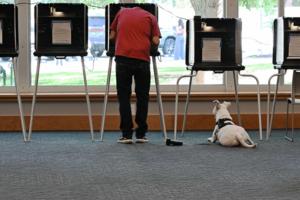
Justice Department will send federal observers to at least 2 Colorado counties on Election Day, letters say
DENVER — The U.S. Department of Justice plans to send federal election observers to Adams and Douglas counties on Election Day, according to letters confirmed by the Colorado Secretary of State’s Office and the state clerks association.
The DOJ characterized the monitoring as routine, but it quickly drew concerns from election officials ...Read more

Trump and crypto firm sued for profiting from foreign government
Donald Trump and World Liberty Financial, the cryptocurrency venture he co-founded with his sons, were sued by a shareholder in a rival crypto firm over claims the president illegally profited from his office in violation of the U.S. Constitution.
Benjamin Greenberg, a shareholder in Circle Internet Group Inc., claims illegal competition from ...Read more
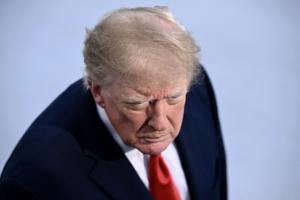
Trump ordered to sit for deposition by Dec. 11 in BBC suit
A judge ordered President Donald Trump to sit for a deposition by Dec. 11 in his $10 billion lawsuit against the British Broadcasting Corp. after he missed an earlier date he’d agreed to.
The date was set Thursday by U.S. Magistrate Judge Enjoliqué Lett in Miami, who last week threatened to sanction Trump if he didn’t follow through on the...Read more
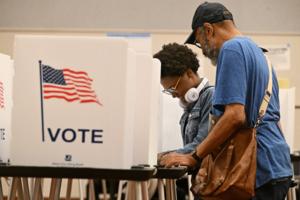
Department of Justice sending election monitors to 7 Michigan cities
DETROIT — The U.S. Department of Justice plans to send election monitors to polling places in seven Michigan cities this fall, as voters in the battleground state prepare to pick a new governor and decide a series of races that could sway control of Congress.
Less than two weeks before the midterm election, the federal department within ...Read more
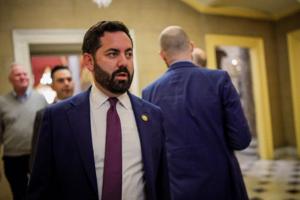
NY's 17th District: Lawler scores $500,000 boost from Musk amid reports of undercutting Ukraine
NEW YORK — Republican Rep. Mike Lawler has received a much-needed boost of at least $500,000 from Elon Musk in the closing days of his reelection fight even as the world’s richest man reportedly has undercut Ukraine by throttling or cutting off access to the Starlink satellite system used to defend against Russian attacks.
The endangered ...Read more
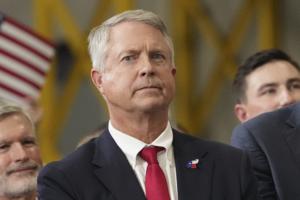
In TV debate, Kansas Senate candidates Marshall and Hamilton respond to attacks on church abuse, medical bills
Just minutes into their final TV debate on Wednesday, the candidates jockeying for U.S. Senate in Kansas immediately faced questions about the two issues that have dominated TV ads in recent weeks.
The first question posed to U.S. Sen. Roger Marshall, a Republican, centered on his history of suing patients as a rural physician. The Rev. Adam ...Read more
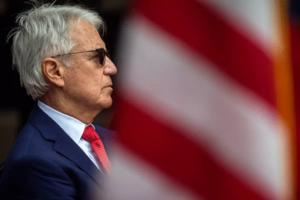
A political bogeyman has emerged in LA's election: Ousted District Attorney George Gascón
LOS ANGELES — A political advertisement released this summer claimed former L.A. County District Attorney George Gascón "almost destroyed Los Angeles" and warned that, if elected as L.A.'s next city attorney, Marissa Roy will "do the same."
Earlier this month, a seemingly out-of-nowhere rumor spread through City Hall and among rank-and-file ...Read more

Israel on the ballot: Moskowitz, Singer battle for Jewish vote in new Florida district
MIAMI — In the race to represent Florida’s newly redrawn Congressional District 25 — one of the most heavily Jewish districts in the country — voters heard from prospective candidates for the first time on Tuesday evening during public forum at a synagogue event in Boca Raton. Amid a myriad of issues voters are facing, the conversation ...Read more
Israel on the ballot: Moskowitz, Singer battle for Jewish vote in new FL district
MIAMI — In the race to represent Florida’s newly redrawn Congressional District 25 — one of the most heavily Jewish districts in the country — voters heard from prospective candidates for the first time on Tuesday evening during public forum at a synagogue event in Boca Raton. Amid a myriad of issues voters are facing, the conversation ...Read more

Israel on the ballot: Moskowitz, Singer battle for Jewish vote in new FL district
MIAMI — In the race to represent Florida’s newly redrawn Congressional District 25 — one of the most heavily Jewish districts in the country — voters heard from prospective candidates for the first time on Tuesday evening during public forum at a synagogue event in Boca Raton. Amid a myriad of issues voters are facing, the conversation ...Read more

Billionaire Brazilian brothers emerge as Bolsonaro's foes in presidential runoff
Two brothers from Brazil’s richest family have emerged as opponents of right-wing presidential candidate Flávio Bolsonaro ahead of Sunday’s closely fought runoff election.
João and Walter Moreira Salles — scions of the Itau Unibanco Holding SA fortune with a combined net worth of $17.6 billion, according to the Bloomberg Billionaires ...Read more
Stablecoin yield rule revives crypto vs. banking industry fight
WASHINGTON — Banking industry representatives came out firing Wednesday after regulators finalized a rule settling the debate over a legal loophole created by Congress in favor of cryptocurrency exchanges’ ability to pay interest on account owners’ stablecoin holdings in certain instances.
Last year’s law known as the “GENIUS Act” ...Read more

How 3 Virginia races showcase the House battleground
WASHINGTON — Virginia Republicans caught a break this spring when the state Supreme Court struck down a map drawn to help Democrats win 10 of the commonwealth’s 11 House seats.
But Virginia remains instructive to the fight for the House majority, and a trio of GOP-held seats there exemplify the type of districts that have made it onto the ...Read more
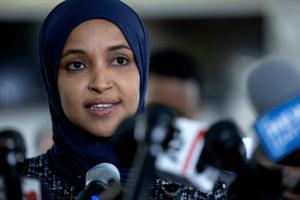
Editorial: In Ilhan Omar case, follow the evidence, not the politics
When federal investigators examine a public official’s immigration records, the public deserves two things at once: a serious inquiry and a fair one. The allegations involving Rep. Ilhan Omar are grave. They also remain allegations, and the public has not seen evidence establishing that she committed fraud.
The timeline matters. Federal ...Read more
Popular Stories
- In TV debate, Kansas Senate candidates Marshall and Hamilton respond to attacks on church abuse, medical bills
- A political bogeyman has emerged in LA's election: Ousted District Attorney George Gascón
- Editorial: In Ilhan Omar case, follow the evidence, not the politics
- Gov. Lamont, Sen. Fazio clash in first CT gubernatorial debate over taxes, electricity
- How 3 Virginia races showcase the House battleground
Related Channels

ACLU
By The ACLU

Amy Goodman
By Amy Goodman

Armstrong Williams
By Armstrong Williams

Austin Bay
By Austin Bay

Betsy McCaughey
By Betsy McCaughey

Bill Press
By Bill Press

Bonnie Jean Feldkamp
By Bonnie Jean Feldkamp

Cal Thomas
By Cal Thomas

Clarence Page
By Clarence Page

Danny Tyree
By Danny Tyree

David Harsanyi
By David Harsanyi

Dick Polman
By Dick Polman

Erick Erickson
By Erick Erickson

Froma Harrop
By Froma Harrop

Jacob Sullum
By Jacob Sullum

Jamie Stiehm
By Jamie Stiehm

Jeff Robbins
By Jeff Robbins

Jessica Johnson
By Jessica Johnson

Jim Hightower
By Jim Hightower

Joe Conason
By Joe Conason

John Stossel
By John Stossel

Josh Hammer
By Josh Hammer

Judge Andrew Napolitano
By Judge Andrew P. Napolitano

Laura Hollis
By Laura Hollis

Marc Munroe Dion
By Marc Munroe Dion

Michael Barone
By Michael Barone

Mona Charen
By Mona Charen

Rachel Marsden
By Rachel Marsden

Rich Lowry
By Rich Lowry

Robert B. Reich
By Robert B. Reich

Ruben Navarrett Jr
By Ruben Navarrett Jr.

Ruth Marcus
By Ruth Marcus

S.E. Cupp
By S.E. Cupp

Salena Zito
By Salena Zito

Star Parker
By Star Parker

Stephen Moore
By Stephen Moore

Susan Estrich
By Susan Estrich

Ted Rall
By Ted Rall

Terence P. Jeffrey
By Terence P. Jeffrey

Tim Graham
By Tim Graham

Tom Purcell
By Tom Purcell

Veronique de Rugy
By Veronique de Rugy

Victor Joecks
By Victor Joecks

Wayne Allyn Root
By Wayne Allyn Root
Comics