President Trump may think he is President Jackson reincarnated − but there are lessons in Old Hickory’s resistance to sycophants
Published in Political News
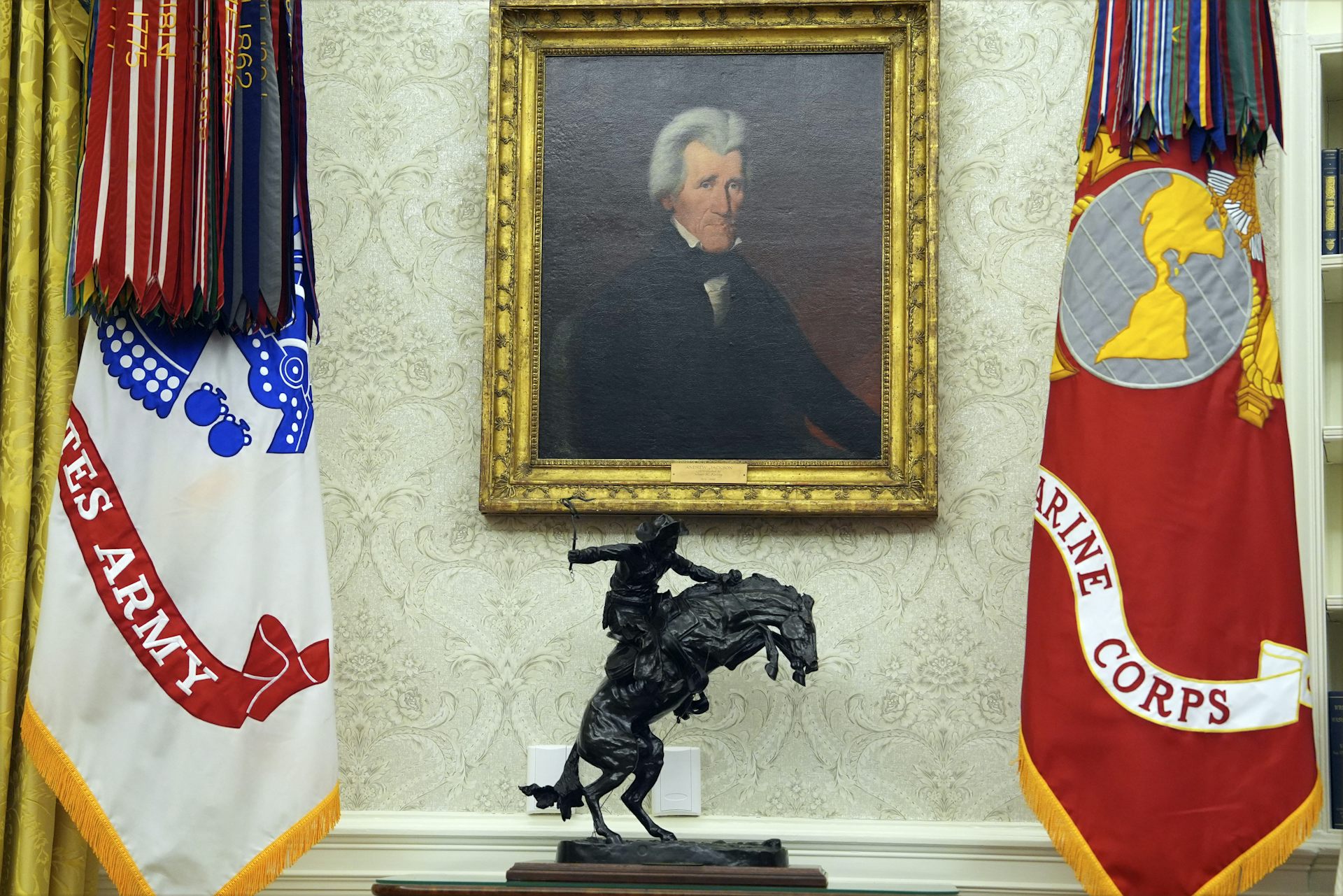
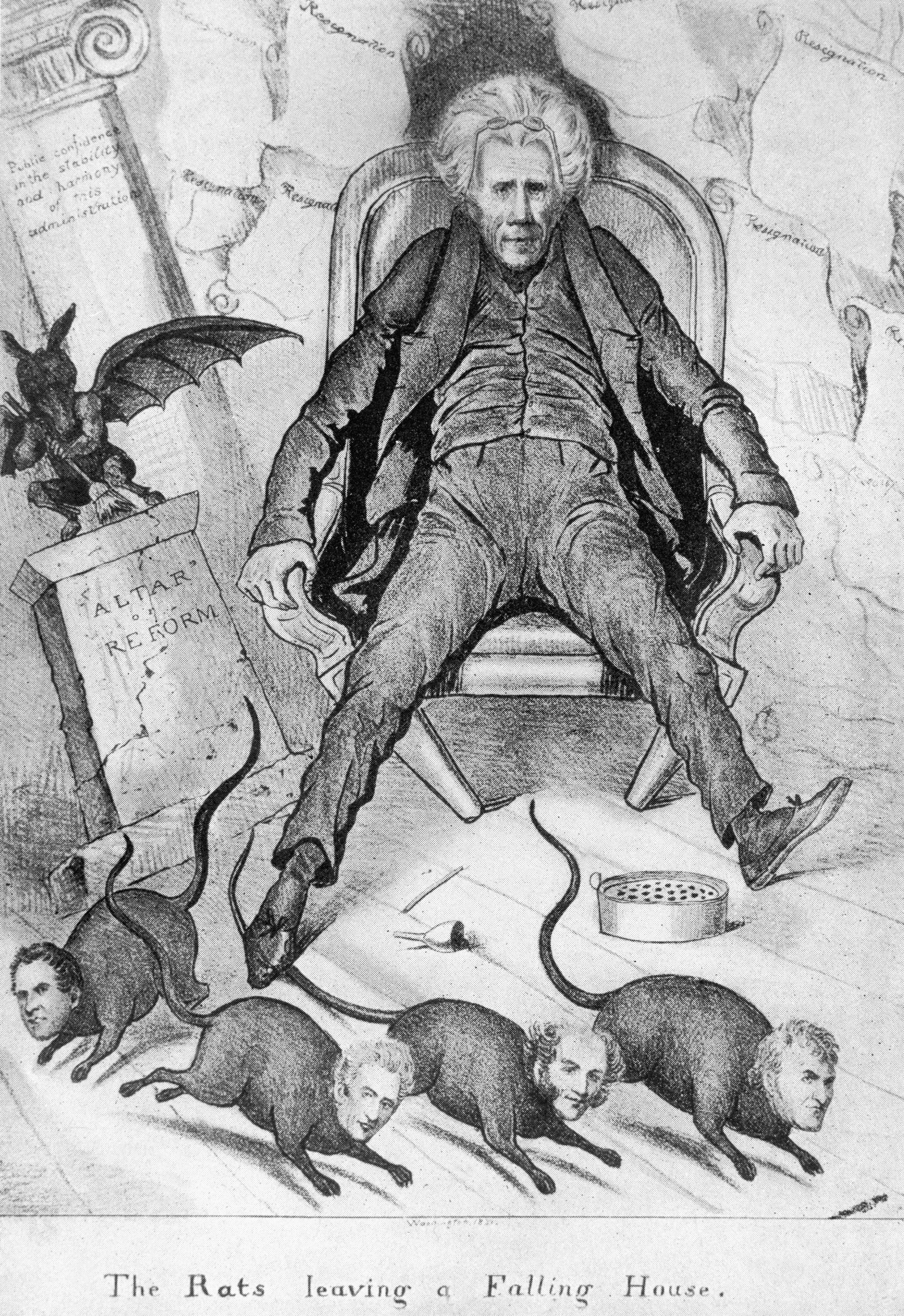
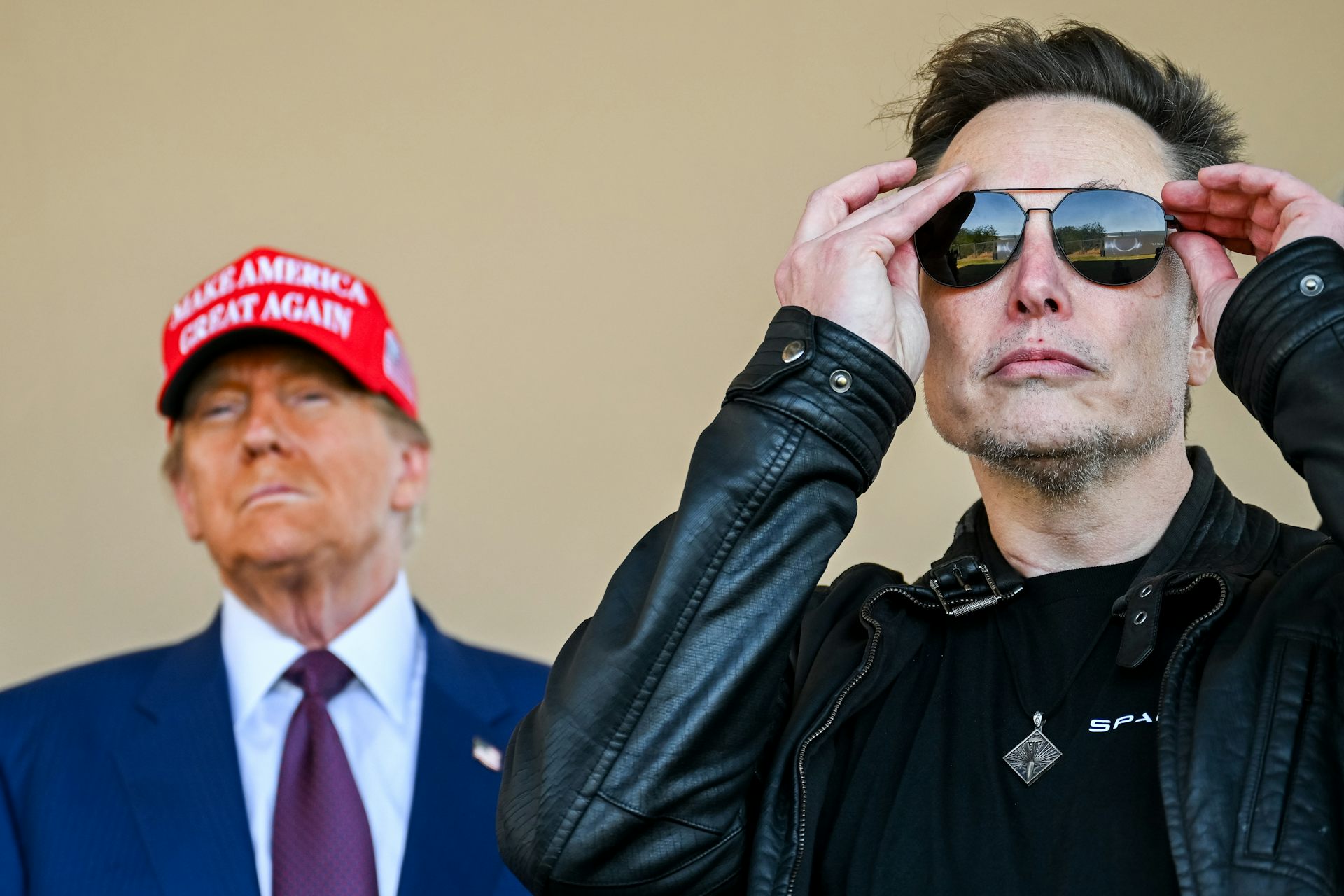


The portrait of President Andrew Jackson has recently made a comeback in the Oval Office. “Old Hickory” – Jackson’s nickname – has long been a favorite of President Donald Trump.
Trump identifies with Jackson on many levels. As a man and a leader, he likes the brash, confrontational, hypermasculine, lionlike attitude that characterized the seventh president. Jackson pushed executive power to the limits, just like Trump tries to do.
And there is a commonality of philosophical and political visions. The two tap into the same definition of freedom. They both believe the president has freedom from all restraint and from every form of legislative or judicial control.
However, differences exist between the two that might prompt Trump to consider the potential danger of how he governs and whom he listens to.
As an expert on American presidents, I can state with confidence that Trump is not the first to insist on complete obedience from his subordinates. Nor is he the first to take disagreement personally.
Trump’s attempt to create an army of sycophants, along with his effort to purge government staff he deems disloyal, is nothing new in America.
Personal loyalty and devotion were important to Andrew Jackson, who didn’t trust human nature. But he was steadfast in his trust, once he decided to place it in a person.
When Jackson had to choose his advisers and shape his first Cabinet, he relied on cronies from his beloved Tennessee – plus a handful of relatives.
The most famous and infamous of those chums was John H. Eaton. Eaton had developed a brotherly relationship with Jackson. Jackson felt indebted to him because Eaton had run his presidential campaigns of 1824 and 1828. Eaton would become secretary of war, but he also ended up embarrassing the president.
First off, he had an affair with a married woman, Margaret O’Neale Timberlake, whose husband was often at sea. When in 1828 Mr. Timberlake died abroad, rumor spread that he had slashed his own throat because of Margaret’s infidelity.
In Washington, D.C., gossip soon became ugly about what was known as the Eaton Affair. It ultimately led to the resignation of some Cabinet officials.
Jackson was irate. He had always realized he didn’t belong in the elite society of Washington, D.C. He was too self-conscious about his entire persona and too aware that he was perceived as an interloper. Consequently, he usually reacted defensively and often violently, thus betraying insecurity: “Our society wants purging here,” he wrote to one of his friends in 1829.
Jackson’s clan lived with him in the White House. There was Andrew Jackson Jr., a nephew and his adopted son. Andrew Jr. would inherit a huge fortune, but he would die in debt. It’s no surprise that historians have described him as “irresponsible and ambitionless, a considerable disappointment to his father.”
There was Andrew Jackson Donelson and his wife, Emily. Donelson was the nephew of the just-deceased wife of the president, Rachel Jackson, who tragically died just days after her husband won the 1828 election. Donelson had served with Jackson in the Florida War – known as the First Seminole War – and later became his private secretary. Emily Donelson would act as the president’s hostess in the White House.
Another close friend from Tennessee, Maj. William B. Lewis, also moved into the White House. Also a presidential adviser, Lewis gained the official title of second auditor of the Treasury. But the Donelsons couldn’t stand the man. Emily Donelson would eventually label him a “sycophant” who had seized an opportunity to “save himself all expense.”
As he shaped his first Cabinet, Jackson consistently ignored the suggestions coming from the two higher-profile characters of his administration, Martin Van Buren and John C. Calhoun. It wasn’t just an ideological difference; it was that neither of them had been early Jackson men.
Jackson, the president who made no secret that he was running a one-man show, had a presidential style derived from his military experience. As a general, Jackson rarely summoned councils of war. When he had to decide on a given course of action, he didn’t share responsibility.
But critics saw things in a totally different way. In the spring of 1831, Sen. George Poindexter, a hesitant Jacksonian, complained that Jackson was “surrounded by a few favorites who controlled and directed all things.”
To describe the informal group of friends, family members and advisers whom they believed maintained too great an influence over the president, the opposition coined the phrase “kitchen cabinet.”
But the opposition’s image of the “kitchen cabinet” was not the reality. No matter his personal quirks, Jackson proved to be an excellent administrator. And contrary to Emily Donelson’s fears, he resisted sycophants and self-interested counselors.
Jackson escaped manipulation because he managed to keep his eyes on his higher goal, the expansionist idea of the American nation.
He sought to create a blueprint for a government that would outlast him. He enacted impersonal rules that were sustained by elaborate systems of checks and balances. Whether you like him or not, Jackson was a builder, not a destroyer, of administrations.
The circumstances of the Jackson and Trump presidencies might look similar, but the key is that they are two very different men. Both wanted to fully reform the federal government, faced scandal, felt like an outsider in Washington, D.C., and had all sorts of close loyalists around pushing their agendas.
But Jackson didn’t get distracted. So he was not a useful puppet for those who sought to exploit him that way.
By contrast, it will be difficult for Trump to morph into President Jackson. Since the 1970s, the power of unelected and unconfirmed presidential aides and counselors has become more intense.
These individuals may easily end up negotiating deals or directing the course of events while escaping both congressional oversight and public scrutiny.
In their unaccountable influence, they are joined by major donors to a president’s campaign or causes.
There’s no doubt that they are a potential liability more dangerous than Jackson’s sycophants, more problematic than his cronies, more embarrassing than his wacky nephews.
This article is republished from The Conversation, a nonprofit, independent news organization bringing you facts and trustworthy analysis to help you make sense of our complex world. It was written by: Maurizio Valsania, Università di Torino
Read more:
America’s founders believed civic education and historical knowledge would prevent tyranny – and foster democracy
How George Washington used his first Thanksgiving as president to unite a new country
Do we need political parties? In theory, they’re the sort of organization that could bring Americans together in larger purpose
Maurizio Valsania does not work for, consult, own shares in or receive funding from any company or organization that would benefit from this article, and has disclosed no relevant affiliations beyond their academic appointment.
















































Comments