‘Lebanon wanted us gone … it was a risk to leave’ − Syrian refugees who fled Israeli bombs face hostility and uncertainty on return
Published in Political News
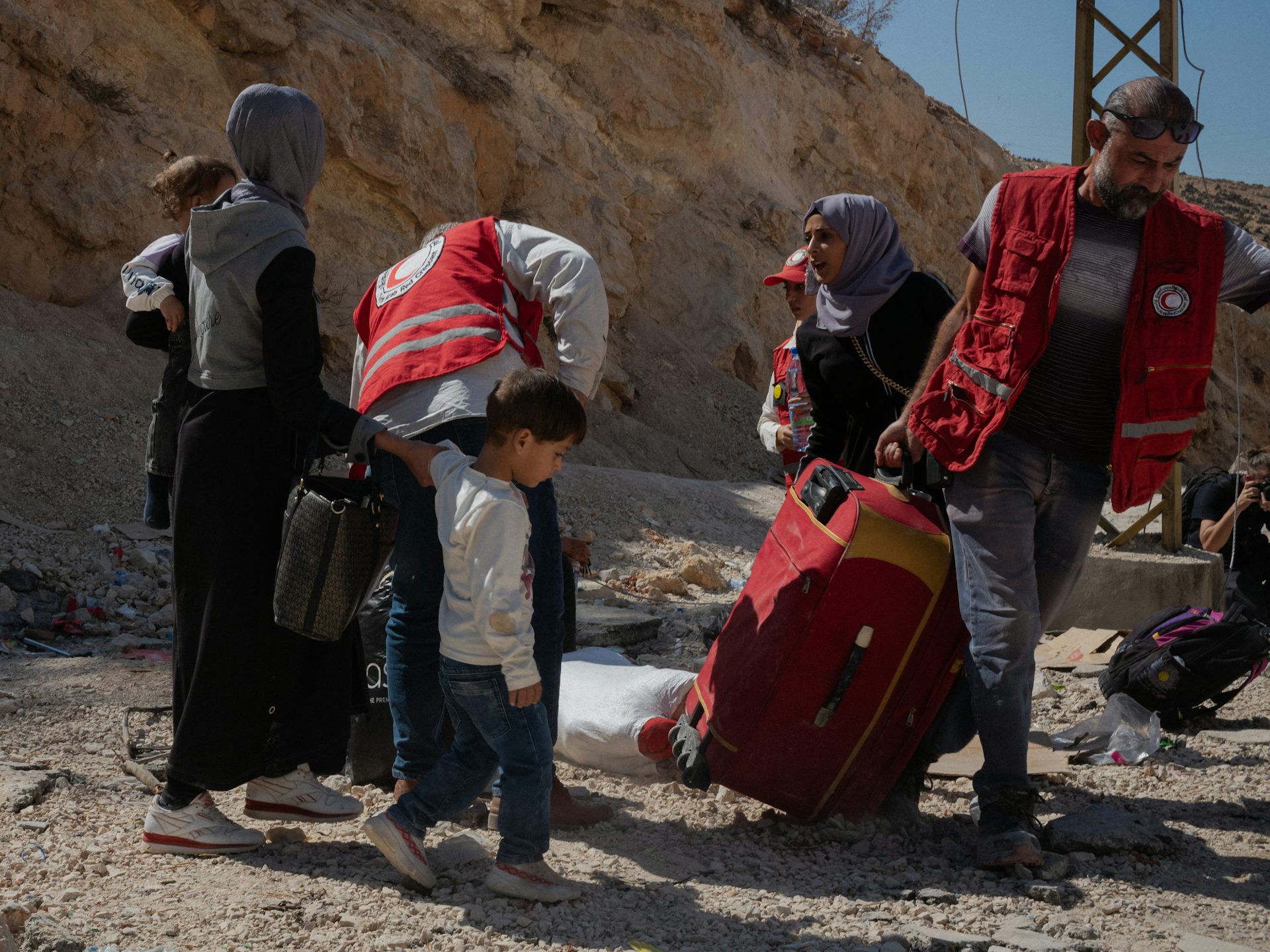
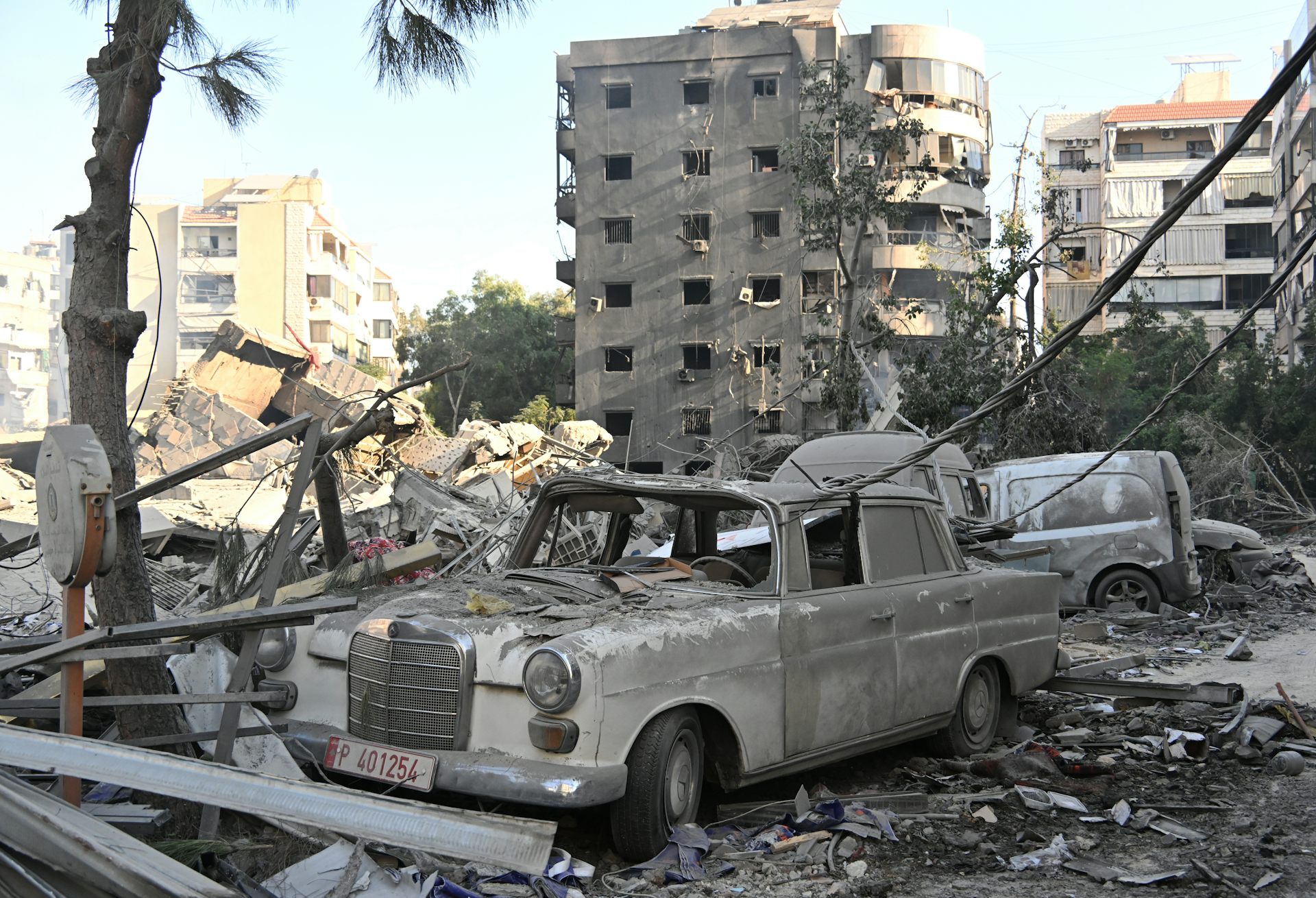
The ceasefire between Israel and Hezbollah has brought a cautious sense of relief to a Lebanese population battered by a yearlong conflict, not least the more than 1 million people displaced during the escalation of violence between September and November 2024.
But for the 1.5 million Syrian refugees already in Lebanon – many of whom lived in precarious conditions, having earlier fled civil war in their homeland – the pause in hostilities, announced on Nov. 27, 2024, is far from a straightforward reprieve.
Rather, it introduces new uncertainties. Syrians who temporarily fled Lebanon or were displaced within its borders now face growing hostility and restrictive policies regarding their return.
As Israel’s bombing of Lebanon intensified, 335,000 Syrian refugees made a painful choice: to temporarily return to civil war-torn Syria, the very place they had originally fled.
At the Institute for Migration Studies at the Lebanese American University, we have been monitoring the plight of Syrian refugees closely and have interviewed those who have fled, as well as humanitarian and law experts – all of whom requested to remain anonymous due to the sensitive nature of the refugee process in Lebanon.
Most of these refugees we spoke to hoped to return to Lebanon once conditions stabilized. M.H., a Syrian refugee speaking from inside Syria, told me in October: “We needed to make this move. It was temporary, but we had no choice. It is a risk to be here in Syria, of course. But it was also a direct threat on our lives to remain in Lebanon.”
In a nod to what I refer to as the “cyclical” nature of refuge, M.H., whose name I withhold to protect his identity, added: “We were forcibly displaced from Syria to Lebanon, but then forcibly displaced from Lebanon back to Syria – and we cannot stay in Syria under the current conditions.”
Lebanon’s border with Syria has long seen crossings by families looking to flee decades of violence. Many of those who fled Syria did so at the onset of civil war in 2011, fearing various forms of persecution and forced conscription.
With a 60-day ceasefire in place, many Syrian refugees who fled back to their homeland hope now to reenter Lebanon, where they had established lives despite enduring extreme hardship.
While many have succeeded at reentering Lebanon since the ceasefire was announced, there remains concern over the fate of others who sought temporary refuge in Syria. International law experts I spoke to as part of my research also spoke of concerns over their legal status. One explained: “Temporary returns to one’s country of origin may risk jeopardizing refugee status under international law because, unfortunately, this is subject to varying interpretations.”
This is because of the “cessation clause” of the 1951 Refugee Convention, which allows for the loss of refugee status under specific conditions, including the refugee’s “re-establishment in his or her country of origin.”
While the convention acknowledges the possibility of cessation, it emphasizes the voluntary nature of such movements as a critical criterion.
And while brief returns are not intended to trigger cessation clauses, varying interpretations of “re-establishment” leave many refugees in a vulnerable position.
Lebanon is not a signatory to the 1951 Refugee Convention, meaning the country is not legally bound by the convention’s provisions. However, Lebanon still engages with these norms indirectly, often citing international frameworks selectively to justify its policies.
And there are concerns that Lebanon may use the cessation clause principles to support return-oriented policies, making it difficult for fleeing Syrians to return across the border to Lebanon.
As of early December 2024, the Lebanese government has not officially commented on the reentry of Syrian refugees who temporarily returned to Syria during the conflict. But even before the latest refugee crisis, there were reports that Lebanese authorities had been implementing measures effectively preventing Syrians from entering Lebanon. And the crisis comes against a backdrop in Lebanon in which politicians have advocated for the return of Syrians to their homeland.
Certainly, those making the choice to temporary flee Lebanon to Syria were aware of the risk. A.S., a Syrian refugee in Syria since October, told me: “Lebanon has wanted us gone for a very long time. We knew it was a risk to leave in September (2024) when the conflict escalated, and knew that this would likely make it very difficult for us to reenter Lebanon. Lebanon’s army had been deporting Syrians and preventing them from entering for months before this escalation. But there was nowhere else for us to go.”
UNHCR, the United Nation’s refugee agency, emphasizes that temporarily returning under adverse circumstances to the land originally fled does not constitute voluntary repatriation and should not result in cessation of refugee status.
As a legal and human rights expert leading a local humanitarian organization operating at the Lebanese-Syrian border explained to me: “There is nothing voluntary about these movements. These are movements of desperation. Syrians and Lebanese are terrified; they are fleeing for their lives.”
The expert continued: “This is forced displacement over and over again.”
Lebanon hosts about 800,000 officially registered Syrian refugees, while an additional 700,000 are recorded by UNHCR without receiving a registration certificate.
For those who reenter Lebanon after the ceasefire announcement, their status with UNHCR technically remains intact if their movements are deemed involuntary. Yet, this raises pressing questions: How long can refugees remain in Syria without risking their status? And how will Lebanon’s policies shape these decisions?
The director of a humanitarian organization operating in north Lebanon explained to me: “The issue with this voluntary-involuntary predicament is not so much the initial movement of Syrians from Lebanon back to Syria, but rather, the duration of their stay in Syria. … If a Syrian left in October (2024) and is now attempting to reenter in November, this is certainly different than if a Syrian who left in October will attempt to reenter six months later. Even for UNHCR, there are complexities here when we discuss the concepts of ‘reestablishment’ in the home country.”
The conflict between Hezbollah and Israel also internally displaced thousands of Syrian refugees who stayed in Lebanon, pushing many from southern regions and the Bekaa Valley into other areas to escape bombardments.
With the ceasefire, these refugees also face daunting challenges as they attempt to return to areas marked by destruction, insecurity and rising hostility. A Syrian man making his way from an informal shelter in Mount Lebanon back to the south told me: “We don’t know what’s left there. The locals weren’t happy with us even before the conflict, and the tensions worsened as we fled alongside the displaced Lebanese, competing for aid. I’ve heard they burned our settlements, locked us out of rented spaces, and that many buildings we lived in are now destroyed.”
Years of economic collapse, political instability, scapegoating and misinformation have exacerbated resentment toward Syrian refugees, especially in regions where competition for scarce resources fuels tensions.
Many informal settlements where refugees lived have been destroyed, dismantled or abandoned. Returning refugees now find not only the physical loss of their homes but also an increasingly hostile social environment.
This double burden underscores how the ceasefire, while halting violence, does little to address the deeper structural and social challenges of displacement.
The plight of Syrians displaced in Lebanon highlights the fragility of refugee protections. For many, the ceasefire represents not just a pause in violence but a critical test of whether international systems can respond effectively to the complexities of cyclical displacement.
The experience of Syrian refugees in Lebanon also highlights the fact that displacement is rarely a linear process. For many Syrians, crossing back into Syria was a temporary response to immediate dangers, not a permanent decision. Denying their right to return to Lebanon now would force them into untenable situations, exacerbating their vulnerabilities and contributing to regional instability.
The ceasefire offers a fragile hope for rebuilding lives, but without inclusive policies and sustained international support, this hope could devolve into yet another chapter of displacement.
This article is republished from The Conversation, a nonprofit, independent news organization bringing you facts and trustworthy analysis to help you make sense of our complex world. It was written by: Jasmin Lilian Diab, Lebanese American University
Read more:
Bouncing between war-torn countries: Displacement in Lebanon and Syria highlights cyclical nature of cross-border refuge
A year of escalating conflict in the Middle East has ushered in a new era of regional displacement
The Russia-Iran-Assad ‘axis of the vulnerable’ is cracking in Syria
Jasmin Lilian Diab does not work for, consult, own shares in or receive funding from any company or organization that would benefit from this article, and has disclosed no relevant affiliations beyond their academic appointment.






















































Comments