Sri Lankans throw out old guard in election upset: What nation’s new Marxist-leaning leader means for economy, IMF loans
Published in Political News
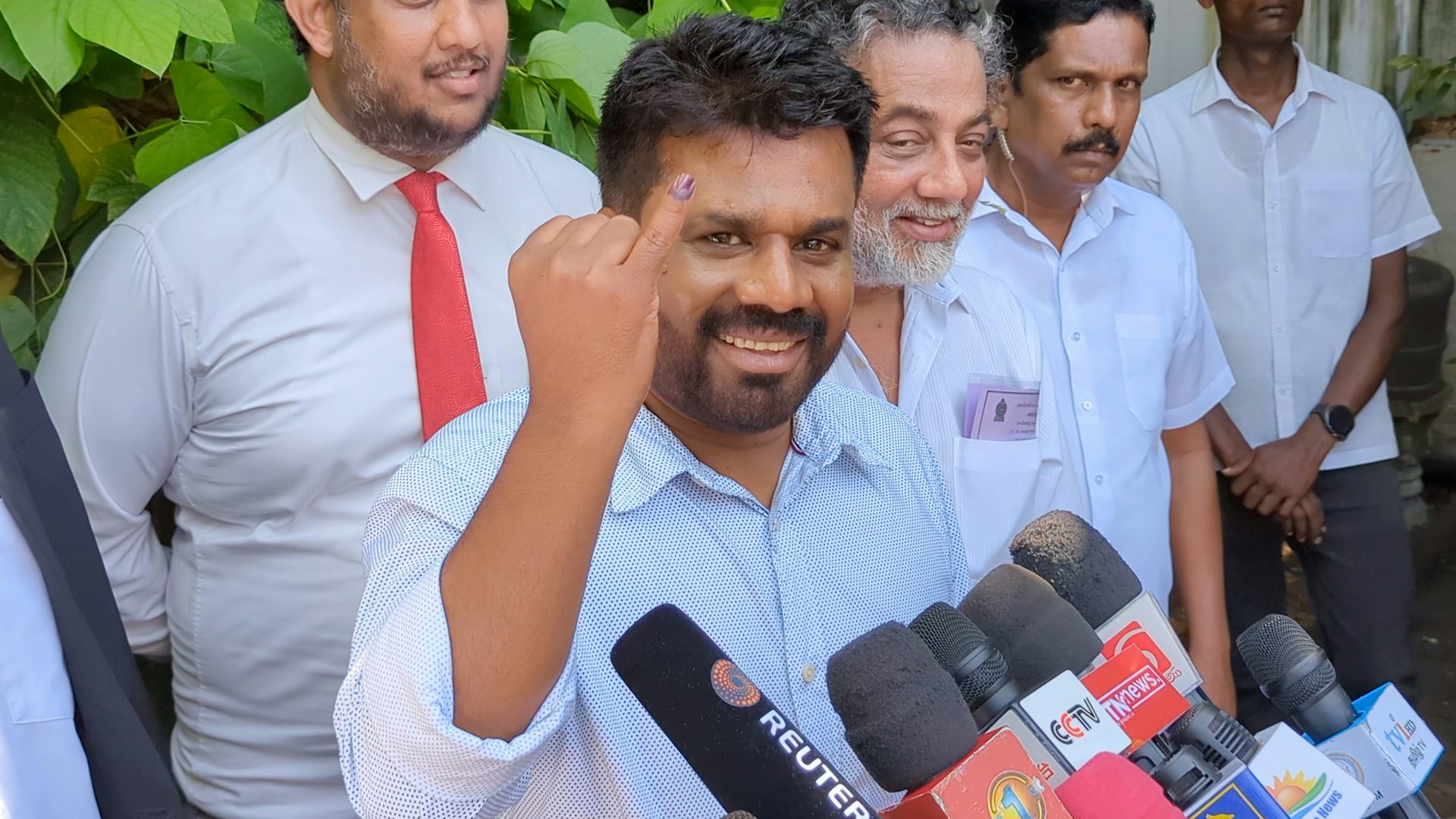
Sri Lankans voted for a new direction in leadership on Sept. 22, 2024, electing a leftist anti-poverty campaigner as president of the South Asian nation.
The ascent of Anura Kumara Dissanayake marks a break with the past and from the establishment parties and politicians blamed for taking the country to the brink of economic collapse in 2022.
Dissanayake characterized the victory as a “fresh start” for Sri Lanka – but he will nonetheless need to address the economic baggage left by his predecessors and the impact of an International Monetary Fund loan that came with painful austerity demands. The Conversation turned to Vidhura S. Tennekoon, an expert on Sri Lanka’s economy at Indiana University, to explain the task facing the new president – and how Dissanayake intends to tackle it.
Anura Kumara Dissanayake leads both the National People’s Power alliance, or NPP, and the Janatha Vimukthi Peramuna, or JVP. Rooted in Marxist ideology, the JVP was founded in the 1960s with the aim of seizing power through a socialist revolution. But after two failed armed uprisings in 1971 and 1987-89 – which resulted in the loss of tens of thousands of lives – the party shifted toward democratic politics and has remained so for over three decades.
Until this election, the JVP remained a minor third party in Sri Lanka’s political landscape, while power alternated between the alliances led by the two traditional political parties – the United National Party and the Sri Lanka Freedom Party – or their descendant parties.
In 2019, under Dissanayake’s leadership, the NPP was formed as a socialist alliance with several other organizations. While the JVP continues to adhere to Marxist principles, the NPP adopted a center-left, social democratic platform – aiming to attract broader public support.
Despite these efforts, Dissanayake garnered only 3% of the vote in the 2019 presidential election.
But the political landscape shifted dramatically during the economic crisis of 2022. Many Sri Lankans, frustrated with the two traditional parties that had governed the country for over seven decades, turned to the NPP, seeing it as a credible alternative.
The party’s anti-corruption stance, in particular, resonated strongly because many people blamed political corruption for the economic collapse.
It helped deliver 42% of the vote to Dissanayake.
While a significant achievement, it also marks a historic first for Sri Lanka — Dissanayake is the first president to be elected without majority support; the remaining 58% of votes were split between candidates from the two traditional parties.
His immediate challenge will be to secure a parliamentary majority in the upcoming elections, a crucial step for his administration to govern effectively.
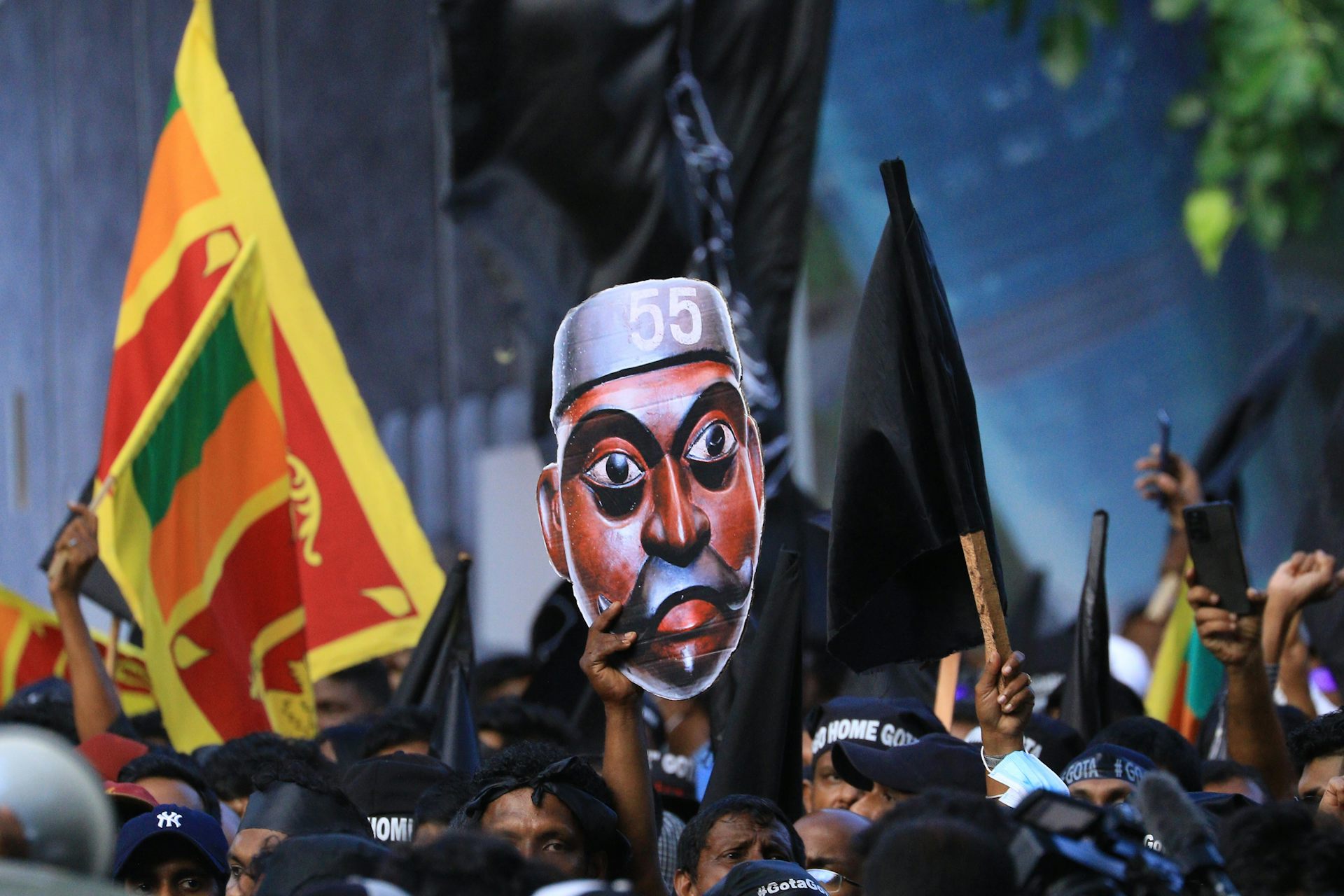
Two and a half years ago, Sri Lanka experienced the worst economic crisis in its history. With foreign reserves nearly depleted, the country struggled to pay its bills, leading to severe shortages of essential goods. People waited in long lines for cooking gas and fuel, while regular blackouts became part of daily life. The Sri Lankan rupee plummeted to a record low, driving inflation to 70%. The economy was contracting, and the country defaulted on its international sovereign bonds for the first time.
This sparked a massive protest movement that ultimately forced President Gotabaya Rajapaksa to resign. In July 2022, Parliament appointed Ranil Wickremesinghe to complete the remainder of Rajapaksa’s term.
In the two years that followed, Sri Lanka’s economy made an unexpectedly rapid recovery under Wickremesinghe’s leadership. After securing an agreement with the International Monetary Fund, the currency stabilized, the central bank rebuilt foreign reserves, and inflation fell to single digits. By the first half of 2024, the economy had grown by 5%.
The government successfully restructured its domestic debt, followed by a restructuring of its bilateral debt – that is, government-to-government loans, mostly from China but also from India and Western counties, including the United States. Just days before the election, an agreement was reached with international bondholders to restructure the remaining sovereign debt.
Despite these achievements, Wickremesinghe was overtaken in the presidential race by both Dissanayake and opposition leader Sajith Premadasa. Wickremesinghe’s unpopularity stemmed largely from the harsh austerity measures implemented under the IMF-backed stabilization program.
Dissanayake now inherits an economy that, while more stable, remains vulnerable. He will have limited room to maneuver away from the carefully planned economic path laid out by his predecessor, even as voters expect him to fulfill popular demands.
As a leader from a Marxist party, Dissanayake will likely pursue policies to reflect collective decisions made by the politburos and central committees of the NPP and JVP, rather than his individual views. He advocates for an economic system where activities are coordinated through a central government plan, emphasizing the importance of “economic democracy.”
His party believes prosperity should be measured not just by economic growth but by the overall quality of life. They argue that people need more than just basic necessities — they require secure housing, food, health care, education, access to technology and leisure.
Dissanayake’s long-term vision is to transform Sri Lanka into a production-based economy, focusing on sectors like manufacturing, agriculture and information technology rather than service industries. One of the key policies is to promote local production of all viable food products to reduce reliance on imports. To support these activities, the NPP plans to establish a development bank. Additionally, they NPP proposes increasing government spending on education and health care, in line with Sri Lanka’s tradition of providing free, universal access to both.
Historically, Dissanayake’s party has been critical of the IMF and its policy recommendations. Given the severity of Sri Lanka’s economic crisis, Dissanayake has acknowledged the need to stay within the IMF program for now. But he has vowed to renegotiate with the IMF to make the program more “people-friendly.” Dissanayake’s proposals include raising the personal income tax exemption threshold to double its current level and removing taxes on essential goods. Dissanayake’s party also plans adding jobs to the public sector, despite the ongoing effort to reduce the government workforce to manage the deficit.
Dissanayake’s populist policies, aimed at attracting mass support during the campaign, will inevitably strain government revenues while increasing expenses. However, the IMF program requires Sri Lanka to maintain a primary budget surplus of at least 2.3% of gross domestic product to ensure debt sustainability. Dissanayake has promised not to jeopardize the country’s economic stability by deviating from this target. His strategy is to improve the efficiency of tax collection, which he believes will generate enough revenue to fund his policies.
Additionally, his party has criticized the deal struck by Wickremesinghe’s government with international lenders, calling it unfavorable to the country. Dissanayake has promised to seek better terms. However, since these agreements are already in place, it remains uncertain whether the new government will attempt to renegotiate them.
This article is republished from The Conversation, a nonprofit, independent news organization bringing you facts and trustworthy analysis to help you make sense of our complex world. It was written by: Vidhura S. Tennekoon, Indiana University
Read more:
Sri Lanka’s crisis: Can the South Asian economy break from the past and find a route to stability?
Behind the crisis in Sri Lanka – how political and economic mismanagement combined to plunge nation into turmoil
War is over, but not Sri Lanka’s climate of violence and threats
Vidhura Tennekoon was a former employee of the Central Bank of Sri Lanka.


















































Comments