The Supreme Court's originalists have taken over − here's how they interpret the Constitution
Published in Political News

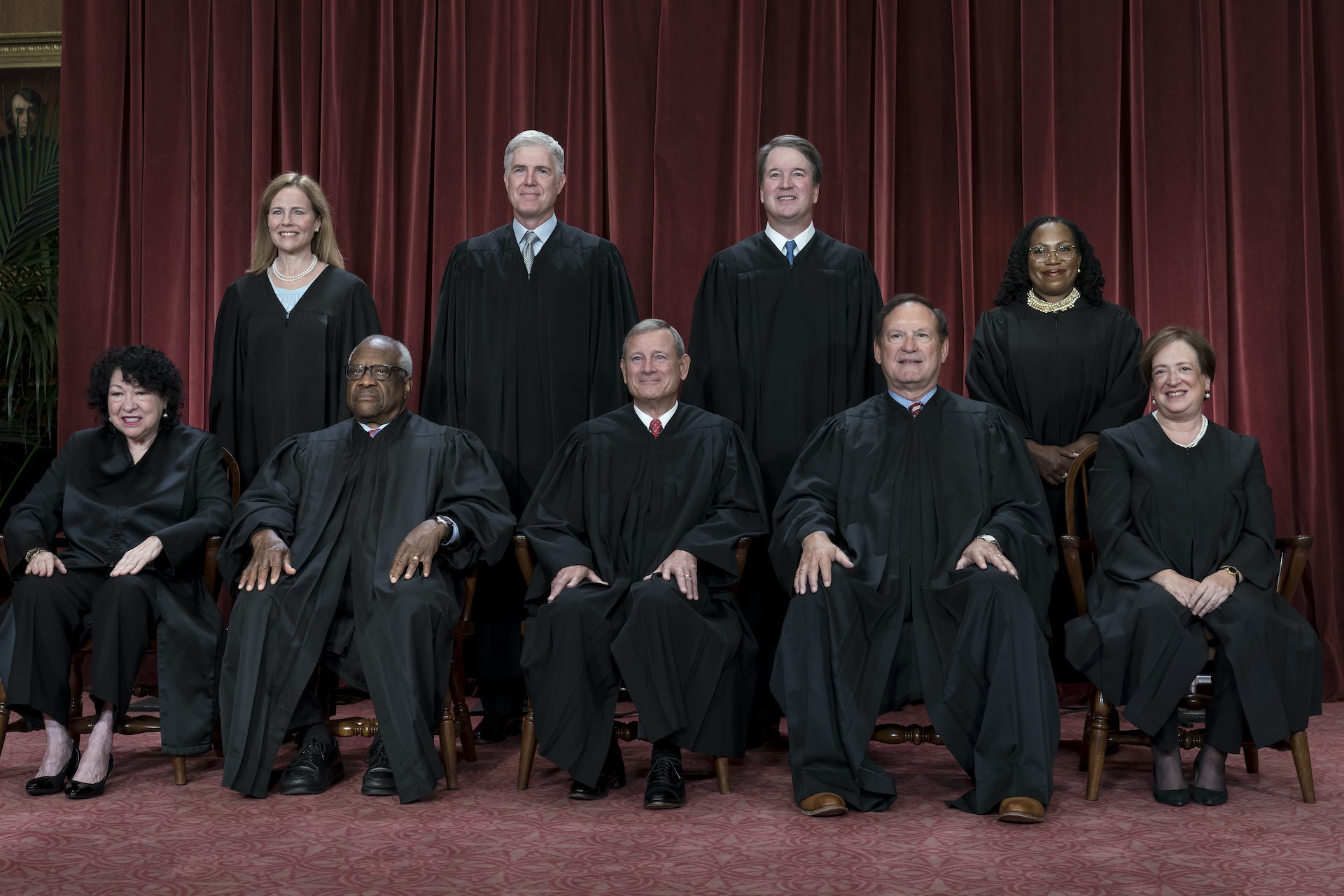

Today a majority of U.S. Supreme Court justices are either self-described originalists or strongly lean toward originalism. Yet less than 50 years ago, originalism was considered a fringe movement, hardly taken seriously by most legal scholars.
So, what is originalism, and why is it so influential today?
Originalism is the theory that judges are bound to interpret the Constitution as it would have been interpreted in the historical era when it was written. Understood this way, originalism is the idea that judges must follow the law as written and not merely ignore it or reinterpret it to their liking.
Why, then, aren’t all judges and legal scholars originalists?
There is no real controversy among judges or politicians about many provisions of the Constitution, for example that the president must be at least 35 years old or that each state gets exactly two senators.
But the challenge arises with certain passages in the Constitution – for example, the Fifth Amendment guarantee of “due process”, that is, the right to some sort of legal procedure when the government attempts to deprive someone of “life, liberty or property,” or the 14th Amendment’s principle of “equal protection of the laws.”
What these have in common is that they are written in vague, open-ended language, with no concrete guidance for interpreting the law. Few if any people would deny that all Americans are entitled to the equal protection of the law. But what exactly does that mean?
Does a law providing for marriage only between a man and a woman violate equal protection, because it excludes gay marriages? Does a law that prohibits bigamy violate equal protection, since it excludes plural marriages? How is a judge to decide, given the vagueness of the text?
It is here in these moments that the originalists and their critics part ways.
For the critics, the only way to interpret the abstract principles such as “due process” or “equal protection” is to look to the overall values and purpose of the Constitution as well as evolving societal values – after all, the very words “due” and “equal” are value terms.
When the Constitution was written, for example, only men were eligible for public office. Thus, the Constitution uses “he” 26 times, in reference to the president, vice president, citizens and others, and never uses “she.” Do these rules now apply only to males?
Of course not.
When the Constitution was written, it was assumed that the sexes had separate spheres. Men belonged in politics, women to the domestic sphere. When that fundamental value judgment shifted radically in the 20th century – as expressed in the 19th Amendment giving women the vote – it meant that the Constitution had to be read in a new way so that “he” is now interpreted as inclusive.
Now compare the equal protection clause and its application to sexual orientation.
For the originalist, the 14th Amendment guarantee of equal protection was clearly not intended to protect gay rights, given that sodomy was a crime at the time. For the non-originalist, societal values have changed radically on this issue, so they believe that now the Constitution should be read in a new way, such that equal protection extends to sexual orientation as well.
For the originalist, allowing such interpretive freedom is to abandon the Constitution altogether.
Yet, as a scholar of law and philosophy, I believe that flexible interpretation was the original intention of the framers.
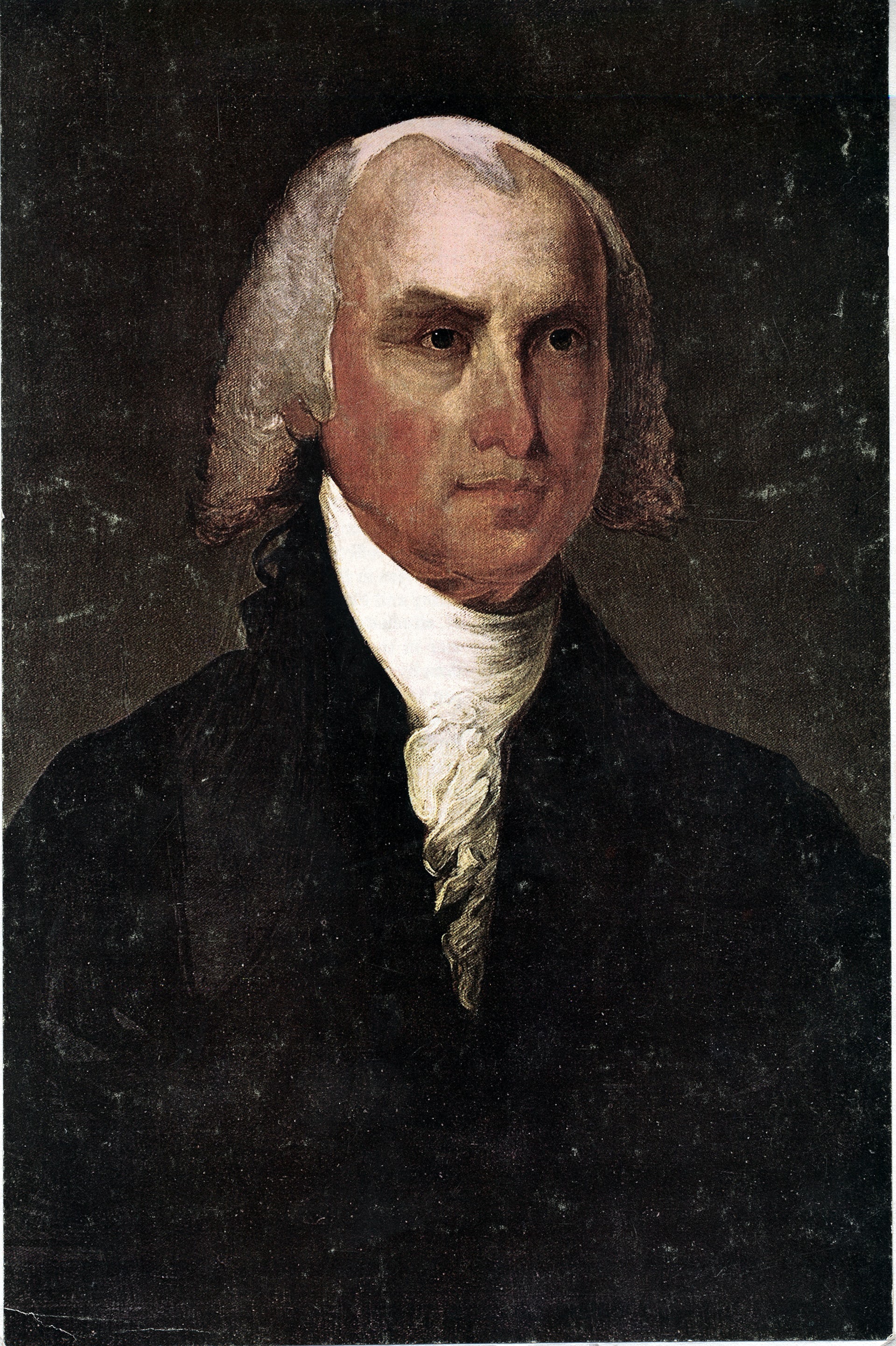
James Madison, for example, wrote in Federalist 37 – part of a collection of essays by Madison, Alexander Hamilton and John Jay endorsing adoption of the Constitution – that all new laws will always be “more or less obscure and equivocal, until their meaning be liquidated and ascertained by a series of particular discussions and adjudications.”
That is, the meaning of these phrases are not fixed at the time of the passage of the Constitution. That meaning is only “liquidated,” that is, made determinate, in light of future experience involving debate that Madison called “particular discussions” and judicial decisions that he called “adjudications.”
Laws, for Madison, may not have a determinate meaning until they are tested by experience: Just what level of process is “due,” and what does “equality” require?
Hence, in Madison’s view, faithfulness to the original understanding actually requires that laws be interpreted in light of changing values and new circumstances. Principles in the Constitution like “due process” and “equal protection” were deliberately left vague and open-ended precisely so they could evolve in the future.
Ironically, I believe, it is the non-originalists who can claim to be the true originalists.
Why then is originalism so influential? The answer is that the movement arose in the 1970s and 1980s among conservatives, in response to the liberal decisions of the Supreme Court headed by Chief Justice Earl Warren. Originalism began not as a neutral theory of interpretation but as a rallying cry for conservatives. It is no surprise that the originalists on today’s Supreme Court are also the conservatives.
The central and plausible core of originalism is the idea that judges should not impose their own personal values on the Constitution. But the real debate, I believe, is not about originalism versus the freedom to ignore the Constitution, but rather it is about just what the true, original meaning of the Constitution is.
This article is republished from The Conversation, an independent nonprofit news site dedicated to sharing ideas from academic experts. If you found it interesting, you could subscribe to our weekly newsletter.
Read more:
‘A revolutionary ruling – and not just for abortion’: A Supreme Court scholar explains the impact of Dobbs
A seismic change has taken place at the Supreme Court – but it’s not clear if the shift is about principle or party
Whitley R.P. Kaufman does not work for, consult, own shares in or receive funding from any company or organization that would benefit from this article, and has disclosed no relevant affiliations beyond their academic appointment.





















































Comments