Alabama is not the first state to defy a Supreme Court ruling: 3 essential reads on why that matters
Published in Political News
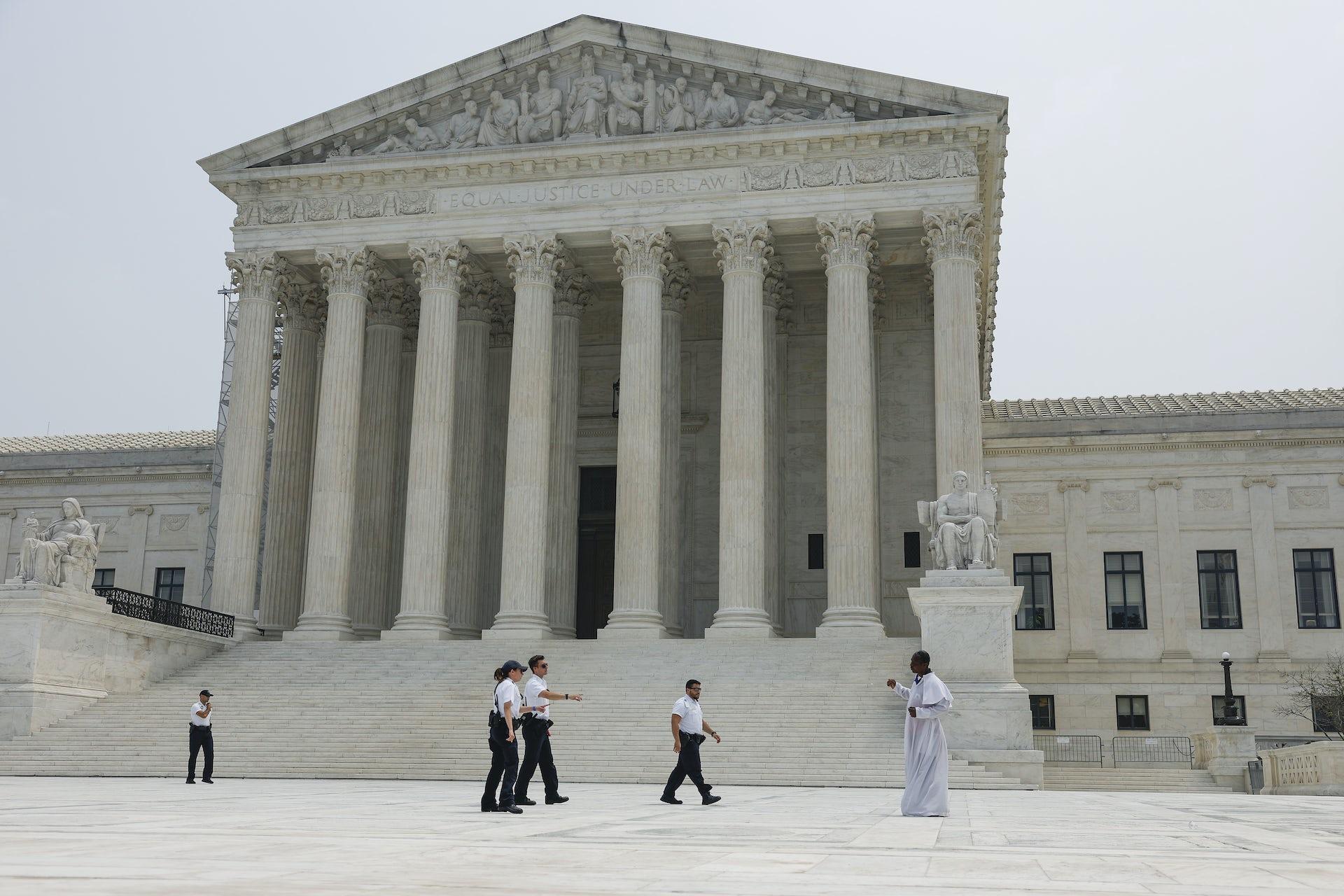
In its 5-4 Allen v. Milligan decision on June 8, 2023, the U.S. Supreme Court ordered the state of Alabama to redraw its congressional voting districts and consider race as it made up the new districts. The court had found that the state’s political districts diluted the strength of Black voters by denying them the possibility of electing a second Black member to the state’s congressional delegation.
While the court did not specifically order the state to create a second majority-Black congressional district, Chief Justice John Roberts made it clear how he viewed the long history of racist voter suppression in Alabama – and what factors should weigh prominently in the state’s new political map.
“States shouldn’t let race be the primary factor in deciding how to draw boundaries, but it should be a consideration,” Roberts wrote. “The line we have drawn is between consciousness and predominance.”
Alabama state officials submitted the state’s new boundaries by the Republican-controlled state legislature in late July.
But the new districts still include only one in which Black voters could reasonably elect a candidate of their own choosing, not two as voting rights advocates had argued – and as the Supreme Court appeared to endorse.
Over the years, The Conversation U.S. has published numerous stories exploring the consequences of not complying with court rulings and what resistance, including resistance to decisions involving race, does to the legitimacy of America’s legal system. Here are selections from those articles.
As political scientists Joseph Daniel Ura of Texas A&M and Matthew Hall of Notre Dame wrote, the Supreme Court’s 1954 decision in Brown v. Board of Education revealed “white Americans’ tenuous loyalty” to the authority of the federal judiciary.
In Brown, the court unanimously held that racial segregation in public education violates the equal protection clause of the 14th Amendment.
“Rather than recognizing the court’s authoritative interpretation of the Constitution,” Ura and Hall explained, “many white Americans participated in an extended, violent campaign of resistance to the desegregation ruling.”
The result of such resistance is clear. “Eroding legitimacy means that government officials and ordinary people become increasingly unlikely to accept public policies with which they disagree,” they wrote.
Read more:
In June 2020, the Supreme Court decided in McGirt v. Oklahoma that the Muscogee Creek reservation in Oklahoma is Indian Country.
As an expert in federal Indian law at Wayne State University, Kirsten Matoy Carlson wrote that the ruling meant federal criminal laws applied to much of eastern Oklahoma as Indian Country and enabled the federal government – instead of the state of Oklahoma – to prosecute crimes committed by and against American Indians there.
Oklahoma state officials refused to comply and actively resisted implementation of the McGirt decision. They asked the Supreme Court to reverse it over 40 times.
The strategy paid off. The U.S. Supreme Court took up a similar case and in June 2022, decided to roll back some its 2020 decision.
As Carlson wrote, “Conflicts between state and tribal governments are not new; states have long tried to assert power – often violently – over sovereign tribes.”
Read more:
Political scientist Richard L. Pacelle Jr. at University of Tennessee, Knoxville has examined how the power and authority of the court have waxed and waned over the centuries.
“That immense power has arguably made the court a leading player in enacting policy in the U.S,” Pacelle wrote. “It may also cause the loss of the court’s legitimacy, which can be defined as popular acceptance of a government, political regime or system of governance.”
Read more:
Editor’s note: This story is a roundup of articles from The Conversation’s archives.
This article is republished from The Conversation, an independent nonprofit news site dedicated to sharing ideas from academic experts. If you found it interesting, you could subscribe to our weekly newsletter.
Read more:
After Roe’s overturning, Americans are demanding Supreme Court term limits
A business can decline service based on its beliefs, Supreme Court rules – but what will this look like in practice?





















































Comments