John M. Crisp: What will change with Democrats in charge?
Published in Op Eds
Here are two mirror-image myths about our nation’s remarkable midterm election:
First, the Democrats’ efforts were driven chiefly by hatred and rejection of President Donald Trump.
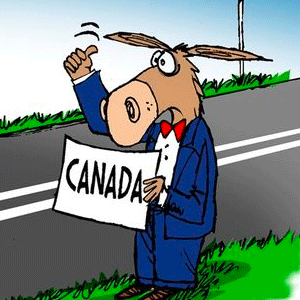
Second, the dog, having caught the car he so avidly chased, now doesn’t know what to do with it.
A cynical corollary to these two misguided notions is this soothing bromide: There’s not a “dime’s worth of difference” between our two political parties, no matter who’s in charge.
But it does make a difference. Consider my home state, Texas. Republicans have been in full charge for three decades, while Democrats languished in the wilderness, dreaming of one day turning Texas blue.
Then, suddenly, Texas turned blue. Will anything change?
There’s this: Currently Texas has the highest percentage in the nation of citizens without healthcare insurance. One of the reasons is that Texas—along with nine other states—has refused to accept the Medicaid expansion provided by the Affordable Care Act.
On Nov. 3, Democrats won the offices of governor, lieutenant governor, attorney general and comptroller, as well as a majority in the Texas House, which makes the expansion of Medicaid much more likely; 1.1 million additional Texans could be insured.
You may think that Medicaid expansion isn’t a good idea, but 40 states disagree with you, and so do most of the citizens for whom it’s provided healthcare coverage that they couldn’t otherwise afford. At the least, you can’t argue that Texas Democrats don’t represent real change.
Here’s another example: Public education in Texas has suffered for decades under Republican leadership. Texas ranks 43rd in public-school funding per student and 33rd in teacher pay. This year Texas implemented a voucher system that costs at least a billion dollars and will largely benefit families already wealthy enough to send their children to private schools.
Furthermore, Republicans have systematically intruded into the curricula of local school districts to snuff out the faintest whiff of diversity, equity and inclusion. Bible stories have been returned to the classroom. Is school-sponsored prayer far behind? At colleges and universities, faculty senates have been disbanded and tenure undermined. University boards have been populated with proponents of conservative values. The state has threatened to take over schools.
The legislature has even made provisions to post The Ten Commandments in every public-school classroom, whether the many Texas Muslims, Jews, Sikhs, atheists and even Christians like it or not.
Some party of small government!
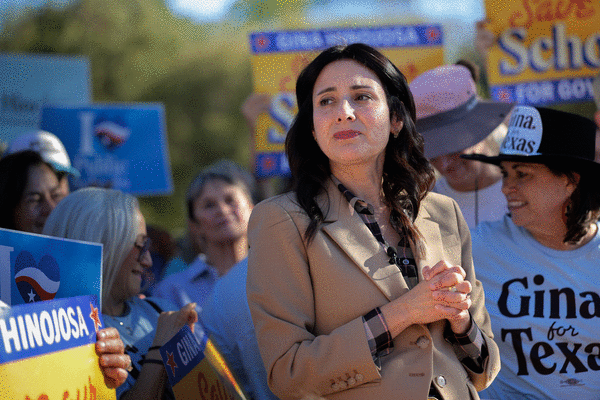
Governor-elect Gina Hinojosa got her start in politics by serving on the Austin Independent School District Board of Trustees, and education reform was one of the hallmarks of her campaign. She and other Democratic electees are determined to do away with the voucher system, support public school teachers and return curricular authority to the educators themselves.
Again, you may not like these ideas, but Texans elected leaders who do. And you can’t say that Democrats ran with no plans.
As in Texas, so with the nation. You may think, with Trump, that climate change is a hoax, but 60 percent of Americans don’t agree. Somewhere between 77 and 91% believe that all the Epstein files should be released. Two-thirds of Americans believe that the government has a responsibility to ensure that all Americans have healthcare coverage.
These are things that will never happen under Republican rule. In fact, Democrats still face a struggle to make them happen, as long as, in Texas, Republicans still hold a 19-11 edge in the Texas Senate and as long as Trump is in the White House.
But even if the myth at the top of this column—that the Democrats were focused primarily or entirely on defeating Trump—that, in itself, isn’t an unworthy goal.
On Nov. 3, a majority of Americans spoke emphatically against a lot of what Trump stands for and in support of the principles that really make America great: Democracy, as expressed by acceptance of the outcome of elections; the rule of law as embodied by an independent Department of Justice; public service instead of self-enrichment; competence instead of corruption; normalcy; decency.
Now, these are worth voting for.
_____
ABOUT THE WRITER
_____
©2026 Tribune Content Agency, LLC
















































Comments