Editorial: Richard Posner and the life of an inquiring mind
Published in Op Eds
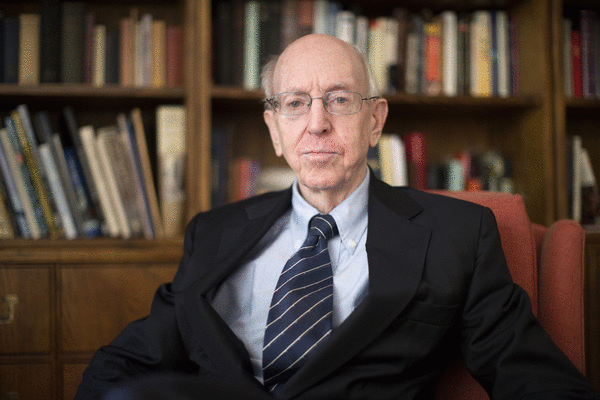
Richard A. Posner spent his career asking whether the law was working as it should and insisting that judges explain their answers in language ordinary people could understand. His recent death, at 87, is a loss for the University of Chicago, the federal judiciary and a nation whose legal life he helped shape.
Posner was a towering figure in American law, but his legacy cannot be reduced to a title or a single school of thought. He joined the University of Chicago Law School in 1969, where he became one of the leading architects of law and economics: the study of how legal rules shape behavior, incentives and institutions. His 1973 book, “Economic Analysis of Law,” became a landmark. Yet Posner’s lasting contribution was also his willingness to test his own ideas, challenge conventional wisdom and invite others to do the same.
In 1981, President Ronald Reagan appointed him to the U.S. Court of Appeals for the Seventh Circuit, where he served for 36 years, including seven as chief judge. He wrote thousands of opinions, bringing a sharp, practical intelligence to questions that affected businesses, workers, families and civil liberties. He expected lawyers to confront the facts and consequences of their arguments. He had little patience for opinions buried in jargon or for legal reasoning that treated precedent as a substitute for thought.
That approach could be bracing and controversial. Posner was not a jurist who fit comfortably inside a political label. He could unsettle allies and critics alike, and he sometimes changed his views as he reconsidered the evidence. His writing on same-sex marriage, abortion, economic policy and the limits of judging reflected a mind that resisted easy classification. The point was not that he was always right. It was that he believed serious argument required more than repeating what one’s side already believed.
The University of Chicago gave Posner a home for that restless inquiry, and he gave the university a figure whose reach extended far beyond its classrooms. His influence traveled through courtrooms, law schools, books and public debate. The Seventh Circuit was where his ideas met the concrete demands of judging: disputes between real people, legal rules with real consequences and decisions that had to be explained.
A great jurist does not make the law simple. Posner understood that law is shaped by competing principles, limited knowledge and human judgment. But he believed complexity was no excuse for obscurity. His insistence on clarity was itself a form of respect for litigants, for the public and for the work of justice.
Posner leaves behind an immense body of scholarship and opinions, but also a demanding example: keep asking whether the rules serve their purpose; examine the consequences; write so people can understand. The University of Chicago and the federal courts can honor him by preserving the open inquiry he embodied. His work will continue to provoke, teach and challenge. That is a fitting legacy for one of the great legal minds of our time.
_____
©2026 The Baltimore Sun. Visit at baltimoresun.com. Distributed by Tribune Content Agency, LLC.
















































Comments