Kaitlyn Buss: What do Republicans do with Trump?
Published in Op Eds
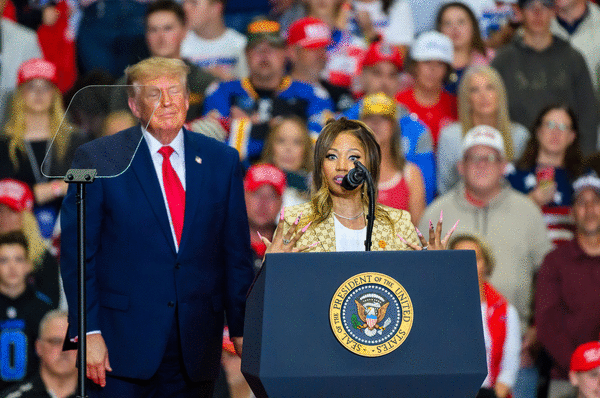
Republicans, fresh off a devastating electoral defeat, have a rather urgent question to answer: what do they do with President Donald Trump?
For a decade, the Republican Party has organized itself around a single political force whose ability to mobilize disaffected Americans fundamentally changed the political landscape.
Now, Trump has two years left in the White House, Republicans have lost Congress and their appeal to the American electorate, and the party must figure out what it intends to offer voters in 2028.
The temptation is to blame the election on everything except Trump, wait for Democrats to overreach and resume the political warfare that has defined Republican politics for a decade.
But that would avoid the uncomfortable reality that Trump has become perhaps the biggest problem for Republicans to solve.
Trump’s political rise was built on the frustration of Americans who believed powerful people and institutions were pushing them around. He promised to stand up to the bullies.
But the president has increasingly adopted the same tactics he once condemned, using the considerable powers of his office to intimidate opponents and demand loyalty. In many ways, he has become the bully. Republicans have largely accommodated him.
The party that once championed limited government has defended expansive executive authority, tariffs, enormous federal spending and a war in Iran. He has demeaned, insulted and sued the media, while telling voters they're wrong about the economic pain they're experiencing.
Without a sharp course correction, the GOP risks shrinking yet more.
Political power has become an end in itself for the GOP — and for Democrats, too — rather than a means of accomplishing something for Americans. Republicans who question that approach risk being treated as enemies of their own party, which is essentially Trump.
That can't continue.
If they have any hope of reclaiming their party — or of retaking either chamber of Congress or the presidency in 2028 — Republicans must be able to speak their minds regardless of the nasty tweets from the White House coming down on them.
They must be able to authentically address issues Americans are facing, including high prices and the economy, cybersecurity and data centers, without every issue becoming a referendum on Trump.
State parties and candidates should be developing political identities rooted in the needs of their own communities, not organizing their campaigns around defending the president.
And Republicans don't have to abandon principle to work with Democrats. They have to remember that their responsibility is to the people who elected them, not to the political personality occupying the White House.
How many Republican candidates would have won on Nov. 3 without Trump's endorsement? Impossible to say. But whatever advantages his endorsement once offered, they couldn't overcome the opposition he helped inspire, particularly in Michigan.
Republicans must realize political movements can't be defeated simply by being mad they exist.
The Republican Party's next generation of leadership will have to confront the contradictions between traditional conservatism and Trump’s governing agenda — a debate that can't be resolved simply by selecting his preferred successor.
It could take years to develop political identities, governing priorities and public trust that aren’t dependent on Trump. But the process cannot begin while Republicans remain unwilling to distinguish loyalty to the president from their responsibilities to the people.
Republicans may be able to survive another two years of Trump in the White House. But they can no longer let him determine their futures.
_____
©2026 www.detroitnews.com. Visit at detroitnews.com. Distributed by Tribune Content Agency, LLC.

















































Comments