Commentary: If you get kids off their devices, where are they going to go?
Published in Op Eds
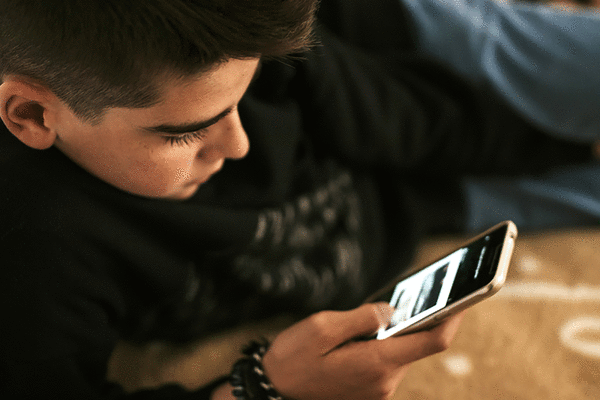
How do you get kids to stop spending so much time in the virtual world? It’s pretty obvious: Give them back the real one.
Kids desperately need free time, with each other, in person, in a place their parents let them go. That’s a pretty simple ask — it’s what you did after school, right? Hung out with friends? But right now it’s not happening, for a variety of reasons.
First of all, kids are barely allowed to go anywhere on their own anymore. This is due to factors as disparate as predator panic and bad city planning. A 2025 Harris poll found the majority of 8- to 12-year-olds had never walked or biked anywhere without an adult. (Contrast that with your own childhood and sigh.)
As for older kids, they’re treated like toddlers. A huge Institute for Family Studies survey just found that the majority of parents of 14-year-olds — high school freshmen — will not let them leave the block. So problem No. 1 is that they don’t leave the house because they aren’t allowed to leave the house.
Problem No. 2: Where can they go? A study of teens by the nonprofit California Partners Project found that many literally can’t get to a “third place” even if they’re allowed off the block, because they lack transportation. And a lot of third spaces, like cafés, require money, which teens are perpetually short on.
And then, a lot of kids don’t feel welcome in some places — because they aren’t. Across America, more than 1,000 malls have banned young people in some way, according to the National Youth Rights Association. Teens are sent packing. (And even if some shopping centers are welcoming, there just aren’t nearly as many malls as there used to be.)
You might guess that when they come home and hop on social media, they at least talk to each other online, but actually, it’s even sadder. About half the teens who feel unwelcome are turning to chatbots, according to the California Partners survey. They use AI for friendship and advice. But — one note of hope — the survey also found that almost half of those kids would use chatbots less if they were meeting with friends in real life.
In fact, that is the after-school life kids desperately want. That Harris poll last year asked kids 8-12 how they’d most like to spend time with friends: in person, just hanging out; in an adult-run activity, like soccer or ballet; or online, whether playing video games or on social media.
The winner, by far? Unstructured, in-person time — basically a Gen X childhood. Organized activities came in second, possibly because at least they’re in person. Online was dead last.
The California Partners survey found the same longing among teens. “Unstructured in-person hangouts — time spent together without a set plan or schedule” won big time — 70% — over organized activities (17%) and online interaction (12%). Kids are jonesing for real-world time with each other.
The evidence seems to be adding up: Kids from elementary through high school dearly want a time and place to be together in person. Absent that, they go online, sometimes to talk to each other, sometimes to talk to a bot. Not surprisingly, this is hurting their mental health.
Over the decades, as young people’s independence and free play have been going down, children’s anxiety and depression have been going up.
What could turn this around? Simple: If kids need a place they can get to and hang out at, open more public spaces to them.
Stop banning them from shops and malls. (Feel free to kick out the troublemakers — just not everyone of a certain age.)
Make libraries into hang-out havens and maker spaces.
Put “parkies” — recreation supervisors — back in the parks.
Turn underused locales — the basement of a town hall, an empty storefront, a community college cafeteria on weekends — into welcoming places with boardgames, or movies, and snacks. Kids don’t need luxuries. They need a room and some granola bars.
Parents play a role too: They have to recognize that the safety they may seek by keeping kids home poses its own risks of loneliness and anxiety. Phones aren’t the only childhood experience-blocker. So is parental fear. Start opening the door!
Finally and most simply: Keep the schools open after school for all-age free play. Parents trust schools, and the kids are already there. Let them hang out for a couple hours every day. Friendships and those elusive “social-emotional skills” will blossom.
If kids can’t meet up easily in the real world, they’ll meet up in the virtual one. That is literally the last thing they want to do.
____
Lenore Skenazy is president of Let Grow, a nonprofit promoting childhood independence and resilience, and founder of the Free-Range Kids movement.
_____
©2026 Los Angeles Times. Visit at latimes.com. Distributed by Tribune Content Agency, LLC.

















































Comments