POINT: Political yard signs create problems; just ask a realtor
Published in Op Eds

Leading up to the 2024 presidential election, divisions were so high across the country that CBS News reported on the effects political yard signs had on home sales. CBS wasn’t the only outlet covering that topic.
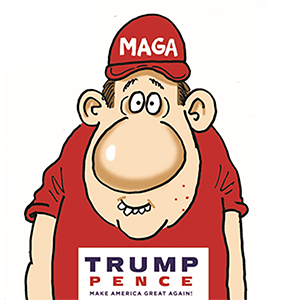
“You may not have bought that ‘Make America Great Again’ sign on your next-door neighbor’s lawn, but if you’re looking to sell your house soon, you could end up paying for it,” Money Magazine reported.
With the 2026 midterm elections right around the corner, Realtors say political signs can be interpreted in a variety of ways, but they still reflect the values of a few outspoken neighbors in every community, and that can chill prospective buyers.
“It doesn’t change the appraisal value of a home or neighborhood, but it can change buyer perception, which affects marketability,” said Monica Nalbantoglu, director of sales with the Rob Jensen Co. in Las Vegas. “Feelings drive an enormous amount of decision-making.”
Linda Lombardini, who co-owns Trillium Real Estate in Ann Arbor, Mich., told CBS in 2024 that one set of her clients decided not to buy in the area they were looking because they were so turned off by the political signs.
Jules Zaphire, a real estate agent in Locqube, N.Y., said something similar has happened to him. He is licensed in New York and Connecticut.
“Can it negatively affect a buyer’s viewpoint of a neighborhood? Yes. And in some cases they do decide to not move to that location. I’ve dealt with it personally,” Zaphire said in a recent interview with The Mortgage Note.
“I tell my clients to look up the stats and see how things lean in any given neighborhood if it’s something that is important to them. There is a lot of change that occurs around you when buying a home, and this can include dealing with different political affiliations.”
Joshua Holt, CEO and broker at Holt Real Estate Team in Madison, Wis., said he’s also seen examples of what Lombardini encountered.
“We have had buyers in our market that have chosen not to purchase homes simply because of things that neighbors have hanging up that do not align with their own beliefs,” Holt said. “Homebuying is a deeply emotional process. Buyers who see aggressive or inflammatory signs will wonder if they will feel welcome or safe in that community.”
Wendy Martorano, a Realtor with the Yackley Group in Chicago, attributes this to people thinking that if their political viewpoints differ, they won’t get along. She suggested buyers concerned about fitting into a neighborhood take their time to consider the full picture.
“I tell my clients to ask neighbors questions and just get a feel of what it would be like to live there. They have to do some homework and figure this out. Sit at a park. If there’s a clubhouse, check it out and meet the HOA people. You have to figure out what it is you want from the community,” Martorano said.
Holt suggests looking past the signage and focusing on the maintenance and care neighbors are putting into their properties.
“A neighbor who keeps their yard clean and respects property lines will make a better neighbor, even if they don’t politically agree with you,” Holt said.
Holt added that just because a neighborhood may lean one way now doesn’t mean it will be the same in a few years.
“We advise that you can’t choose your neighbors, and people will come and go from a neighborhood. You may find one that has everything you like now, but then someone will move in with opposing views. Administrations come and go. Policies come and go. Change is always happening,” Holt said.
What can sellers do if their neighbors have political signs up?
“This is a tough one,” Holt said. “If you are close with them, have a discussion and focus on the mutual gain that everyone gets in the neighborhood if the home sells quickly for top dollar.”
Beyond this recommendation, the same answer came across the board: sellers should focus on what they can control. This means focusing on the home and making it as appealing as possible.
“That is outside of the sellers’ control,” Nalbantoglu said. “Buyers should experience the community as it actually exists. We don’t want to hide things from buyers. The community is what it is.”
“There is not really much they can do because you can’t tell people how to feel and you can’t really hide it,” Zaphire said. “Your job as the seller is to show that the neighborhood is welcoming no matter what affiliation you have. You also show this by how you treat your house.”
“Bring buyers’ focus back to the tangibles: the condition of the house, the square footage, and other aspects of the property,” Holt added.
How should real estate professionals handle politics in general?
By keeping it out of their business relationships, Nalbantoglu said.
“We all have the same goal, which is to attract the largest pool of buyers that can purchase their home. Most see logic in this way of thinking and will concede. It’s just best not to touch politics in the real estate sphere whatsoever,” she said.
Martorano specifically encouraged all real estate agents to avoid revealing which side of the aisle they fall on because it can limit who might be willing to work with you.
“Nobody knows what my team’s political views are. We don’t hang signs up in our front yard or post on the internet because I never want a potential buyer to not work with me because of the side of the aisle that I sit on. All real estate industry professionals should do this. You have to stay Switzerland,” she said.
According to a 2022 article by the National Association of Realtors, in a hyperpolitical environment, industry professionals should stay above the fray.
“Great reputations are built one brick at a time, and buildings can come down with one bad move. You can destroy your reputation with one comment,” said 2011 NAR President Ron Phipps.
_____
ABOUT THE WRITER
Nicole Murray covers real estate news for The Mortgage Note. She wrote this for InsideSources.com.
_____
©2026 Tribune Content Agency, LLC














































Comments