Commentary: A death sentence is too heavy a decision to be overturned lightly
Published in Op Eds
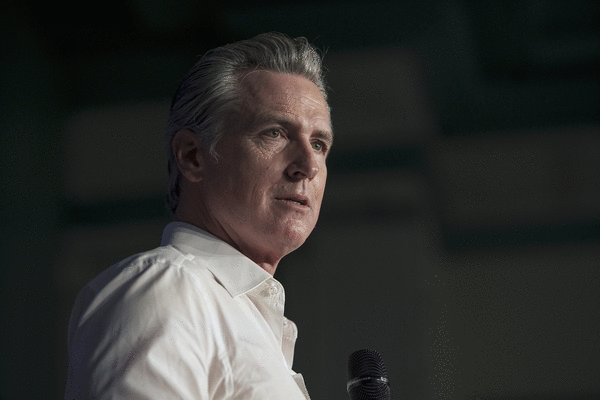
President Donald Trump was right to cancel plans to livestream the execution of Fort Hood murderer Nidal Hasan. Carrying out a lawful sentence should be a solemn responsibility, never a public spectacle. California Gov. Gavin Newsom should exercise restraint of his own by rejecting blanket commutation of the state’s death sentences.
As a society, we must respect the gravity of justice, especially when government exercises the power to take a life — or to replace a death sentence imposed by a jury and judge. Both decisions demand humility and respect for families forever changed by murder.
One of us is an elected district attorney; the other is a former elected district attorney. We both support capital punishment for the most heinous crimes. Our experience has taught us that justice requires both resolve and restraint.
We have sat with murder victims’ families, listened to their anguish and despair, and prepared them for the painful road ahead. We have warned that they would hear horrific details of their loved one’s murder and might see crime scene and autopsy photographs documenting their child’s final moments. No family should endure such suffering.
We have promised to do everything within our power to secure justice. We have asked families to trust a system in which evidence would be heard, a jury would reach its verdict, and a judge would impose a lawful sentence. Above all, we have assured them that their loved one’s life mattered and would never be forgotten.
That trust carries obligations long after the verdict. Trump’s reversal honors an important one: Punishment should be carried out with dignity.
Hasan murdered 13 people and wounded 32 others in 2009. His crimes warrant the gravest accountability. They never justified turning his death into entertainment. Transparency requires independent observation, accurate reporting and public scrutiny. It does not require distributing footage of a person’s death to a worldwide audience, where it can be replayed, manipulated and circulated indefinitely.
Canceling the broadcast leaves the death sentence intact. It demonstrates that supporting capital punishment and rejecting spectacle are entirely consistent. The Fort Hood victims deserve to be remembered for their lives, rather than through images of their murderer’s final moments.
In California, Newsom faces a different decision: whether to commute the death sentences of the state’s condemned prisoners. Each arose from an individual case, with distinct evidence, victims and legal history. Juries heard the evidence; judges imposed sentences subject to judicial review. Blanket commutation — occasionally exercised by outgoing governors, such as Illinois’ George Ryan in 2003 and North Carolina’s Roy Cooper in 2024 — substitutes an individual executive’s stance for those individual judgments.
California voters have repeatedly chosen to retain capital punishment. They rejected repeal in 2012 through Proposition 34 and again in 2016 through Proposition 62. In that same 2016 election, they approved Proposition 66 to reduce delays in death penalty appeals and carry out lawful sentences. Blanket commutation would replace the judgments of juries and judges with one governor’s opinion and disregard voters’ repeated decision to retain the death penalty for the most heinous crimes.
Consider 8-year-old Michael Lyons, who disappeared after school in Yuba City in 1996. Robert Boyd Rhoades sexually assaulted, tortured and murdered him. A jury returned a death verdict, affirmed by the California Supreme Court in 2019.
Or consider 12-year-old Polly Klaas, abducted at knifepoint from a slumber party in 1993 and murdered by Richard Allen Davis. A jury returned a death verdict; the trial judge declined to reduce the penalty, and the California Supreme Court affirmed. Blanket commutation would replace that judgment because the governor opposes the death penalty, rather than because he identified grounds for mercy particular to Polly’s case.
Clemency is a legitimate constitutional power. It can correct injustice or recognize circumstances warranting mercy. Credible claims of wrongful conviction and other grounds for relief deserve serious consideration. But the authority to grant clemency carries a responsibility to exercise it wisely and justly. That requires examining each case on its merits, not treating hundreds of distinct judgments alike. How do we explain otherwise to the families we asked to trust the system?
Newsom’s 2019 execution moratorium expressly stated that it would neither release anyone nor alter any sentence. Blanket commutation would abandon the second assurance. And families also deserve candor about what “life without parole” means. Newsom’s parole board has created a pathway toward possible release for eligible prisoners serving that sentence. Although its current rules exclude prisoners who have already received a commutation, they can seek further clemency from a governor. For families, that uncertainty means more anguish: another hearing, another account of their loved one’s murder, another plea for accountability. Will they be forced to fight this battle again?
Victims’ families do not all agree about capital punishment. Some support clemency; others oppose it. Their voices deserve to be heard as individuals. Their losses should never become material for an execution broadcast or be brushed aside in pursuit of a political legacy.
The president’s decision does not settle the debate over capital punishment. It does show that public officials can reconsider how they exercise extraordinary power. Newsom should do the same before making an irreversible decision across hundreds of cases.
Justice requires resolve to hold murderers accountable and restraint in exercising power. Trump has abandoned the spectacle. Newsom should abandon blanket commutation and give each case, and each family, the individual consideration they deserve.
____
Vern Pierson is the elected district attorney of El Dorado County. Anne Marie Schubert was a Sacramento County district attorney and is president and CEO of the Criminal Justice Legal Foundation.
©2026 Los Angeles Times. Visit at latimes.com. Distributed by Tribune Content Agency, LLC.
















































Comments